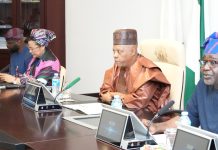



The Permanent Secretary, Federal Ministry of Agriculture and Food Security Dr. Marcus Ogunbiyi, has revealed Federal Government’s proactive steps to move away from Traditional Burning practices to embrace modern agriculture techniques to protect soil health, improve yields, and reduce emissions.
The Permanent Secretary made this known at the Close-out workshop of the project: abatement of Short-Lived Climate Pollutants (SLCP) in the Nigerian Agricultural Sector, held at Hotel 2020, in Wuye, Abuja recently.
He noted that the workshop was being convened under the theme: “Local Action, National Impact: Building Resilience through Climate-Smart Agriculture” was not merely the conclusion of a project cycle, rather marks an important milestone in Nigeria’s collective effort to confront climate change through practical, farmer-centered, and scalable agricultural solution-particularly in reducing short-lived climate pollutants that pose immediate risks to the environment, health, and food systems.
According to him, “This project, implemented by Self Help Africa in collaboration with the Federal Ministry of Agriculture and Food Security, with funding support from the Climate and Clean Air Coalition, CCAC, exemplifies the power of strategic partnerships in translating global climate commitments into local action.
He further stated that Nigeria’s Climate Change Act of 2021 provides a clear legal and institutional framework for achieving low greenhouse gas emissions, climate-resilient development, and sustainable economic growth.
“Within this framework, agriculture occupies a strategic position, as it is both highly vulnerable to climate impacts and a significant source of methane and black carbon emissions.
Nigeria’s updated Nationally Determined Contributions (NDCs) identify the agricultural sector as a priority for mitigation and adaptation-particularly through, reduction of methane emissions, improved residue management, and promotion of climate-smart agricultural practices.
This SLCP Abatement Project directly supports these national priorities and contributes meaningfully to the NDC Implementation Roadmap”, Dr. Ogunbiyi highlighted.
Speaking further he explained that the Short-lived climate pollutants-especially black carbon from open field burning, and methane from rice cultivation and livestock system are among the most potent contributors to near-term global warming. Although their lifespan in the atmosphere is relatively short, their warming impact is significantly higher than that of carbon dioxide, with serious consequences for air quality, human health, and agricultural sustainability.
He added that “for Nigeria-where agriculture remains central to livelihoods, employment, and food security- addressing Short-Lived Climate Pollutants presents a unique triple-win opportunity: to slow near-term climate warming, to improve air quality and public health, and to strengthen agricultural productivity and resilience.
This project has convincingly demonstrated that climate mitigation, adaptation, and food security can be pursued simultaneously, not in isolation”, the PS stressed.
The Permanent Secretary, therefore called upon development partners to support scale-up initiatives, longer implementation horizons, and results-based financing models; Financial institutions to design tailored products that support farmers adopting low-emission and climate-smart practices;
Extension agents and farmers to remain ambassadors of no-burn agriculture and resilient farming systems, noting that together, these actions will ensure that the lessons of this project translate into lasting national impact.
In his remarks, Director Lands and Climate Change Management Services, Mr. Oshadiya Olanipekun reiterated that the Short-lived climate pollutants which includes methane and black carbon pose serious risks to the climate, air quality and public health. “In Nigeria, where agriculture remains a major economic driver and a significant emissions source, addressing SLCPs offers a unique opportunity to reduce global warning, improve environment health and enhance agricultural productivity”.
Earlier in her remarks, the Country Rep, Self Help Africa, Mrs. Joy Aderele stated that the project has also strengthened extension system, built farmer capacity and generated evidence to inform policy and national action.
In attendance were Benue State government representative, Oxfarm, IITA, WFP, CCA Project Manager, a representative of Ministry of environment amongst others,
Signed
Eremah Anthonia (Mrs.)
AD Information
For: Head, Department of Information
23/1/2026