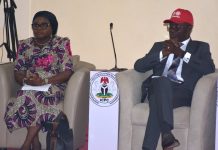



The Bureau of Public Service Reforms (BPSR) has commended the Code of Conduct Bureau (CCB) for its sustained collaboration in advancing public service reform, as part of efforts to strengthen ethical compliance, transparency, and institutional efficiency across government agencies.
?
?The commendation came during a courtesy visit by the Director-General of BPSR, Mr. Dasuki Arabi, and his delegation to the CCB headquarters in Abuja.
?
?Speaking during the visit, Mr. Arabi underscored the strategic role of BPSR in driving and monitoring reforms across Nigeria’s public service since its establishment in 2004, noting that the Bureau continues to provide critical information and coordination on Federal Government reform initiatives.
?
?He explained that the National Strategy on Public Service Reforms is anchored on four key pillars, anti-corruption, national development planning, public financial management, and human capital development, adding that the CCB has remained an active partner in the inter-ministerial review process supporting these reform priorities.
?
?According to the DG, the visit was aimed at deepening institutional synergy between both agencies, driving innovation and advocacy for improved service delivery, and repositioning the CCB for greater efficiency through the deployment of BPSR’s institutional strengthening tools.
?
?Mr. Arabi further highlighted the importance of strengthening anti-corruption policies and supporting the implementation of the National Action Plan under the National Anti-Corruption Strategy (NACS), stressing that increased awareness of CCB activities across public institutions would enhance compliance with ethical standards and asset declaration requirements.
?
?He noted that monitoring asset compliance remains a critical component of ongoing reform programmes and advocated the establishment of a Reform Coordination Department within the CCB to streamline reform initiatives and enhance adherence to the Code of Conduct for public servants.
?
?The BPSR boss also called for intensified capacity building on ethical standards across public institutions, describing it as a key driver of accountability, professionalism, and improved governance outcomes.
?
?Mr. Arabi equally acknowledged the notable achievements of the CCB over the years, particularly its ongoing digitalisation of the assets declaration process and asset verification exercises in some states of the federation, which he said have significantly strengthened transparency mechanisms within the public service.
?
?He added that BPSR would continue to engage the CCB in future institutional strengthening efforts through impact assessments, Service Assessment Tool (SAT) deployment, and broader institutional evaluation frameworks to consolidate reform gains.
?
?In his response, the Chairman of the Code of Conduct Bureau, Dr. Abdullahi Usman Bello, reaffirmed the Bureau’s commitment to sustained collaboration with BPSR, emphasising that the CCB’s mandate extends beyond enforcement to include advisory support for government institutions on ethical compliance.
?
?Dr. Bello outlined key reforms introduced by the Bureau, including the provision of downloadable assets and liabilities declaration forms, updates to declaration formats to reflect emerging governance realities, and ongoing efforts to fully digitise declaration processes to enhance transparency, efficiency, and cost savings for government.
?
?He further disclosed that the Bureau is strengthening partnerships with relevant stakeholders to improve data verification processes and ensure accuracy in asset declaration compliance.
?
?The CCB Chairman also advocated joint advocacy, capacity building initiatives, and ICT-driven reforms between both institutions, noting that such collaboration would enhance institutional effectiveness and promote integrity in the Nigerian public service.
?
?Both agencies agreed to deepen collaboration in advocacy, reform coordination, and institutional capacity development as part of wider efforts to institutionalise ethical standards, enhance service delivery, and drive ongoing public sector reform.
?
?At the close of the meeting, they also resolved to establish a joint technical working committee to operationalise and advance the agreed areas of collaboration.
Signed
Aliyu Umar, FNIPR, FIIM
Head, Strategic Communication
20th February, 2026.