


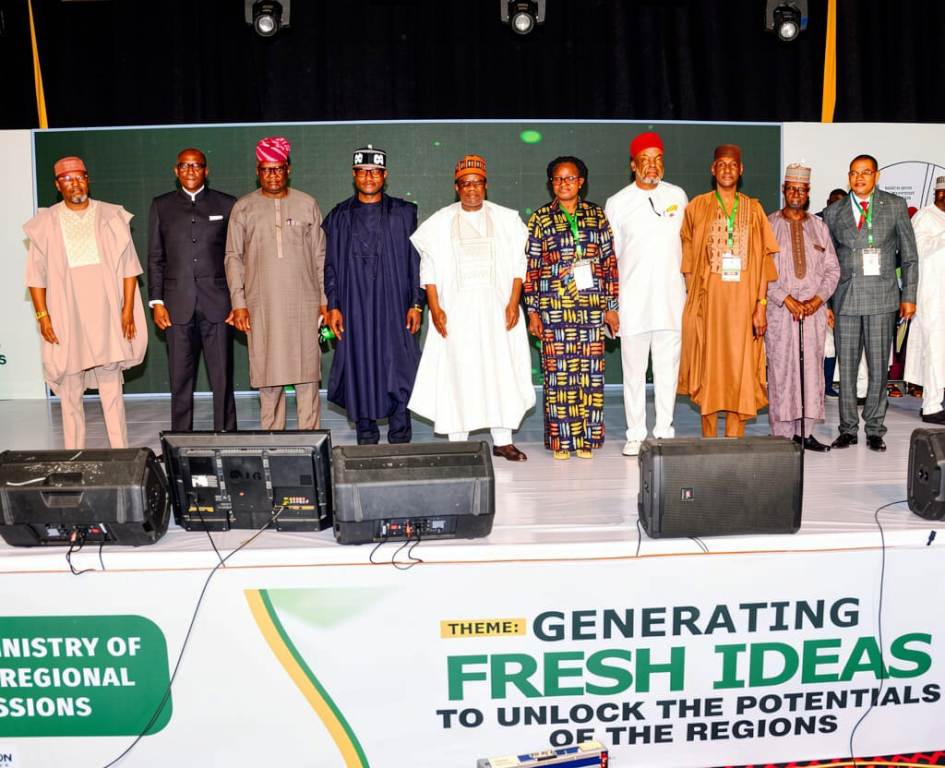
The Federal Government has set a decisive course for accelerated regional development following the successful conclusion of the 2026 Sectoral Retreat convened by the Ministry of Regional Development in collaboration with the Regional Development Commissions in Benin City, Edo State.
The two-day high-level retreat, themed “Generating Fresh Ideas to Unlock the Potential of the Regions,” brought together key stakeholders across government, including the leadership of all seven Regional Development Commissions, National Assembly representatives, development partners, and senior public sector officials. The gathering focused on strengthening governance systems, enhancing institutional collaboration, and unlocking new financing pathways for sustainable development.
At the heart of the discussions was a clear consensus: Nigeria’s regional development architecture must evolve to deliver measurable economic impact. Participants emphasised strict adherence to governance frameworks, including the Public Procurement Act, Public Service Rules, international accounting standards, and the Code of Conduct, as essential to restoring transparency, accountability, and efficiency in public service delivery.
The retreat also produced far-reaching resolutions aimed at transforming the operations of the Regional Development Commissions. These include strengthening the oversight functions of governing boards, institutionalizing capacity-building programmes, and ensuring alignment between annual procurement plans and budget cycles.
A major highlight was the strong push for economic diversification and self-sufficiency across regions. The commissions were directed to invest in revenue-generating assets beyond statutory allocations, while also scaling up skills acquisition programmes in areas such as agriculture and small-scale enterprise development to create jobs and stimulate local economies.
Additionally, there is a need to undertake structured stakeholder engagement across the regions on budgets, projects, and service delivery within the constituent states, involving key actors such as governors, traditional rulers, youth groups, and women’s associations.
Infrastructure development emerged as a critical priority. Participants underscored the need for investments in electricity generation, intermodal transport systems, industrial clusters, and logistics networks to unlock trade and enhance regional competitiveness. These interventions are expected to strengthen linkages between production zones and both domestic and international markets.
Equally significant was the call for stronger engagement with development partners. The Ministry committed to convening a Development Partner Engagement Forum within six months, while each commission is to designate a dedicated officer to facilitate access to international funding, grants, and concessional financing aligned with climate resilience and the Sustainable Development Goals (SDGs).
Speaking at the close of the retreat, the Honourable Minister of Regional Development, Engr. Abubakar Momoh, reiterated the Ministry’s pledge to drive coordinated, results-oriented regional growth:
“We must strengthen regular, close coordination between the Ministry, the Commissions, board members, and management through smaller, more frequent engagements. Going forward, all our actions will be firmly tied to the deliverables assigned to the Ministry at the start of the year. Once a Managing Director signs the performance bond, accountability becomes non-negotiable—you are required to report consistently and transparently on your deliverables.”
The retreat further reinforced the urgency of finalizing and implementing the National Regional Development Policy (NRDP) 2026–2030, which will serve as the central framework guiding strategic plans, annual work programmes, and budget execution across all commissions. An inter-agency implementation committee is expected to be established to monitor progress and ensure policy coherence.
With clear timelines, actionable reforms, and renewed political will, the outcomes of the sectoral retreat signal a strong shift toward a more coordinated, transparent, and impact-driven regional development agenda for Nigeria.
Sani Datti
Head, Information and Public Relations