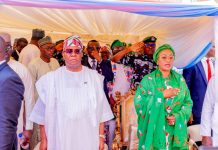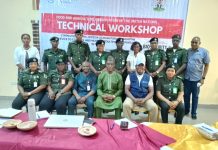


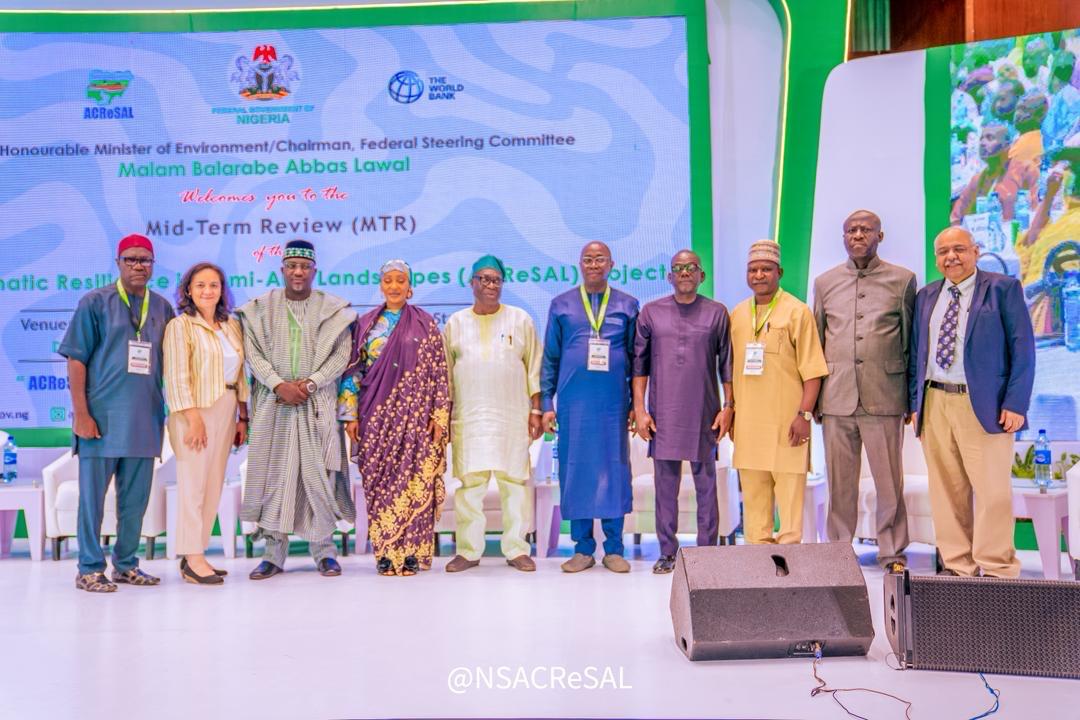
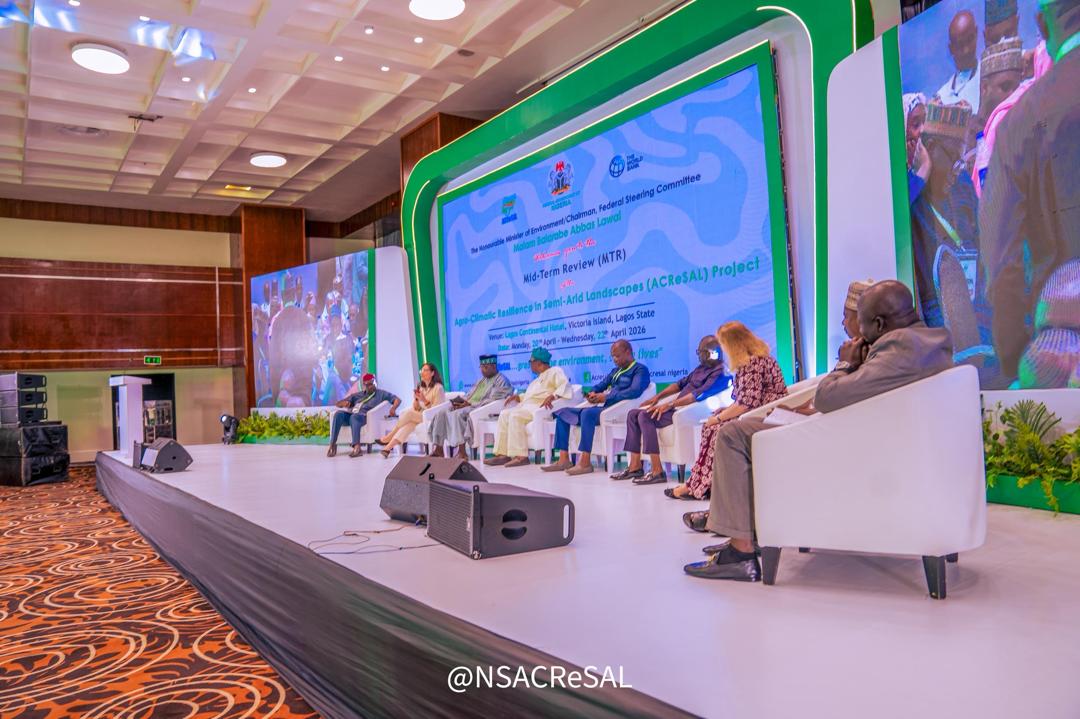
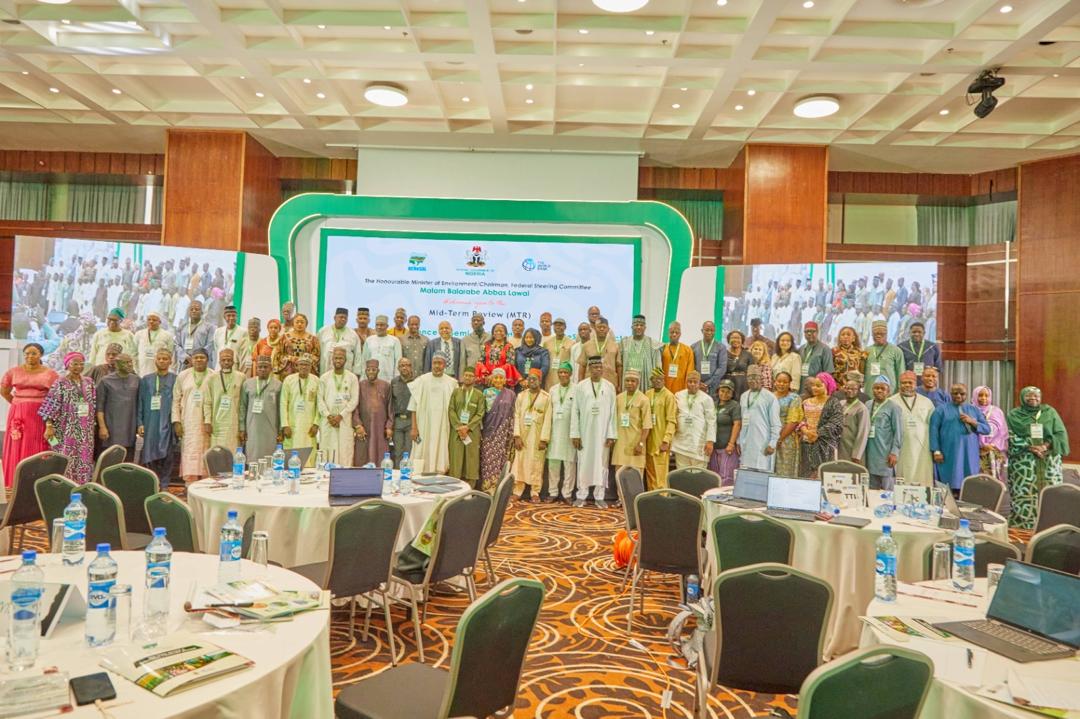
LAGOS, NIGERIA – The Agro-Climatic Resilience in Semi-Arid Landscapes (ACReSAL) project, Nigeria’s flagship climate initiative, has officially concluded its Mid-Term Review (MTR) and Additional Financing (AF) mission, revealing that the project has significantly surpassed its initial performance targets.
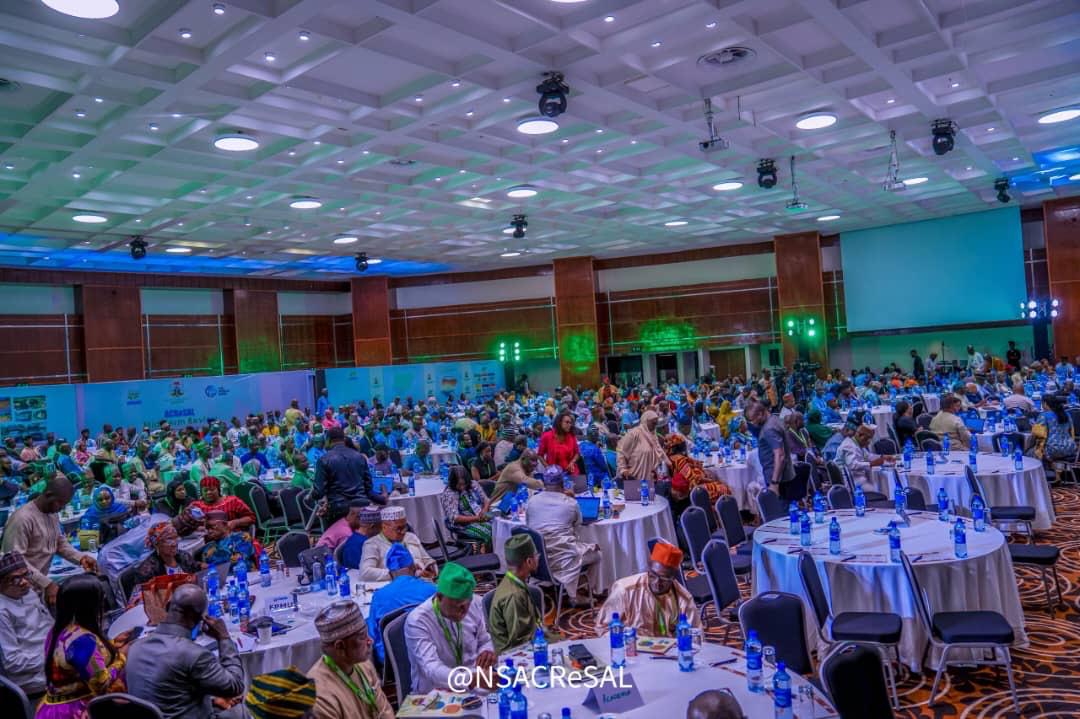
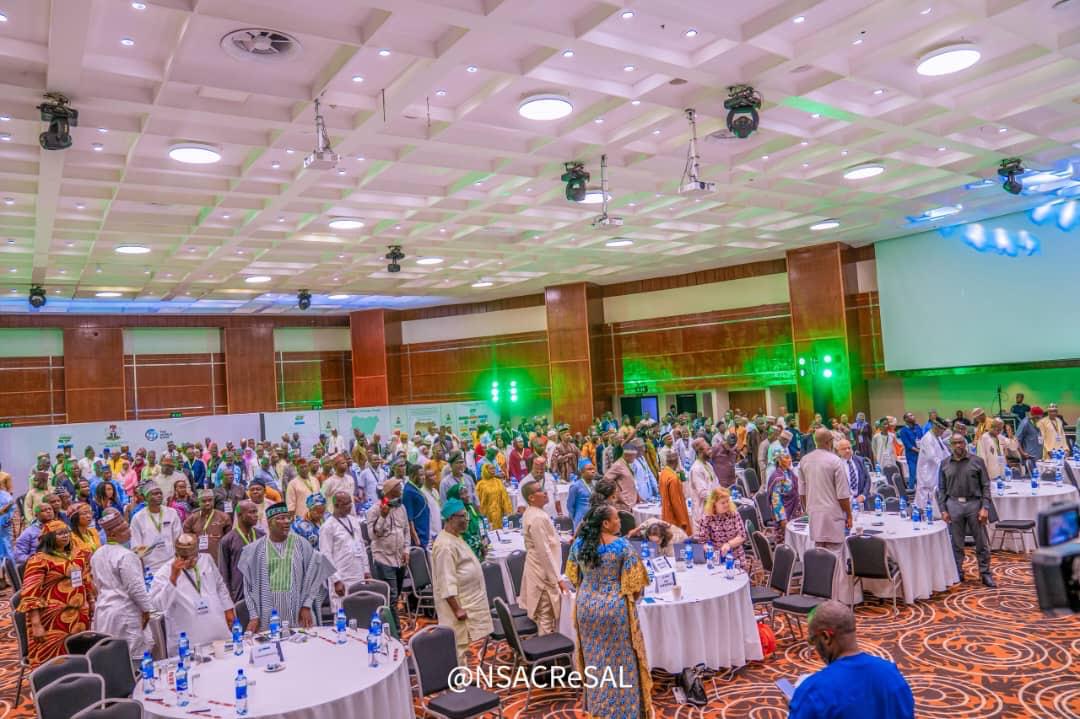
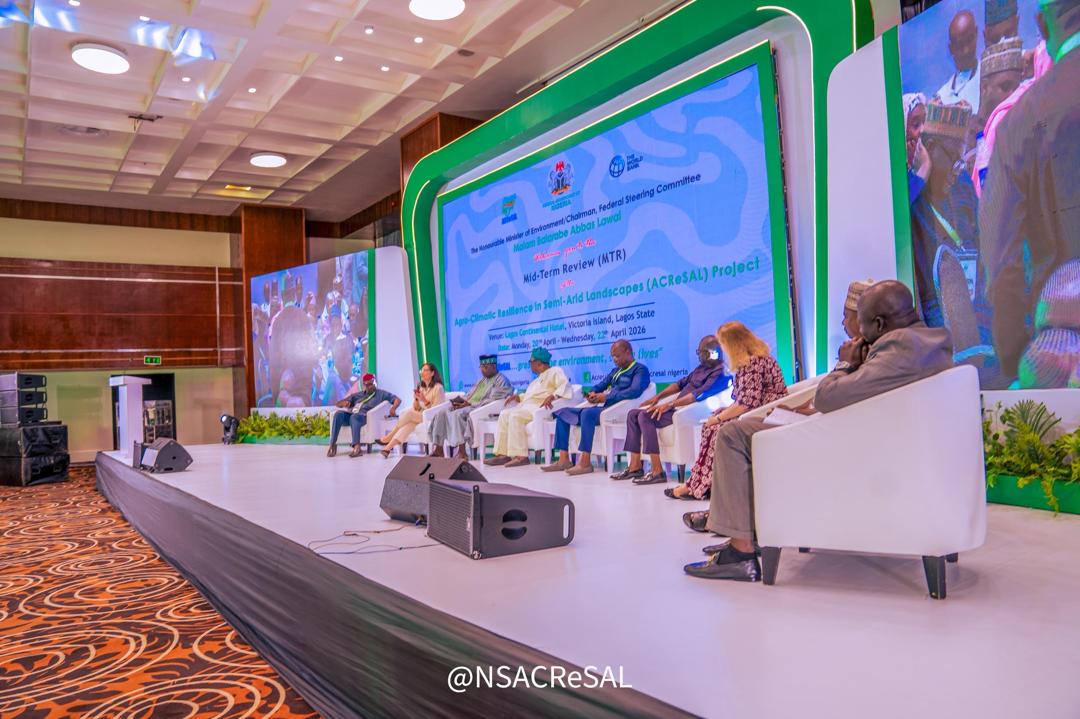
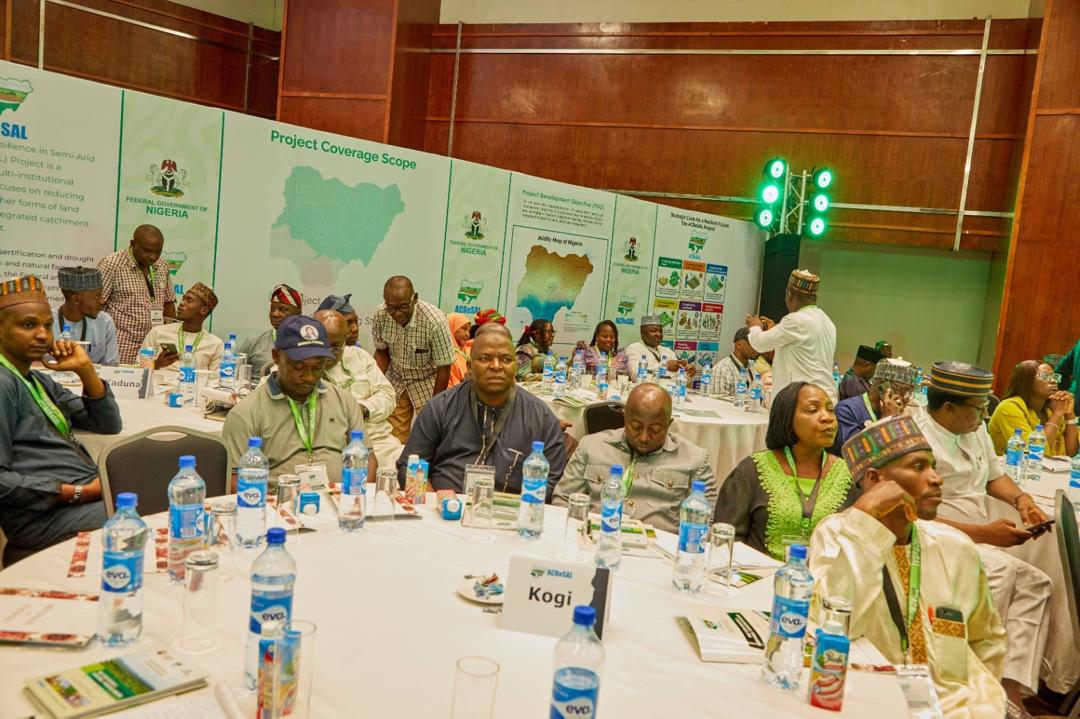
Between April 20 and April 22, 2026, over 500 delegates—including Federal Ministries, State Commissioners and Permanent Secretaries from the 19 Northern States and the FCT, Academia and World Bank technical experts—gathered at the Lagos Continental Hotel to chart the course for the project’s next phase. This followed a rigorous technical review process that began in Abuja on April 6 and included high-level technical sessions in Kaduna State.
Surpassing Targets: A Global Model for Resilience
Speaking at the closing session, the National Project Coordinator (NPC), Abdulhamid Umar, revealed that ACReSAL has already reached 9.3 million beneficiaries, nearly tripling the original lifecycle target of 3.4 million.
Furthermore, the project has successfully placed over one million hectares of degraded land under restoration—a milestone originally set for 2028.
Reflecting on the intensity of the three-day mission, Umar lauded the participants for their unprecedented engagement.
“To God be the glory—we have come, we have seen, we have conquered,” Umar stated. “This, to me, is one of the best technical and intellectual sessions I have ever attended. I am moved by the highest level of attentiveness and concentration I have seen in this room since Monday. It is my hope that the lessons gained here will be transmitted into the second phase of our project implementation.”
Deepening Community Impact and Sustainability
A key outcome of the Lagos review is the strategic shift toward Component B: Community Climate Resilience. Stakeholders emphasized the need to deepen community engagement and empowerment through the Community Revolving Fund (CRF), a mechanism designed to empower local farmers and women’s groups.
Dr. Iganya Joy Agene, World Bank Senior Environmental Specialist and Task Team Leader (TTL) ACReSAL , reinforced the vision of ACReSAL as a “family” united by goal.
“As you return to your states, think Component B, think CRF. We must address the specific areas for the community to ensure these gains are permanent,” she remarked.
The mission also looked toward long-term sustainability through education and technology:
Youth Advocacy: Speakers emphasized the need to sensitize students in primary and secondary schools, ensuring the next generation of graduates is equipped to maintain these environmental gains.
Technological Integration: Technical facilitators encouraged states to leverage the National Centre for Remote Sensing to strengthen in-house GIS facilities, ensuring data-driven landscapes management continues even outside the project’s formal scope.
The “Reality Check”: A Call for Exigency.
While the success stories were celebrated—including averted floods in Katsina and reduced farmer-herder tensions in Benue and Gombe—Engr. Chinedu Umolu, World Bank Senior Water Resources Management Specialist and Co-TTL ACReSAL, provided a vital “reality check.” He reminded participants that despite discussions for additional financing (AF), the current project timeline is a non-negotiable priority.
“Because we are a family, we must bring ourselves back to reality,” Engr. Umolu cautioned. “Our timeline is still March 2028 to deliver. The idea is not to roll over current activities into additional financing. This is a wake-up call: we must deliver our engineering, land, and procurement works with exigency and urgency. All hands must be on the plough.”
Celebrating Earth Day with a Sustainable Vision
Coinciding with Earth Day (April 22), the mission concluded with a reaffirmation of Nigeria’s commitment to environmental protection. The Taraba State Commissioner for Environment, speaking on behalf of the participating states and FCT reaffirmed their commitment to upscaling impact and supported the proposal for additional financing to ensure that the ACReSAL model continues to safeguard livelihoods across Nigeria’s semi-arid landscapes.
Jane Ozuruoke mnipr
Head, Media and Public Relations
ACReSAL, Federal Project Management Unit