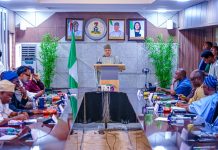



The Director-General of the Bureau of Public Service Reforms (BPSR), Mr. Dasuki Ibrahim Arabi, has called for sustained institutional, financial, technological and human capital reforms to reposition the Federal Airports Authority of Nigeria (FAAN) as a globally competitive, digitally driven and financially sustainable aviation institution.
?
?Mr. Arabi made the call while delivering the keynote address at the Federal Airports Authority of Nigeria (FAAN) Management Retreat held in Lagos, from June 4 to June 7, 2026. The retreat brought together FAAN’s leadership and management team to deliberate on strategies for strengthening the nation’s aviation sector.
?
?Speaking on the theme, “Positioning FAAN for the Future Through Sustained Reforms,” the BPSR DG emphasized that the future of aviation depends on institutions that are adaptive, innovative, efficient and reform-oriented.
?
?According to him, Nigeria’s aviation industry remains a critical driver of economic growth, trade, tourism and national development, making it imperative for FAAN to continuously evolve in response to emerging global trends and industry demands.
?
?Mr. Arabi noted that although successive public sector reforms since Nigeria’s independence have sought to improve efficiency, accountability and service delivery, challenges such as policy inconsistencies, high operating costs, aging infrastructure, skills shortages and governance inefficiencies continue to impede optimal performance within the aviation sector.
?
?He highlighted several critical challenges confronting FAAN, including governance and regulatory overlaps, revenue leakages, foreign exchange pressures, dependence on aeronautical income, infrastructure deficits, technology gaps, resistance to change and inadequate customer service culture.
?
?To address these challenges, the BPSR DG proposed a comprehensive reform agenda anchored on five strategic pillars: strengthening institutional governance and accountability, modernizing airport infrastructure, enhancing financial sustainability, accelerating digital transformation and investing in human capital development.
?
?He stressed the need for FAAN to diversify its revenue sources beyond traditional aeronautical services by expanding opportunities in airport retail and concessions, real estate development, hospitality and logistics services, advertising and media, cargo operations, warehousing and airport city development initiatives.
?
?Mr. Arabi further advocated the deployment of smart airport technologies, electronic payment systems and real-time operational monitoring platforms to improve efficiency, enhance passenger experience and boost revenue generation.
?
?On human capital development, he underscored the importance of building leadership capacity, improving customer service standards and equipping personnel with relevant technical and digital competencies required to thrive in a rapidly evolving aviation environment.
?
?He envisioned a future-ready FAAN that is financially sustainable, digitally enabled, operationally efficient, customer-focused, investment-friendly and globally competitive, driven by a culture of accountability and continuous improvement.
?
?”The future of aviation belongs to institutions that are adaptive, innovative, efficient and reform-driven,” Dr. Arabi stated.
?
?He maintained that repositioning FAAN for long-term success requires sustained commitment to governance reforms, strategic investments in human capital, innovative revenue generation and digital transformation, adding that such measures would strengthen Nigeria’s competitiveness and unlock greater opportunities for economic growth, tourism and international trade.
?
?In recognition of his contributions to public sector reforms and institutional transformation, the Managing Director/Chief Executive of FAAN, Mrs. Olubunmi Kuku, presented Mr. Arabi with an Award of Recognition during the retreat.
Aliyu Umar
Head, Strategic Communication
11th June, 2026