

The Federal Government has called for deeper collaboration between Africa and Brazil in science, research, innovation, and livestock development to accelerate food security, enhance livestock productivity, and drive sustainable transformation of Africa’s agrifood systems.
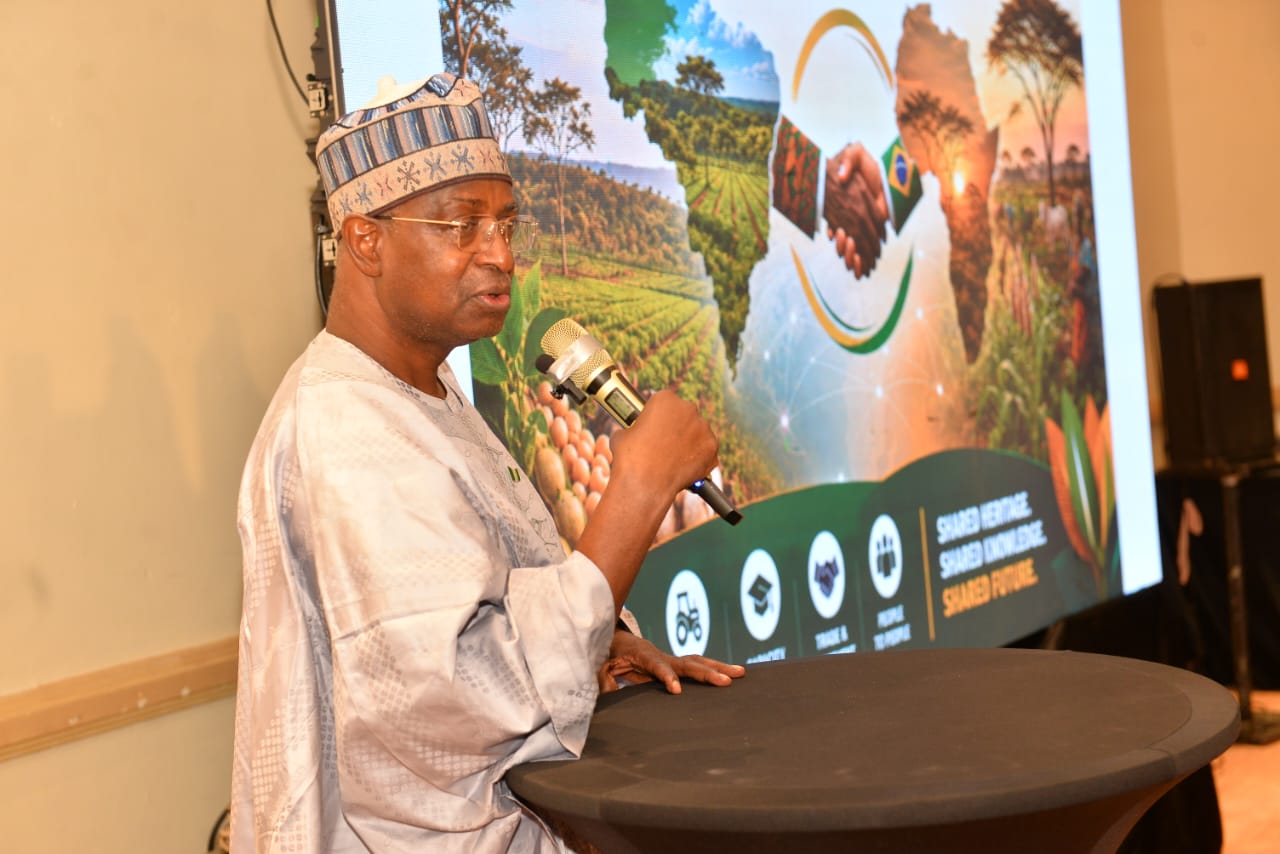
The Honourable Minister of Livestock Development, Alhaji Idi Mukhtar Maiha, made the call while chairing the High-Level Ministerial Session on Africa–Brazil Partnership for Agrifood Systems Transformation during the 9th Africa Agriculture Science Week (AASW9) and the 10th Forum for Agricultural Research in Africa (FARA) General Assembly held in Abuja on 28 July 2026.
In his opening remarks, the Minister described the session as a strategic platform for advancing the long-standing partnership between Africa and Brazil through science, technology, innovation, and knowledge exchange.
He observed that ,both regions share similar ecological conditions, abundant agricultural resources, and enormous production potential, making stronger cooperation essential to addressing food insecurity, reducing poverty, and meeting the growing demand for safe and nutritious food.
Maiha cited Brazil’s transformation of the Cerrado into one of the world’s most productive agricultural regions as compelling evidence of what visionary leadership, sustained investment in agricultural research, and effective collaboration among governments, research institutions, universities, and the private sector can achieve.
He stressed that , Africa possesses the land, human capital, and favourable climatic conditions required to replicate similar success through sound policies, strategic investment, and innovation.
“There is no infertile land; there can only be an infertile mind,” the Minister stated, emphasizing that agricultural transformation begins with a change in mindset, continuous investment in scientific knowledge, adoption of innovative technologies, and the empowerment of young people to drive change across the agricultural value chain.
The Minister identified livestock development as a critical pillar of Africa–Brazil cooperation, noting that partnerships in livestock genetics, pasture development, animal breeding, nutrition, disease control, and modern production systems would significantly improve productivity, strengthen livestock value chains, create jobs, and enhance the livelihoods of millions of livestock producers across Africa.
He added that , stronger collaboration would facilitate technology transfer, strengthen institutional capacity, promote climate-smart livestock production, and build more resilient food systems capable of meeting the continent’s future food and nutrition needs.
Earlier, the session moderator, Abdul-Razak Ibrahim of the Forum for Agricultural Research in Africa (FARA), described Africa and Brazil as natural partners with deep historical, cultural, and scientific ties.
He noted that South–South cooperation provides a practical framework for accelerating agricultural transformation through research collaboration, technology transfer, innovation, and shared learning.
According to Ibrahim, Brazil’s emergence from a food-importing nation to one of the world’s leading agricultural exporters demonstrates the transformative impact of sustained investment in science, technology, research institutions, human capital development, and innovation.
He added that Africa can adapt these experiences while developing solutions tailored to its unique ecological, social, and economic realities.
The ministerial session brought together policymakers, scientists, researchers, development partners, and representatives of governments from Brazil, Nigeria, and across Africa to explore practical strategies for expanding cooperation in agricultural research, livestock development, innovation, and technology transfer.
Discussions focused on strengthening institutional partnerships, promoting collaborative research, enhancing technology exchange, and developing sustainable financing mechanisms to support agricultural research and innovation across the continent.
Participants agreed that Africa’s agricultural transformation will depend on stronger collaboration among governments, universities, research institutions, development partners, and the private sector, while reaffirming that sustained investment in research and innovation remains essential for increasing productivity, improving food security, and creating sustainable livelihoods.
The representative of the Government of Brazil reaffirmed his country’s commitment to expanding technical cooperation with Nigeria and other African nations through knowledge exchange, capacity building, agricultural research, livestock genetics, technology transfer, and institutional support.
He explained that Brazil’s objective is not to replicate its agricultural model in Africa but to work with African countries in adapting proven technologies and innovations to local environmental and socio-economic realities.
Similarly, a representative of the Brazilian Agricultural Research Corporation (Embrapa) highlighted the institution’s success in transforming tropical agriculture through sustained investment in scientific research, skilled manpower, and strong institutional partnerships involving government, academia, producers, and the private sector.
She reaffirmed Embrapa’s commitment to strengthening collaboration with African countries through joint research programmes, scientist exchange initiatives, training opportunities, and the adaptation of innovative technologies to improve livestock production, pasture management, soil health, and climate resilience.
Other panelists underscored the need to strengthen Africa’s research institutions, invest in higher education, expand postgraduate training, encourage youth participation in agricultural science, and promote innovation-driven policies that respond to the continent’s diverse production systems.
Participants also advocated increased domestic investment in agricultural research, stronger public-private collaboration, expanded researcher exchange programmes, and greater support for the Agricultural Research and Innovation Fellowship for Africa (ARIFA), noting that sustained financing for research and innovation is indispensable to achieving long-term agricultural growth, enhanced livestock production, and improved food security.
The session concluded with a renewed commitment by all participants to deepen Africa–Brazil cooperation in science, research, innovation, technology transfer, and capacity development as critical drivers of sustainable agricultural transformation and economic growth across the continent.
Henrietta Okokon
Deputy Director, Information and Public Relations Department
28/7/26