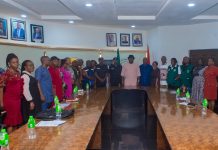



FIC REPORT (LAGOS STATE) – The Federal Airports Authority of Nigeria (FAAN) has intensified efforts to address operational challenges affecting the country’s air cargo sector through renewed engagement with licensed customs agents and freight forwarders operating at the Murtala Muhammed International Airport (MMIA), Lagos.
The initiative is aimed at identifying and resolving bottlenecks that impede the smooth processing and movement of cargo, while improving efficiency, transparency and service delivery across Nigeria’s air cargo value chain.
FAAN considers licensed customs agents and freight forwarders important stakeholders in the cargo ecosystem, given their direct interaction with cargo owners, importers and exporters. According to the authority, their experiences and feedback provide valuable insight into the challenges confronting cargo operations at Nigerian airports.
The Managing Director/Chief Executive of FAAN, Mrs. Olubunmi Kuku, made this known during an engagement with the top 100 licensed customs agents operating at the Pilgrims and Cargo Terminal (PCT) of the Murtala Muhammed International Airport.
Kuku, who was represented at the engagement by the Director, Cargo Development and Services, Mr. Lekan Thomas, emphasised the need for stronger collaboration between FAAN and cargo industry stakeholders.
She, however, stressed that such collaboration must be supported by strict adherence to applicable regulations, airport procedures, security requirements, documentation standards and professional best practices.
Organised by FAAN’s Directorate of Cargo Development and Services, the engagement provided a platform for customs agents and freight forwarders to directly present operational difficulties affecting cargo processing and movement.
The meeting also focused on developing practical solutions that would enhance service delivery and strengthen the overall efficiency of Nigeria’s air cargo ecosystem.
Speaking on the initiative, Thomas explained that the engagement would not be a one-off exercise. He said FAAN was adopting a structured approach whereby concerns raised by stakeholders would be properly documented, referred to the relevant institutions where necessary, and monitored to ensure that progress was made towards resolving them.
The participating customs agents and freight forwarders welcomed the initiative, while calling for sustained engagement between FAAN and stakeholders, as well as stronger coordination among the various government agencies involved in cargo processing.
Among the major challenges highlighted during the engagement were difficulties relating to documentation, cargo processing, access and coordination among agencies operating at the Pilgrims and Cargo Terminal.
Stakeholders noted that addressing these challenges is crucial to Nigeria’s broader trade and economic ambitions. Delays and inefficiencies in cargo handling can increase transaction costs, disrupt supply chains and reduce the competitiveness of businesses that rely on efficient air freight services.
FAAN’s renewed engagement therefore represents part of the authority’s broader efforts to make Nigerian airports more responsive to the needs of the trade and logistics sector.
The initiative is also expected to contribute to improved transparency, security and operational efficiency, while creating a more conducive environment for legitimate trade.
Through its Directorate of Cargo Development and Services, FAAN said it would continue to engage licensed customs agents, freight forwarders and other relevant stakeholders, with particular emphasis on increasing cargo throughput, facilitating legitimate trade and improving the business environment across Nigerian airports.
The development further highlights the strategic importance of an efficient air cargo system to Nigeria’s economic growth, particularly at a time when businesses increasingly depend on reliable logistics networks to transport high-value, time-sensitive and perishable goods both within Nigeria and across international markets.
Sourced and Reported by:
Dimaka Chioma
Deputy Director
Information/ Public Relations.
14 / 09 / 2026 .