


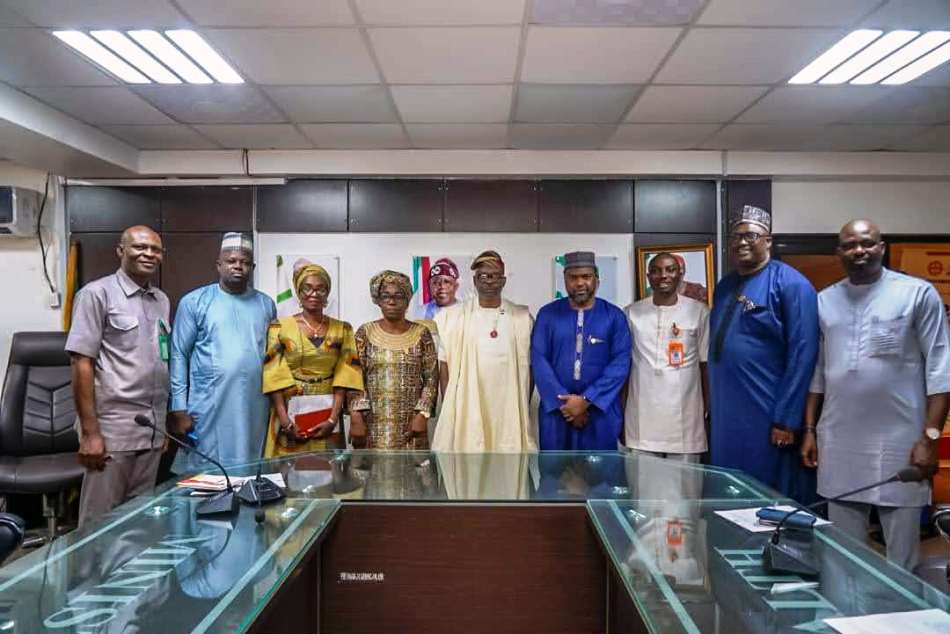
The Federal Government has inaugurated two high-level ministerial committees aimed at addressing long-standing industrial disputes in the health sector, including excessive work hours for health workers, locum engagement practices, and the contentious issue of residency training certification and recategorisation.
The committees were inaugurated in Abuja by the Honourable Minister of State for Health and Social Welfare, Dr. Iziaq Adekunle Salako, who said the intervention was part of the government’s broader efforts to reform the healthcare system, protect health workers’ welfare, and ensure patient safety.
Speaking at the ceremony, Dr. Salako said the issues being addressed have repeatedly strained relations between government and health sector unions, noting that prolonged work hours, uneven locum engagement practices, and certification concerns for resident doctors have remained flashpoints for industrial actions.
According to him, the first committee — the Ministerial Committee on Work Hour Regulation and Locum Engagement Policy — was constituted to respond to concerns over exhausting duty schedules and inconsistent engagement of health workers as locum officers across public hospitals.
The Honourable Minister asserted that excessive work hours pose risks not only to the mental and physical wellbeing of health workers but also to patient safety, especially against the backdrop of a global shortage of health personnel. He cited World Health Organisation estimates that the global health workforce gap could reach 11 million by 2030, with Nigeria particularly affected by migration of professionals to Europe, North America and other developed economies.
He said the Federal Government has, in the last 21 months, adopted several measures to strengthen the health workforce, including the Health Workforce Migration Policy, easing bureaucratic bottlenecks to employment, improving remuneration, and expanding training quotas. He disclosed that 14,444 health workers were employed in 2024, while 23,059 employments were approved in 2025, with over 70 per cent being clinical staff.
Despite these efforts, Salako acknowledged that locum engagement of health workers as a stopgap measure has been inconsistently applied and, in some cases, abused, necessitating a clear national policy framework.
The committee is mandated to conduct a nationwide audit of work hours and shift patterns, assess their impact on patient outcomes and workers’ wellbeing, engage stakeholders, and develop a national policy on safe hospital work hours, rostering and locum engagement, including maximum duty hours, rest periods, and transition pathways from locum to permanent employment. It is expected to submit its first report within 12 weeks.
Elaborating further, Dr. Salako assured health workers and stakeholders that the recommendations of the committees would receive urgent government attention and form part of a “new deal” for health professionals, aimed at reducing industrial unrest and strengthening healthcare delivery nationwide.
The committee is chaired by the Director of Hospital Services at the Federal Ministry of Health and Social Welfare and includes representatives from regulatory bodies, hospital management, health unions and professional associations.
The second committee — the Appraisal Committee on Certification and Recategorisation Policy — is tasked with reviewing complaints by resident doctors over the non-issuance and recategorisation of membership certificates by the Medical and Dental Council of Nigeria (MDCN) and the National Postgraduate Medical College of Nigeria (NPMCN).
The Honourable Minister said the committee would conduct a transparent appraisal of existing policies and the requests by the National Association of Resident Doctors (NARD), particularly on the issuance of membership certificates after passing Part I examinations. The committee, chaired by Professor Muhammad Raji Mahmud, Chief Medical Director National Hospital Abuja, is expected to submit its recommendations within eight weeks.
In their acceptance speeches, the chairpersons of both committees pledged diligence, empathy and fairness in carrying out their assignments. The Director Hospital Services Department, Federal Ministry of Health and Social Welfare Dr. Abisola Adegoke mni, chair of the Work Hour Regulation and Locum Engagement Committee, said the panel would put “a human face” to its work, drawing from life experiences of overworked resident doctors.
While Professor Mahmud, CMD NHA, assured that the certification review process would be guided strictly by principles of justice and equity across the profession.
In a vote of thanks, the Director of Regulatory and Professional Schools Division (Hospital Services Department) FMoHSW, Dame Francisca Okafor, commended the Minister for what she described as decisive leadership, noting that the committees represent a critical step toward restoring harmony, dignity and stability in Nigeria’s health sector.
Signed
Alaba Balogun
Director, Information & Public Relations
16 January 2026