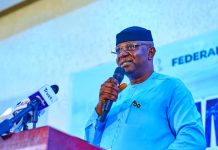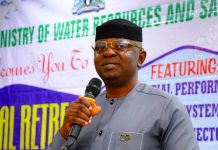



The Federal Ministry of Special Duties and Inter-Governmental Affairs today convened the 2025 Stakeholders’ Interactive Forum on the implementation of Zonal Intervention/Constituency Projects at the OSGF Conference Hall, Abuja.
Declaring the forum open, the Honourable Minister, Hon. Zephaniah Bitrus Jisalo, MFR, represented by the Permanent Secretary, in his keynote address emphasized the critical role constituency projects play in strengthening community development, improving service delivery, and advancing President Bola Ahmed Tinubu’s Renewed Hope Agenda. He noted that the forum serves as a platform for constructive dialogue, accountability, and coordination among implementing agencies, legislators, oversight bodies, and community representatives. The Minister reiterated the Ministry’s commitment to ensuring that constituency projects are executed transparently, efficiently, and in alignment with national priorities, stressing that effective collaboration remains key to achieving sustainable development across the nation.
Delivering the welcome address, the Permanent Secretary of the Ministry, Dr. Onwusoro Maduka Ihemelandu, expressed appreciation to stakeholders for their participation and continued dedication to improving service delivery through constituency and zonal intervention projects. He highlighted the Ministry’s coordinating role in ensuring synergy between MDAs, lawmakers, and communities, noting that the Ministry remains firm in strengthening systems that guarantee accountability, improve project selection processes, and enhance community engagement. Dr. Ihemelandu reaffirmed that the Ministry will continue to foster partnerships that support economic growth and social development consistent with the Renewed Hope Agenda.
The forum also featured an insightful appraisal by Prof. Abdullahi Saleh Bashir of the University of Abuja, who provided a comprehensive overview of constituency projects and their importance in grassroots development. He explained that constituency projects are federally funded interventions nominated by legislators to address specific community needs such as education, healthcare, water supply, and rural electrification. Prof. Bashir identified significant positive impacts, including improved access to essential services, stimulation of local economies, and reduction of infrastructural deficits. He further examined President Tinubu’s Renewed Hope Agenda, emphasizing how constituency projects support its pillars of economic revitalization, inclusion, and social welfare. He noted the coordinating role of the Ministry of Special Duties in ensuring quality implementation and concluded that “all stakeholders must rally round the current government to ensure that Nigerians in all parts of the country benefit from constituency projects as coordinated by the Federal Ministry of Special Duties.”
Earlier on, the Speaker of the House of Representatives, Rt. Hon. Abbas Tajudeen, PhD, GCON, represented by Hon. George Ibezimako in his Goodwill Message highlighted the legislature’s unwavering support for constituency projects and their role in promoting the Renewed Hope Agenda. According to him, “it is therefore clear that the effective implementation of constituency projects can easily provide the necessary support for the Renewed Hope Agenda, especially as small-scale businesses need basic infrastructure like light, water, and transportation to thrive.” He emphasized that the House of Representatives remains committed to ensuring that Nigerians receive the quality of projects they deserve and will continue to support all efforts that enhance transparency, accountability, and value for public resources.
A detailed paper presentation was delivered by Director Bello Idris representing the Chairman, (ICPC), focusing on the appraisal of Constituency and Zonal Intervention Projects in relation to the Renewed Hope Agenda. The presentation covered the definitions and objectives of Zonal Intervention Projects (ZIPs) and constituency projects, highlighting their positive impacts such as improved infrastructure, enhanced service delivery, community empowerment, and local employment creation. ICPC discussed alignment with the Renewed Hope Agenda, particularly in promoting transparency, inclusiveness, and equitable development. The Commission also identified challenges such as poor needs assessment, delayed releases, contractor inefficiencies, and weak monitoring. It emphasized the Ministry’s mandate for verification, certification, and inter-agency coordination, underscoring the importance of rigorous oversight. Recommendations were offered to strengthen project execution, enhance community participation, and deepen collaboration among MDAs, legislators, and anti-corruption agencies.
The forum progressed into an interactive session where members of the Stakeholders’ Forum engaged in robust discussions. Participants asked questions, shared insights, and offered recommendations aimed at improving project monitoring, enhancing transparency, and ensuring timely delivery. Contributions reflected a shared commitment to improving the impact of constituency projects nationwide and strengthening public trust in government interventions.
Signed:
Maryam Gambo
AD (Press & Public Relations Unit)
December 11, 2025.