


The Director-General of the National Boundary Commission (NBC), Surv. Adamu A. Adaji, has reaffirmed the Federal Government’s resolve to bring the protracted Edo/Kogi interstate boundary dispute to a definitive close, announcing fresh steps toward full physical demarcation.
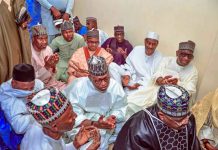
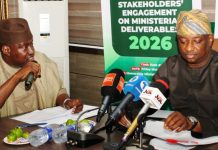
Speaking at the Joint Meeting of Officials on the Edo/Kogi Interstate Boundary held on Wednesday in Abuja, Adaji said the Commission was determined to execute all outstanding activities on the boundary and move the process to its logical conclusion.
He traced the historical roots of the boundary to Legal Notice 126 of 1954, which defined the boundary between the former Northern and Western Regions, a colonial administrative line that later crystallised into the present Edo/Kogi interstate boundary.
According to him, the major challenge over the decades has been the interpretation of the technical description contained in that legal instrument.
The Director-General disclosed that the Commission had convened multiple Joint Meetings of Officials and technical sessions over the years, including the last major engagement in Benin City in September 2011.
He noted that the boundary had already been physically traced and provisionally demarcated, with the Internal Boundaries Technical Committee approving the recommended alignment after reviewing fieldwork reports.
However, he identified obstacles that have impeded swift progress, including inadequate sensitization of border communities, interference from local elites and traditional institutions, funding limitations, and widespread misconceptions linking boundary definition to ownership of natural resources.
Adaji announced that the next phase would involve the installation of approximately 100 primary boundary pillars at two-kilometre intervals and about 900 intermediate pillars at 200-metre intervals to ensure clarity and permanence on the ground.
He appealed to both states, traditional rulers, and stakeholders to maintain peace and cooperation, stressing that a stable boundary regime requires collective responsibility at federal, state, and local levels.
In his remarks, the Deputy Governor of Edo State, His Excellency Hon. Dennis Idahosa, recalled that the boundary resolution process commenced with provisional tracing based on Legal Notice No. 26 of 1954, which defined the former Northern and Western Regions boundary and later became the Edo/Kogi boundary.
He stated that subsequent deliberations led to mutual agreement on virtually all segments of the boundary, except the Ake axis, which remains contentious.
The meeting was reminded that the agreed boundary alignment was formally endorsed on 28th February 2006, a milestone that paved the way for practical steps toward physical demarcation.
Following that endorsement, a contract was awarded in December 2006 for the beaconing of the boundary.
However, Idahosa revealed that the monumentation exercise was stalled in 2007 after violent attacks were carried out on surveyors engaged for the assignment, forcing a suspension of the work.
He emphasized the urgent need to address the factors responsible for the non-completion of the monumentation exercise, particularly security concerns.
The Deputy Governor called for the immediate recommencement and successful completion of the beaconing process in line with the previously agreed alignment.
He reaffirmed the commitment of the Edo State Government to work closely with the NBC and Kogi State to ensure a peaceful and final resolution of the boundary question, expressing optimism that the current deliberations would strengthen inter-state cooperation.
Also speaking, the Deputy Governor of Kogi State, His Excellency Comrade Joel Salifu Oyibo, described the meeting as timely and necessary in light of recurring tensions along parts of the boundary corridor.
He acknowledged that while the boundary dates back to the old Northern and Mid-Western regional divide, recent years have witnessed claims, counterclaims, and intermittent conflicts in certain sectors.
Salifu noted that earlier attempts to monument the boundary were hindered by inadequate sensitization of border communities and unresolved grey areas that generated suspicion.
He urged the NBC and the Office of the Surveyor-General of the Federation to revisit contentious segments to earn the trust and cooperation of affected communities.
The Kogi Deputy Governor identified major flashpoints, including the Ogori-Ekpedo and Okene-Okpella sectors, as well as the disputed Ake Island.
He also drew attention to emerging tensions between communities in Ibaji Local Government Area of Kogi State and Esan South-East Local Government Area of Edo State over farmland ownership.
He further observed that an ethnographic survey conducted in 2016 by the NBC in collaboration with both states had yet to be formally communicated, and called for the findings to be shared.
He further advocated the establishment of an inclusive demarcation team incorporating representatives of traditional institutions and other key stakeholders to guarantee transparency and local buy-in.
The renewed engagement signals a coordinated effort by the Federal Government and the two states to finally settle the Edo–Kogi interstate boundary, reduce flashpoints, and institutionalize a clearly marked and peaceful boundary regime for affected communities.
Signed
Efe Ovuakporie
Head Information and Public Relations Unit
27th February 2026