

FIC Report (Kaduna State) – The Honourable Minister of Information and National Orientation, Mohammed Idris, has warned that false information poses serious moral and national challenges, and has urged Nigerian youths and other citizens to verify information before sharing them.
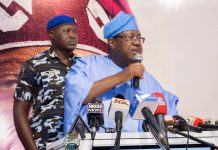
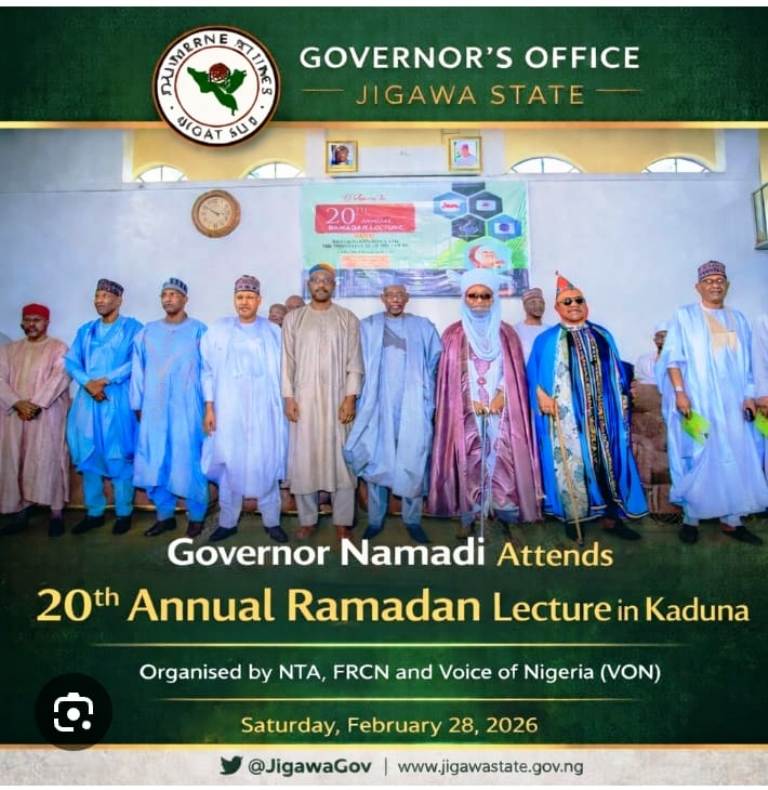
Speaking at the 20th Joint Ramadan Lecture organised by the Nigerian Television Authority (NTA), Federal Radio Corporation of Nigeria (FRCN) and Voice of Nigeria (VON) in Kaduna.
He cautioned that the misuse of digital platforms could deepen division and undermine national unity if not guided by responsibility and truth.
Mohammed emphasised that while digital technology presents major opportunities, it also comes with moral tests that require discipline and accountability, adding that verification had become a compelling civic and moral responsibility.
He also highlighted scores of youth empowerment programmes under President Bola Tinubu that leverage technology as a pathway to economic opportunity.
Idris listed initiatives such as the 3 Million Technical Talent (3MTT) programme, the Nigerian Education Loan Fund (NELFUND), and the establishment of Africa’s first Media and Information Literacy Institute.
Minister said media literacy is the vaccine against misinformation, and these efforts are designed to equip young Nigerians with the skills needed to succeed in the digital economy.
He noted that Nigeria’s youthful population remained one of its greatest strengths, but warned that the country’s future depends on how well young people are guided and supported.
Mohammed mentioned that a nation that fails its youth has no future. We are systematically investing in an ecosystem where digital technology becomes a ladder of opportunity.
He urged young Nigerians to use digital platforms for constructive purposes, including education, innovation, and national development.Verify before you amplify. Pause. Interrogate the source.
Malagi added that digital tools must be used to promote unity, knowledge, and progress rather than division.
He also underscored Nigeria’s designation by UNESCO as host of Africa’s first Media and Information Literacy Institute, describing it as a strategic milestone that will equip citizens with critical thinking skills necessary to withstand digital manipulation and information disorder.
Honourable minister reaffirming government commitment, and emphasised that safeguarding the nation’s moral and informational space cannot be left to the government alone.
He called on parents, educators, religious leaders, media practitioners, and young people themselves to embrace collective responsibility in building a digitally empowered yet morally grounded society.
He concluded by urging Nigerians to recognise that faith and patriotism are complementary, stressing that responsible citizenship and spiritual consciousness must guide engagement in the digital space
In his Address the Director-General of the Voice of Nigeria (VON), Mallam Jibrin Baba Ndace, has called for a moral reawakening in the digital age, stressing that technological advancement must be anchored on strong ethical values to safeguard the future of Nigerian youth.
Ndace made the call during his welcome address at the 20th Annual Ramadan Lecture held in Kaduna. Themed “Digital Technology and the Moral Future of the Youth,” the event convened scholars, policymakers, traditional rulers and media executives to examine the growing influence of digital technology on young people.
He observed that Nigeria’s youth are among the most digitally connected in Africa, describing them as creative, innovative and ambitious.
He cautioned that while digital technology offers enormous opportunities for education, entrepreneurship and global engagement, it also exposes young people to misinformation, cybercrime and moral disorientation.
Ndace noted that it becomes constructive or destructive depending on how it is used. The real task before us is to ensure that digital literacy is accompanied by moral literacy.
He emphasised that public service broadcasters, including the Nigerian Television Authority (NTA) and the Federal Radio Corporation of Nigeria (FRCN), have a responsibility not only to inform but also to promote national unity, ethical standards and responsible digital engagement.
Jibrin commended the Honourable Minister of Information and National Orientation, Mohammed Idris, for his strategic leadership in repositioning public broadcasting. He also aligned the theme of the lecture with the Renewed Hope Agenda of President Bola Ahmed Tinubu, particularly its focus on youth empowerment, digital transformation and national reorientation.
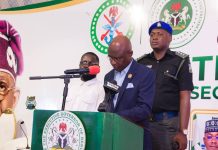
In his remarks, the Jigawa State Governor, Umar Namadi, called for stronger policies and collective action to guide the moral development of young people in the digital era.
He acknowledged that although digital technology presents vast opportunities for learning and innovation, it also exposes youth to harmful content and negative influences.
Umar advocated digital citizenship education and the development of regulatory frameworks to manage children’s access to social media.
He urged stakeholders including parents, educators and media practitioners to work collaboratively to instil ethical values and responsible online behaviour.
Governor Namadi further disclosed that his administration is partnering with relevant agencies to equip young people with skills in emerging fields such as artificial intelligence, blockchain and technology outsourcing. He added that programmes promoting discipline, social orientation and positive values are also underway.
Also the Kaduna State Governor, Uba Sani, urged Nigerians to use the Ramadan season as a period for unity, tolerance and responsible use of digital technology. Represented by the Director-General of the Kaduna State Bureau for Interfaith, Tahir Umar Tahir, the governor reaffirmed his administration’s commitment to supporting religious education and initiatives that promote peaceful coexistence.
The Director-General of the Nigerian Television Authority, Salihu Abdulhamid, expressed appreciation to participants and reiterated the commitment of public broadcasters to delivering accurate, timely and value-driven information in the interest of national cohesion.
The keynote lecture was delivered by Professor Umaru Pate, Vice-Chancellor of the Federal University Kashere, while the event attracted an array of distinguished personalities, including traditional rulers, government officials and members of the diplomatic corps.
The annual Ramadan Lecture, jointly sustained for two decades by VON, NTA and FRCN, continues to serve as a respected platform where faith, governance and media converge to address pressing moral and social challenges confronting the nation.
Signed:
Muhammad Gwani
AD FIRC Kaduna.
28th February, 2026.