

………Agbakoba Says Cargo Certainty, Not Government Funding, Will Make Nigerian Vessels Financeable.
The Federal Government has intensified efforts to operationalise the Cabotage Vessel Financing Fund (CVFF), with the Minister, Federal of Marine and Blue Economy, Dr Adegboyega Oyetola, CON, directing the Nigerian Maritime Administration and Safety Agency (NIMASA) to accelerate the disbursement process for qualified indigenous shipowners.
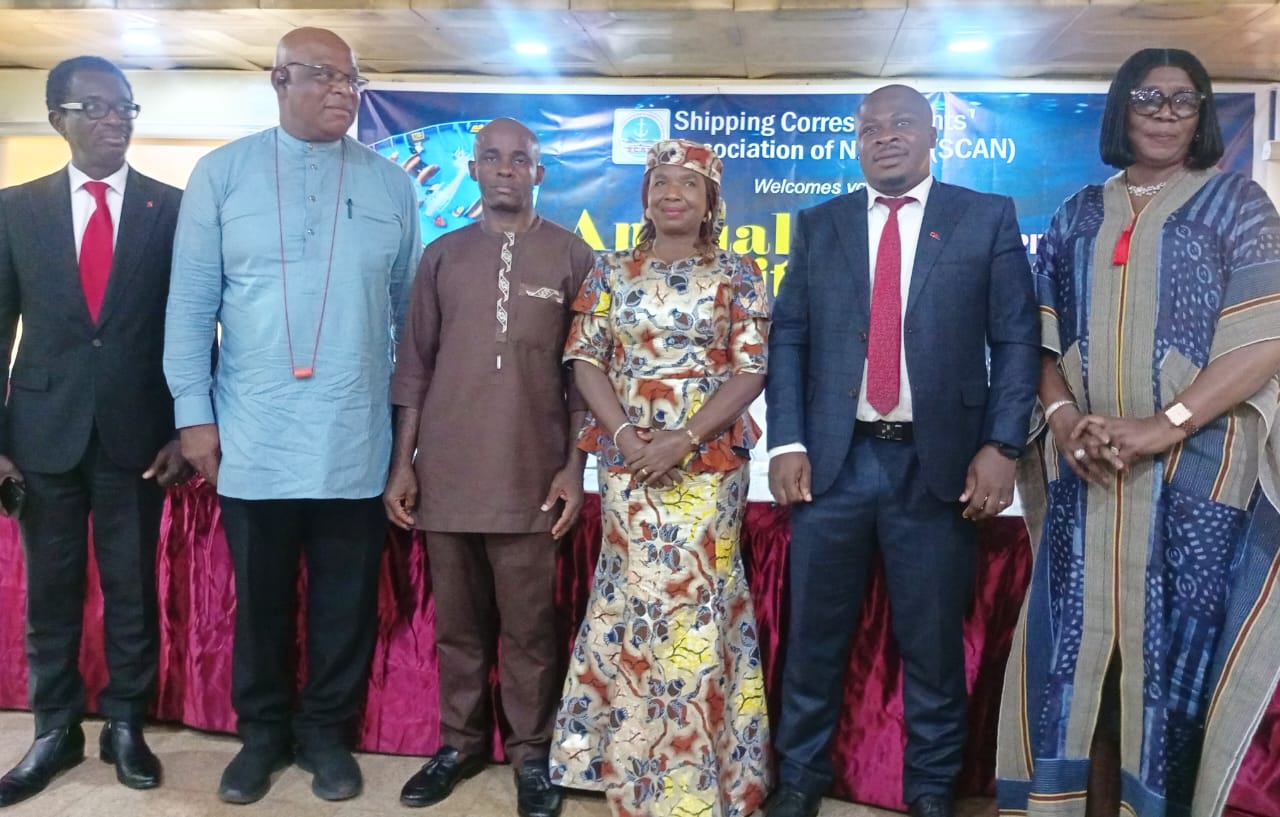
Oyetola disclosed this on Thursday at the 2026 Annual Summit of the Shipping Correspondents Association of Nigeria (SCAN), held at Rockview Hotel, Apapa, Lagos, under the theme, “Low-Risk Capital for Indigenous Shipowners: Overcoming Regulatory and Financial Bottlenecks.”
The Minister, who was represented by the Director, Information and Public Relations, Federal Ministry of Marine and Blue Economy, Anastasia Ogbonna, said the Government had taken steps to improve access to the Fund, established under the Coastal and Inland Shipping (Cabotage) Act, 2003.
He recalled that a dedicated CVFF application portal was launched in January 2026 and the number of approved Primary Lending Institutions increased from five to twelve to promote transparency, accessibility and efficiency.
Describing the Fund as a strategic instrument for developing indigenous shipping capacity, Oyetola said its sustainability required transparent administration, rigorous due diligence, prudent risk management and responsible repayment.
He urged banks to develop financing products suited to maritime investments and challenged shipowners to demonstrate sound corporate governance, technical competence and commercial discipline.
Beyond the CVFF, the Minister said the Government was exploring a commercially driven national shipping line under a public-private partnership framework, with private capital, professional management and international expertise.
The initiative, he said, would complement indigenous operators, expand Nigeria’s shipping capacity and create more opportunities for Nigerian seafarers.
Meanwhile, stakeholders at the summit called for private-sector-driven financing mechanisms to complement public funding and address the high cost of capital confronting indigenous shipowners.
Chairman of the summit and former Director-General of NIMASA, Temisan Omatseye, identified crude oil lifting, cargo generated by the Dangote Refinery, liquefied natural gas shipments and solid minerals evacuation as opportunities capable of sustaining indigenous shipping.
He stressed the need for reliable cargo data and information on vessel demand to help shipowners develop bankable proposals and enable financial institutions to structure appropriate financing.
Delivering the keynote address, Dr.Olisa Agbakoba, SAN, said Nigeria did not need the Government to finance every vessel but needed cargo certainty, bankable shipping contracts and regulatory confidence to attract private capital.
He explained that vessels without dependable employment would struggle to secure financing, while credible cargo commitments and predictable revenue would make investments more attractive to lenders.
Agbakoba called for consistent enforcement of the Cabotage Act, 2003, and the Nigerian Oil and Gas Industry Content Development Act, 2010, transparent administration of applicable waivers and stronger coordination among , the Federal Ministry of Marine and Blue Economy, Nigerian Maritime Administration and Safety Agency, Nigerian Ports Authority and NPERA.
He described the CVFF as an important financing instrument but maintained that it should complement commercial bank lending, development finance and private investment rather than substitute for a functioning shipping market.
“Public financing should support viable projects and mobilize private capital, not substitute for a functioning commercial shipping market,” he said.
Agbakoba proposed six priority actions, including; cargo-backed vessel financing, improved indigenous access to cargo, stronger regulatory coordination, mobilisation of private capital, development of local maritime technical capacity and an implementation framework with measurable timelines.
He concluded that Nigeria’s national fleet ambition depended on connecting cargo demand with suitable vessels, competent operators and willing financiers.
“The Government does not need to finance every Nigerian vessel. The Government needs to create cargo and regulatory certainty that makes Nigerian vessels financeable,” he said.
Also speaking, the Director-General, Nigerian Ports Economic Regulatory Agency, Dr. Pius Akutah Ukiyem, said financing alone would not resolve the challenges facing indigenous shipping, noting that port charges, service quality and vessel turnaround times also influence operating costs, stressing the importance of predictable and transparent port economic conditions.
The Regional Manager, Apapa, United Bank for Africa Plc, Mr Nelson Edoye, representing Group Managing Director Oliver Alawuba, said the bank remained committed to supporting indigenous participation through tailored financing and trade facilitation.
Earlier, SCAN President Moses Ebosele called for urgent action to address inadequate access to affordable finance, administrative bottlenecks and limited cargo opportunities. He urged stakeholders to recognise indigenous shipping as a strategic national economic asset and work towards building a competitive Nigerian fleet.
Anastasia Ogbonna
Director, Information &PR
anastasia.ogbonna@fmmbe.gov.ng