

FIC Report (Edo State) – The Senator representing Edo South Senatorial District, Neda Imasuen, has revealed that the administration of President Bola Ahmed Tinubu has introduced major reforms aimed at addressing the persistent migration of Nigerian academics abroad, widely referred to as the “Japa syndrome.”
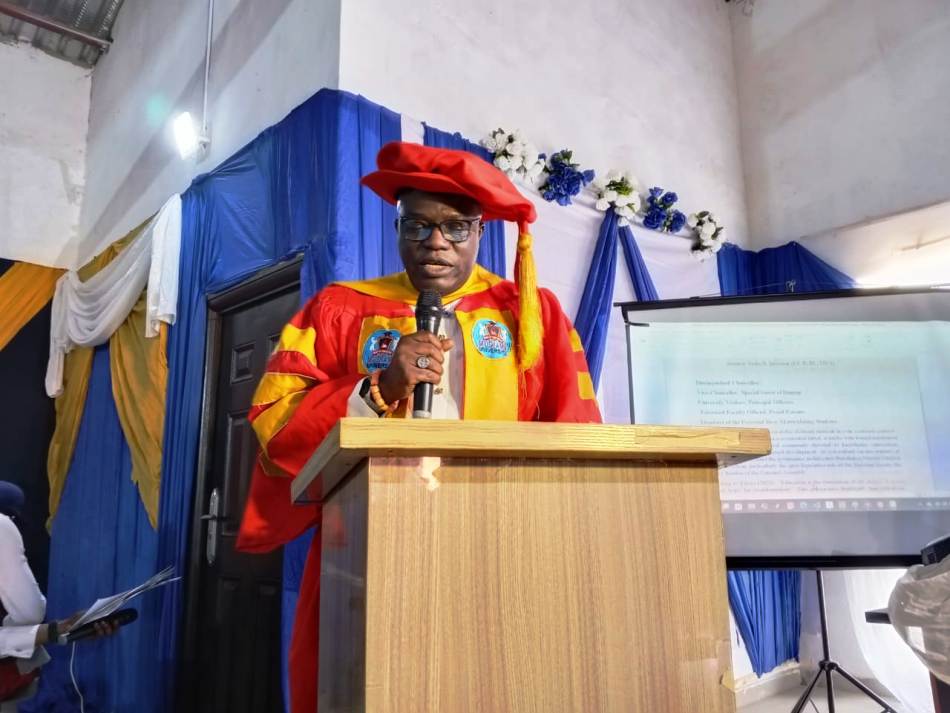
Speaking at the 5th Matriculation Ceremony and the groundbreaking of the College of Medicine Administrative Building and Department of Anatomy Laboratory at Mudiame University in Irrua, Edo State, the lawmaker disclosed that the Federal Government has approved a 40 percent salary increase for university lecturers, effective January 1, 2026.
According to him, the salary adjustment followed the renegotiation of the government’s agreement with the Academic Staff Union of Universities (ASUU), and is part of efforts to improve lecturers’ welfare and discourage the migration of skilled academics to other countries.
Imasuen explained that the new agreement also strengthens the Consolidated Academic Tools Allowance, enabling lecturers to access better funding for research, publications, academic conferences, and professional development.
He further disclosed that the Federal Government has released ?2.3 billion to federal universities to settle outstanding staff arrears in order to restore confidence and financial stability within the university system.
The senator noted that under the administration’s Renewed Hope Agenda, broader reforms are also being implemented to strengthen tertiary education through improved infrastructure and increased research funding via the Tertiary Education Trust Fund (TETFund).
He said the intervention agency is now more focused on promoting academic excellence, supporting high-impact research, and expanding institutional capacity across Nigerian universities.
To encourage international academic collaboration, Imasuen said the Federal Government has also launched the BRIDGE Diaspora Platform, an initiative designed to connect Nigerian academics in the diaspora with local universities for research partnerships and knowledge exchange rather than permanent migration.
He added that workforce development initiatives, particularly in critical sectors such as medicine, are also being expanded to strengthen local training capacity.
Speaking on the constitutional responsibilities of the Senate, the lawmaker explained that the upper legislative chamber plays a key role in lawmaking, oversight of government agencies, and approval of national budgets and public expenditure.
According to him, the Senate has contributed significantly to the development of higher education through legislation guiding regulatory institutions such as the National Universities Commission and strengthening admission processes managed by the Joint Admissions and Matriculation Board.
He added that the Senate also determines education funding through the appropriation process, conducts oversight to ensure accountability in tertiary institutions, and confirms key presidential appointments affecting university governance.
Imasuen highlighted ongoing legislative efforts aimed at strengthening research and innovation, encouraging university–industry collaboration, and promoting digital transformation in higher education through technology-driven learning models.
He also pointed to recent initiatives expanding access to educational financing, including the student loan programme administered through the Nigerian Education Loan Fund.
Despite these reforms, the senator acknowledged that Nigeria’s higher education sector still faces major structural challenges, including inadequate funding, rising population pressure on admission spaces, limited institutional capacity, and the continued migration of skilled academic personnel.
“These challenges are interconnected and systemic. Only through deliberate policy coordination, adequate funding, and institutional accountability can Nigeria reposition its higher education system to meet national development goals and global standards,” he said.
Imasuen also commended Edo State Governor, Monday Okpebholo, for aligning with the Federal Government’s Renewed Hope Agenda and for efforts to strengthen Ambrose Alli University.
Representing the governor at the event, the Edo State Secretary to the Government, Musa Ikhilor, praised the senator for his contributions to national development and reaffirmed the state government’s commitment to supporting educational institutions.
He disclosed that the Edo State Government is finalising a partnership with the Edo Specialist Hospital to serve as a temporary training facility for medical students of Mudiame University pending the completion of the institution’s teaching hospital.
Earlier, the Vice-Chancellor of the university, Emmanuel Aluyor, commended the Edo State government for its commitment to education and described the governor’s leadership as transformative for institutions in the state.
Aluyor also urged newly admitted students to remain focused on their studies and avoid activities that could jeopardise their academic future.
In his remarks, the Chancellor of the university, Sunny Eromosele, encouraged the students to take pride in studying at the institution, noting that the university adopts inclusive teaching methods and maintains international collaborations, including partnerships with universities in Sweden.
The event also featured the foundation-laying ceremony for the College of Medicine building and was attended by several dignitaries, including the Chief Medical Director of Irrua Specialist Teaching Hospital, Reuben Agbons Eifediyi, traditional rulers, and other stakeholders in the education sector.
Signed:
Omoluogbe Ruth
FIC Benin city
8th March, 2026