
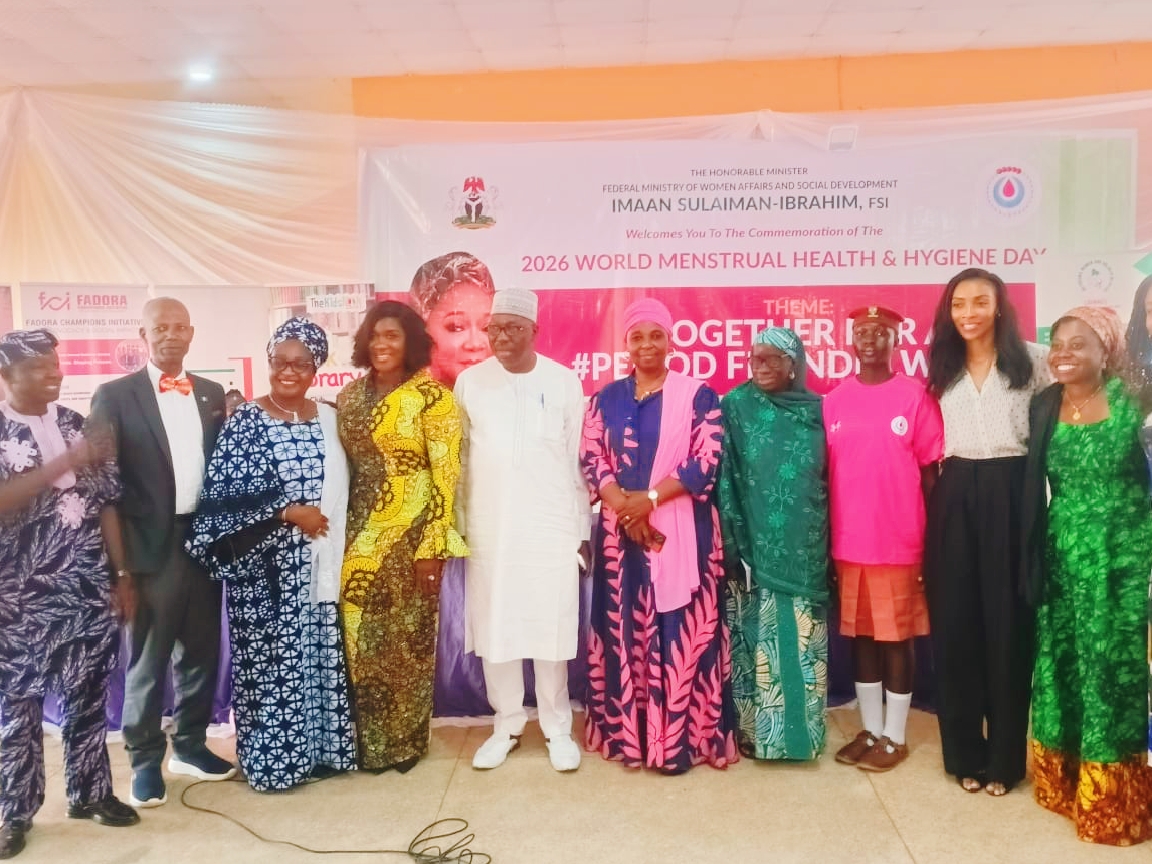
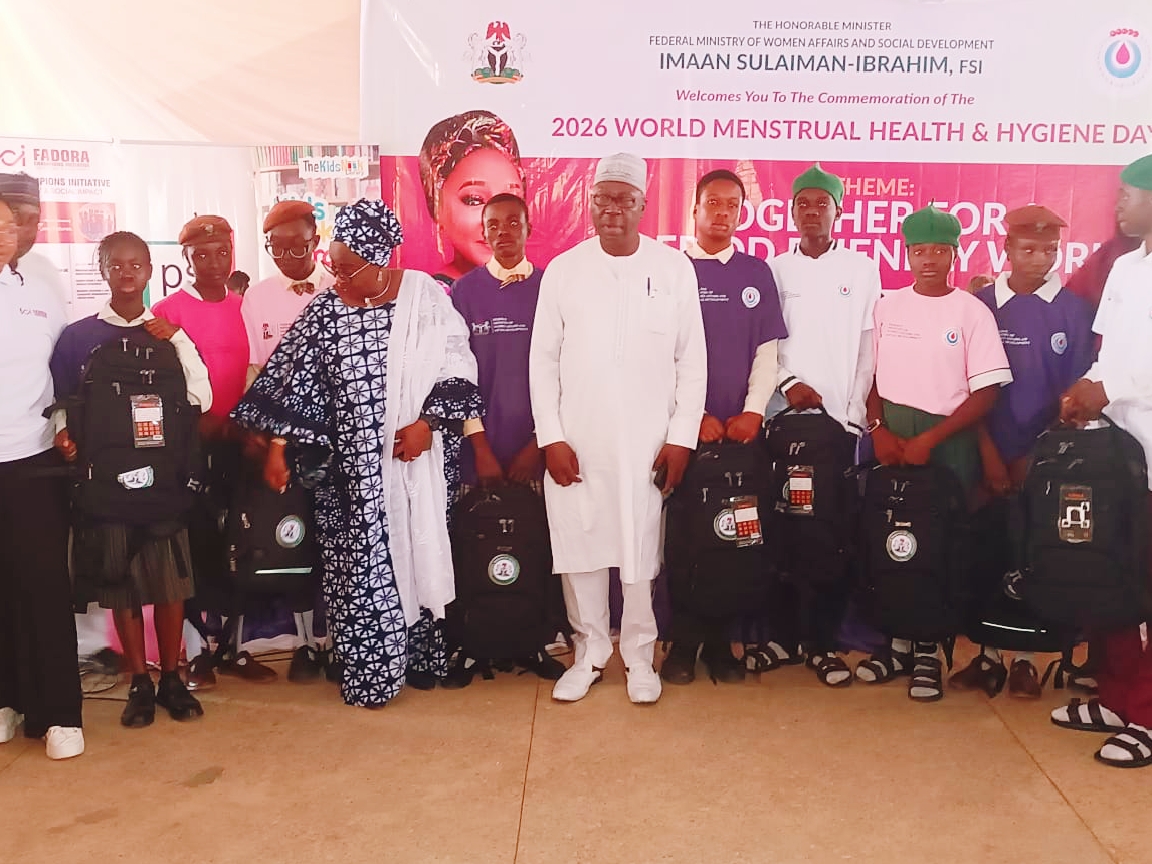
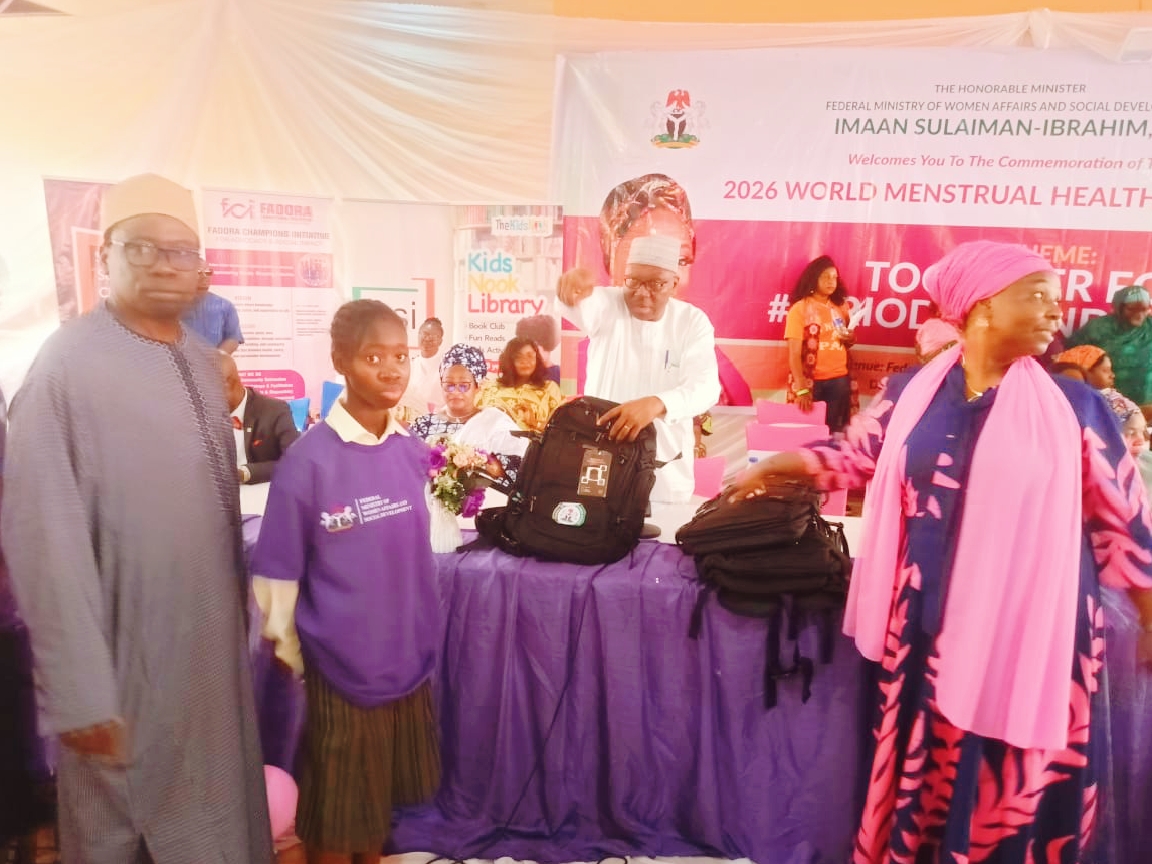
The Federal Government has reaffirmed its commitment to ending period poverty, dismantling menstrual stigma, to and ensuring that every Nigerian girl has access to menstrual health education, sanitary products, and supportive learning environments, as stakeholders gathered at the Federal Government Girls College (FGGC), Bwari, Abuja, to commemorate the 2026 World Menstrual Health and Hygiene Day.
The event, organized by the Federal Ministry of Women Affairs and Social Development in collaboration with the Federal Ministry of Education and development partners, was held under the global theme, “Together for a #PeriodFriendlyWorld.”
Honourable Minister of Women Affairs and Social Development, Hajiya Imaan Sulaiman-Ibrahim, FSI, delivered the keynote address through the Director of Child Development, Mr. Ali Andrew Madugu, emphasizing that menstrual health is a matter of dignity, education, public health, and human rights.
“Every girl represents a future of promise, dignity, and national possibility. Menstruation is natural, universal, and must never be a source of shame or exclusion,” she stated.
The Minister noted that while an estimated 1.8 billion girls and women globally menstruate, over 20 million girls under the age of 18 in Nigeria continue to face challenges such as stigma, inadequate sanitation facilities, limited access to sanitary products, and school absenteeism due to menstruation.
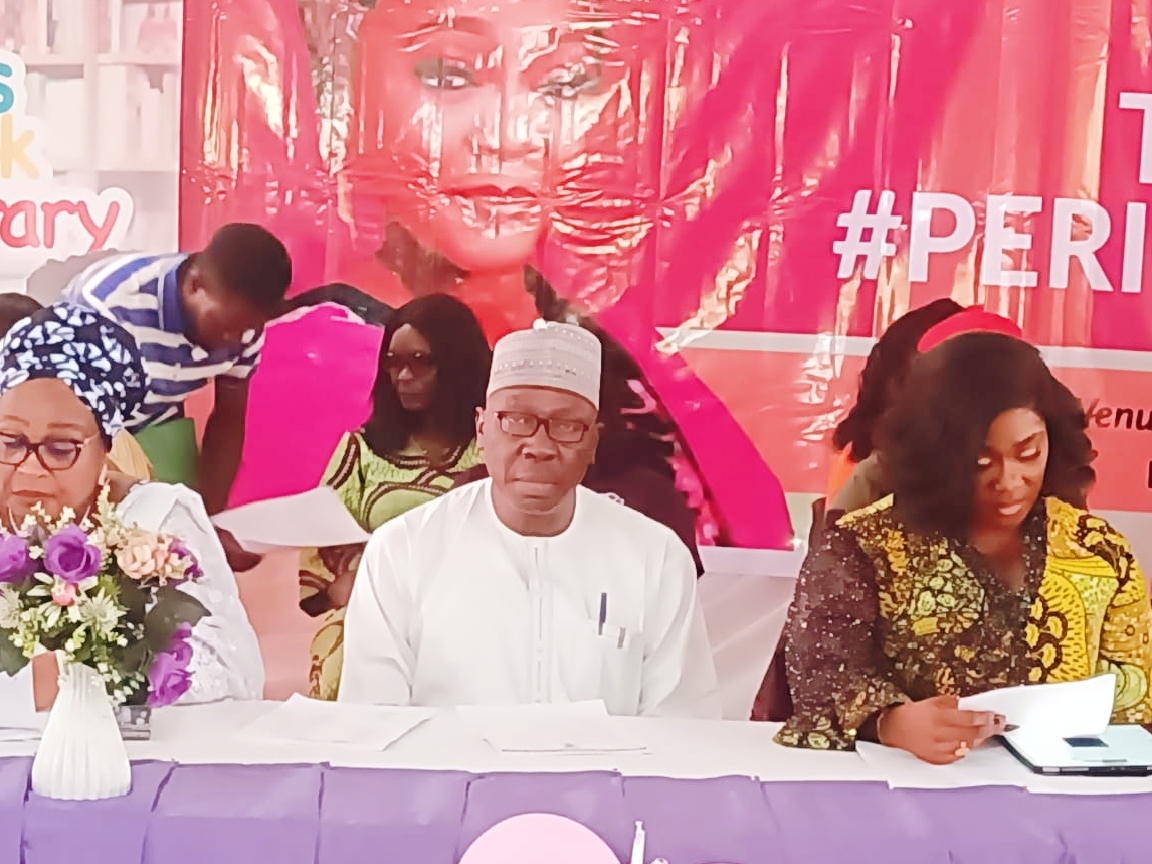
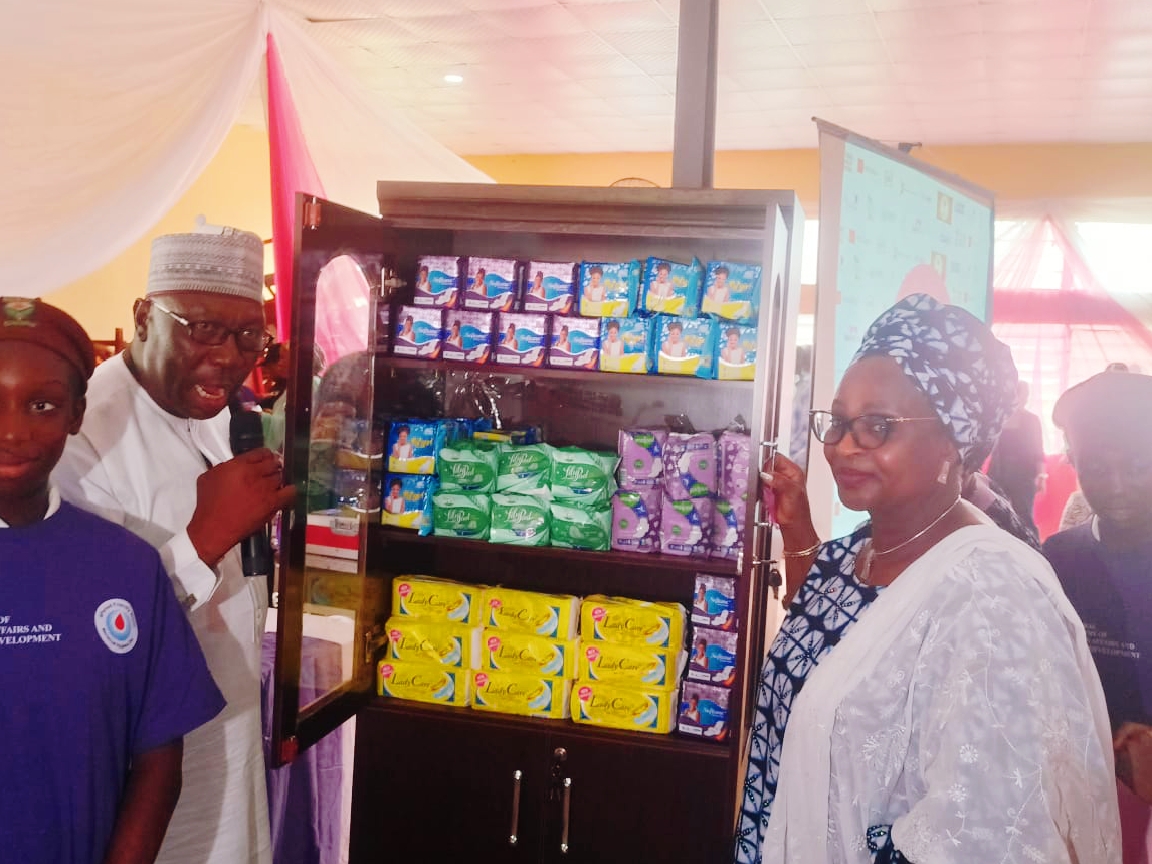
She highlighted the Federal Government’s landmark achievements in developing and launching Nigeria’s first National Policy and Implementation Strategy on Menstrual Health and Hygiene Management, which she described as a coordinated framework aimed at improving education, access, infrastructure, and stigma reduction.
“The Federal Government has elevated menstrual health as a national development priority. Through targeted interventions, including the establishment of Pad Banks in schools, we are building what I call dignity infrastructure to ensure that no girl’s education is interrupted because of menstruation,” the Minister said.
The Ministér further disclosed that through the Renewed Hope Social Impact Intervention (RHSII-774) initiative under President Bola Ahmed Tinubu’s Renewed Hope Agenda, the government is expanding access to education, healthcare, nutrition, and social protection services for girls and vulnerable populations across all 774 Local Government Areas.
She called for collective responsibility and urged government institutions, families, schools, faith leaders, communities, and development partners to work together in guaranteeing menstrual dignity and educational inclusion for all girls.
“Your voice matters, your dreams are valid, and your future is bright. Your circumstances do not define your destiny,” she encouraged the students.
In welcome remarks, the Permanent Secretary, Federal Ministry of Women Affairs and Social Development, Mrs.Esuabana Nko Asanye, represented by Mrs. Saeed Maimunat, who
oversees the Office of the Director of Special Duties, stressed that menstrual health remains fundamental to achieving gender equality, improving educational outcomes, and advancing national development.
“Together for a Period-Friendly World reminds us that menstrual health is not only a women’s issue but a societal issue requiring collective action from governments, communities, schools, families, development partners, and the private sector,” she said.
She lamented that many girls still miss school due to lack of sanitary products, poor water and sanitation facilities, and fear of stigma, describing such realities as unacceptable.
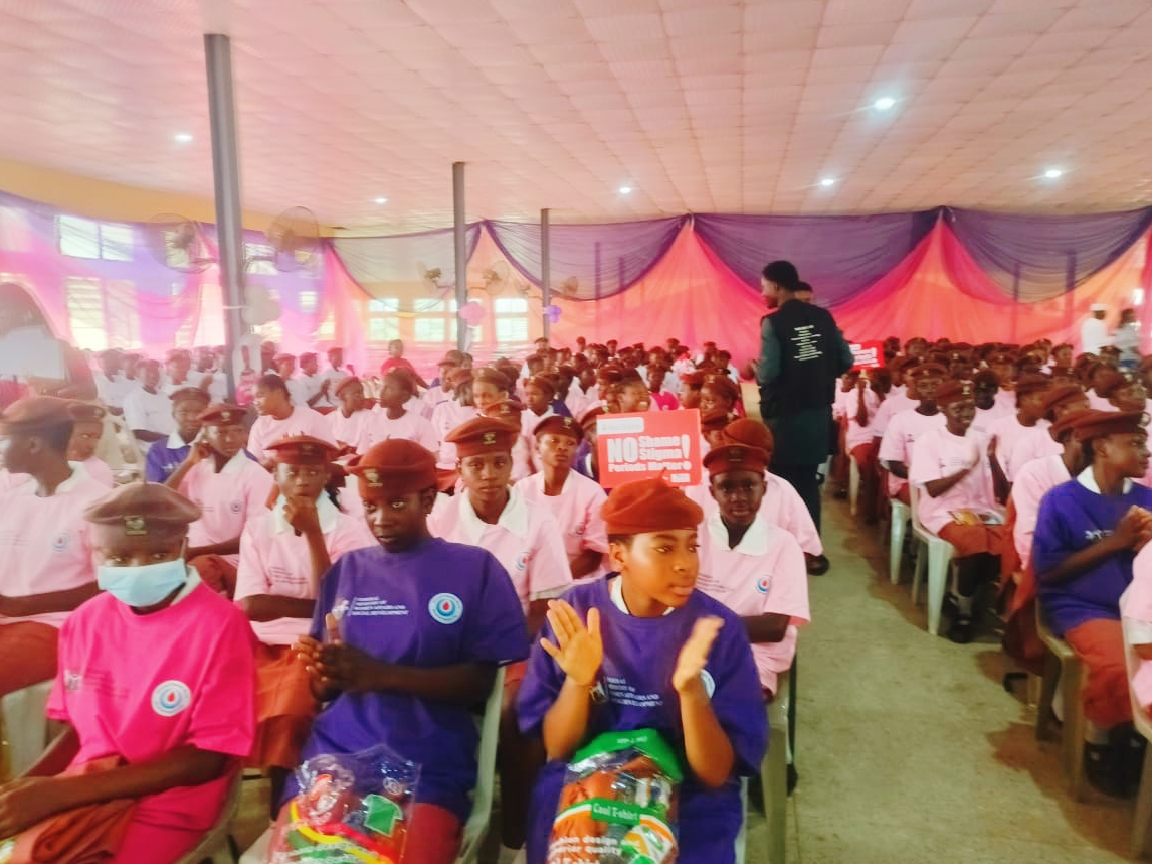
“Every girl deserves the opportunity to attend school confidently and participate fully in academic, social, and extracurricular activities without limitations imposed by her menstrual cycle,” she added.
Representing the Permanent Secretary of the Federal Ministry of Education, Mr. Abel Olumuyiwa Enitan reaffirmed the Ministry’s commitment to creating safe, inclusive, and supportive learning environments where girls can thrive.
“Menstrual hygiene management is not only a health issue; it is also an educational and social development issue. These challenges can negatively affect school attendance, participation, performance, and retention,” he noted.
He emphasized ongoing efforts by the Ministry to integrate menstrual hygiene education into school health programmes and educational policies while strengthening partnerships with relevant stakeholders.
“Let us renew our collective commitment to ensuring that no girl misses educational opportunities because of menstruation,” he urged.
Earlier, the Principal of Federal Government Girls College, Bwari, Mrs. Ibrahim Gladys Assibi, welcomed participants and described menstrual health education as a nation-building investment.
“When you educate a girl about her period and give her the means to manage it hygienically, you don’t just help her survive five days a month. You protect her health, secure her education, preserve her dignity, and unlock her full contribution to society,” she stated.
She further remarked that menstrual health should no longer be viewed as a girls-only issue.
“Menstrual health education isn’t a girl’s programme; it is a nation-building programme,” she emphasized.
Speaking on behalf of Population Services International (PSI) Nigeria, Winifred Kwaknat, Senior Programme Manager overseeing Menstrual Health initiatives, commended the strong partnership between government and development partners in advancing menstrual health across Nigeria.
According to her, PSI’s interventions across seven states and 24 Local Government Areas have demonstrated the transformative impact of collective action in breaking stigma, improving awareness, and creating safe spaces for conversations around menstruation.
“Menstrual health is about much more than access to products. We have seen how innovative approaches are building confidence, dignity, leadership, and life skills among adolescent girls and young women,” she said.
She added that the organization’s initiatives, including storytelling, local-language advocacy, and creative educational tools, have helped normalize discussions around menstruation and improve health outcomes for girls.
Delivering the vote of thanks on behalf of the Director of Child Development, Mrs. Shuaibu Mariam F., Deputy Director, Child Development, expressed appreciation to the Federal Ministries of Women Affairs and Education, development partners, civil society organizations, health professionals, educators, media practitioners, and members of the Menstrual Health Technical Working Group for their unwavering support.
“No girl should miss school, lose confidence, or face discrimination because of menstruation. Every girl and woman deserves access to safe menstrual products, accurate information, clean water and sanitation facilities, and a society that treats menstruation with dignity and respect,” she said.
She also acknowledged the support of male students and advocates, describing their participation as critical in fostering understanding and support for girls experiencing menstruation.
The event featured health education sessions, interactive discussions, cultural performances, quiz competitions, and advocacy activities designed to equip students with accurate information on menstrual hygiene management and reproductive health.
Ahmed Lawan Danbazau Mnipr
Head, Information, Press and Public Relations Dept
FMWASD