


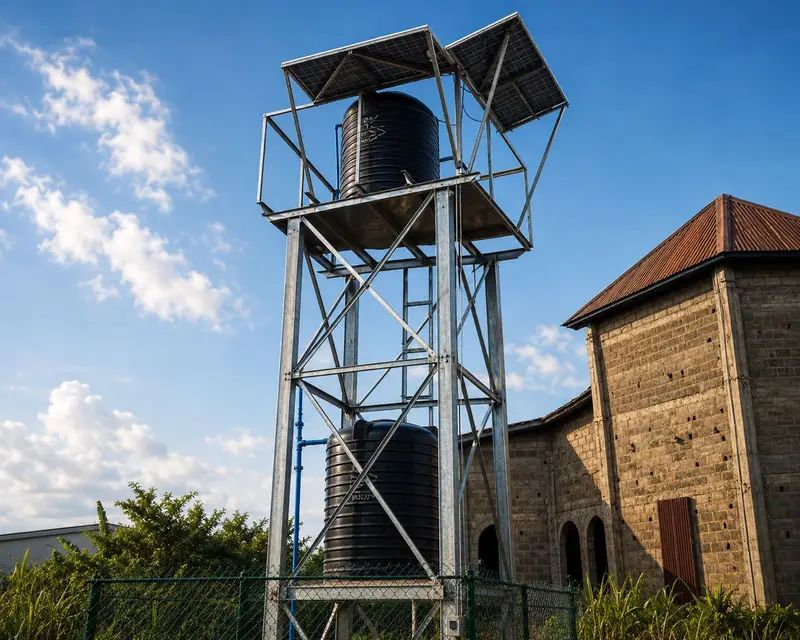
FIC Report (Bayelsa State) – In the riverine communities of Southern Ijaw, where access to basic amenities often defines the quality of daily life, small but strategic infrastructure projects can make a profound difference. For residents of Amassoma, that difference is now flowing in the form of clean, sustainable water.
Hon. Engr. Rodney Ebikebina Ambaiowei, who represents Southern Ijaw Federal Constituency in the House of Representatives, has expanded his ongoing infrastructure drive with the completion of a solar-powered borehole and water storage facility in the community. The project, situated in Amassoma—the administrative headquarters of the Ogboin North Rural Development Area—marks another step in a series of targeted interventions aimed at improving living conditions across the constituency.
For many locals, access to potable water has long been a persistent challenge, often requiring reliance on unsafe sources or long-distance travel. The introduction of a solar-powered system not only guarantees a cleaner water supply but also ensures sustainability in a region where electricity remains inconsistent. By harnessing renewable energy, the project reflects a forward-looking approach that aligns with climate adaptation needs in coastal communities.
This latest initiative builds on a growing portfolio of constituency projects by the lawmaker. Notably, it complements the recently completed six-block classroom facility at Alomu Primary School, further demonstrating a dual focus on education and essential services. It also follows a similar solar-powered water project commissioned in Igeibiri community last year—an intervention widely praised for its impact on public health and community welfare.
Observers note that these projects are not isolated efforts but part of a broader, deliberate strategy to deliver people-oriented development across the various wards of Southern Ijaw. From education infrastructure to water access, the emphasis has been on practical solutions that directly affect everyday life.
Community members and political analysts alike have commended Hon. Ambaiowei’s performance, describing his achievements as both visible and impactful. In a constituency often challenged by difficult terrain and limited infrastructure, such interventions are seen as critical to bridging development gaps.
As expectations grow, many residents express optimism that continued investment in grassroots infrastructure will further transform the region. For now, in Amassoma, the steady flow of clean water stands as a tangible reminder of governance delivered at the community level—quietly, but meaningfully improving lives.
Ighovojah Gloria Afure
Principal Information Officer
FIC Yenagoa, Bayelsa
8th June 2026