


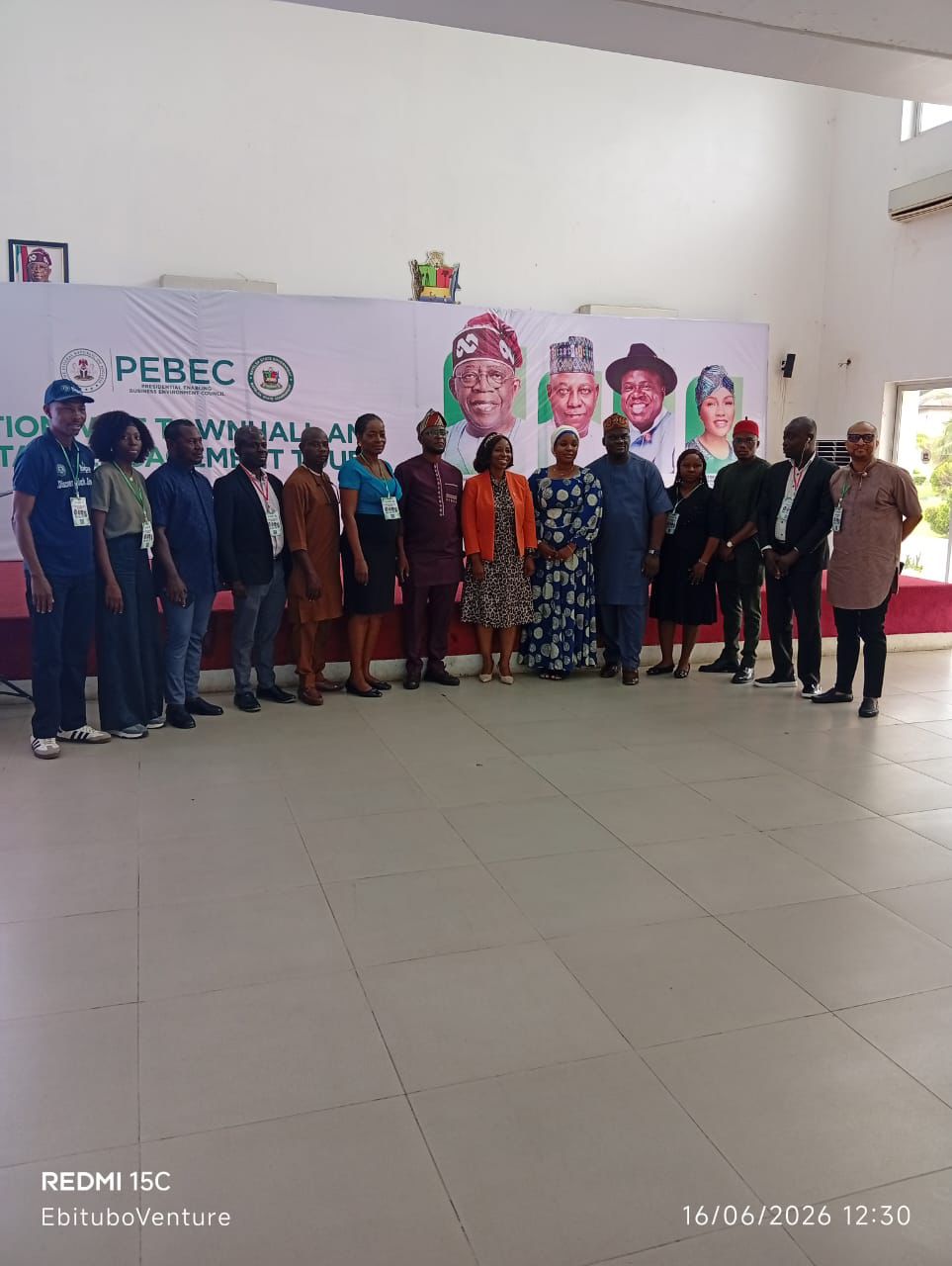
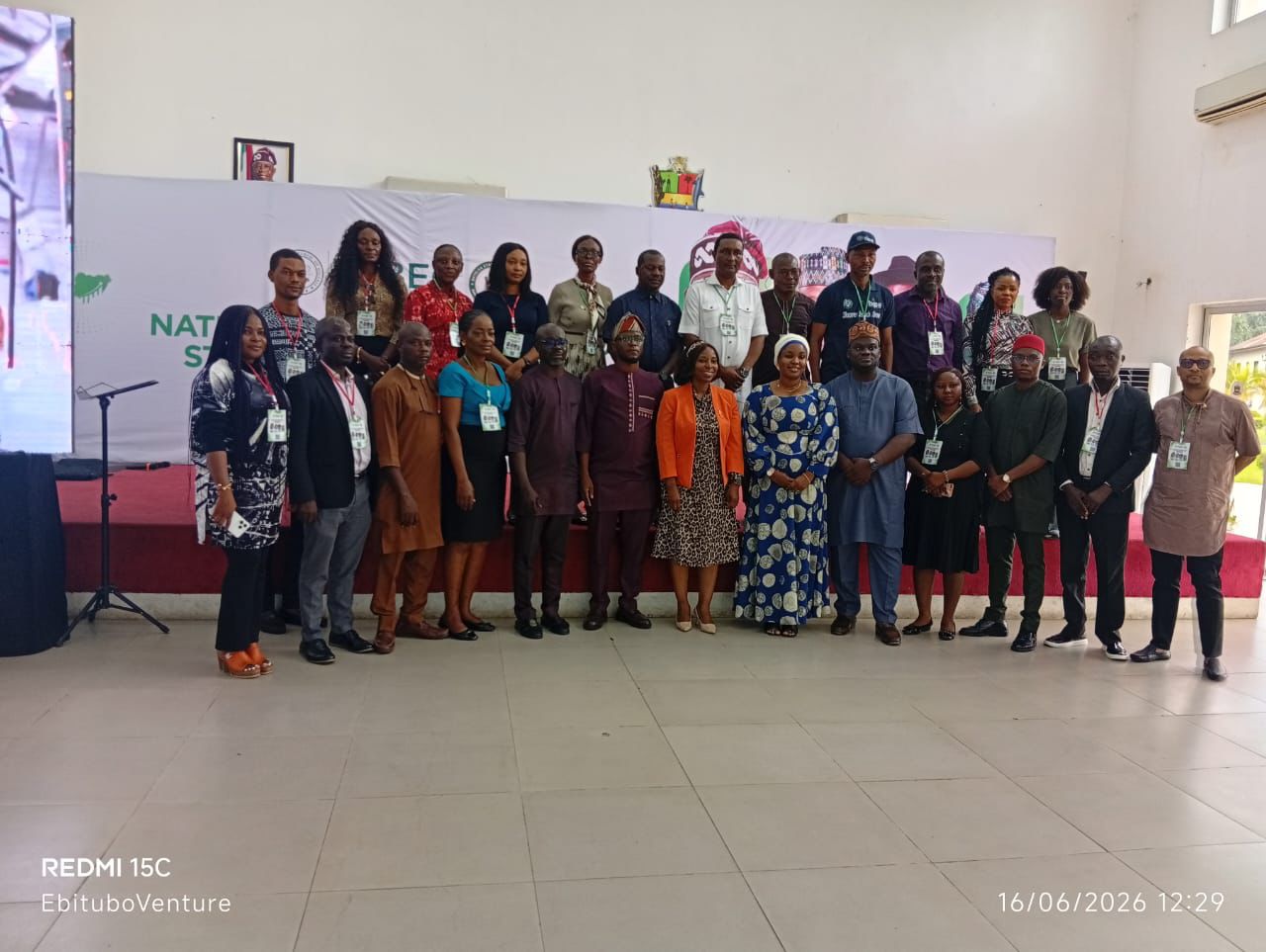
FIC Report (Bayelsa State) – The Presidential Enabling Business Environment Council (PEBEC), in collaboration with the Bayelsa State Enabling Business Environment Council (BEBEC), has organised a town hall stakeholders’ engagement in Yenagoa, Bayelsa State, as part of its nationwide subnational reform drive.
The town hall meeting, held at the Golden Tulip Hotel, Yenagoa, brought together key stakeholders from both the public and private sectors, including members of the State Executive Council, heads of Ministries, Departments and Agencies (MDAs), private sector operators, and development partners.
Speaking during the engagement, the Director-General of PEBEC, Princess Zahrah Mustapha Audu, conveyed the goodwill of the Vice President of Nigeria, Senator Kashim Shettima, who chairs the Council, as well as President Bola Ahmed Tinubu. She reiterated the Federal Government’s commitment to implementing bold economic reforms aimed at boosting investor confidence and strengthening the nation’s business climate.
She emphasised that Nigeria’s economic transformation requires strong alignment across Federal, State and Local Governments, noting that while investors enter countries, actual investments are made within states where policies, infrastructure and institutions directly impact business operations.
According to her, the future of Nigeria’s economy will be shaped not only at the federal level but within states, cities, industrial clusters, farms, innovation hubs and local governments. She stressed that strengthening national competitiveness is imperative, adding that globally successful economies are built on the strength of their regions.
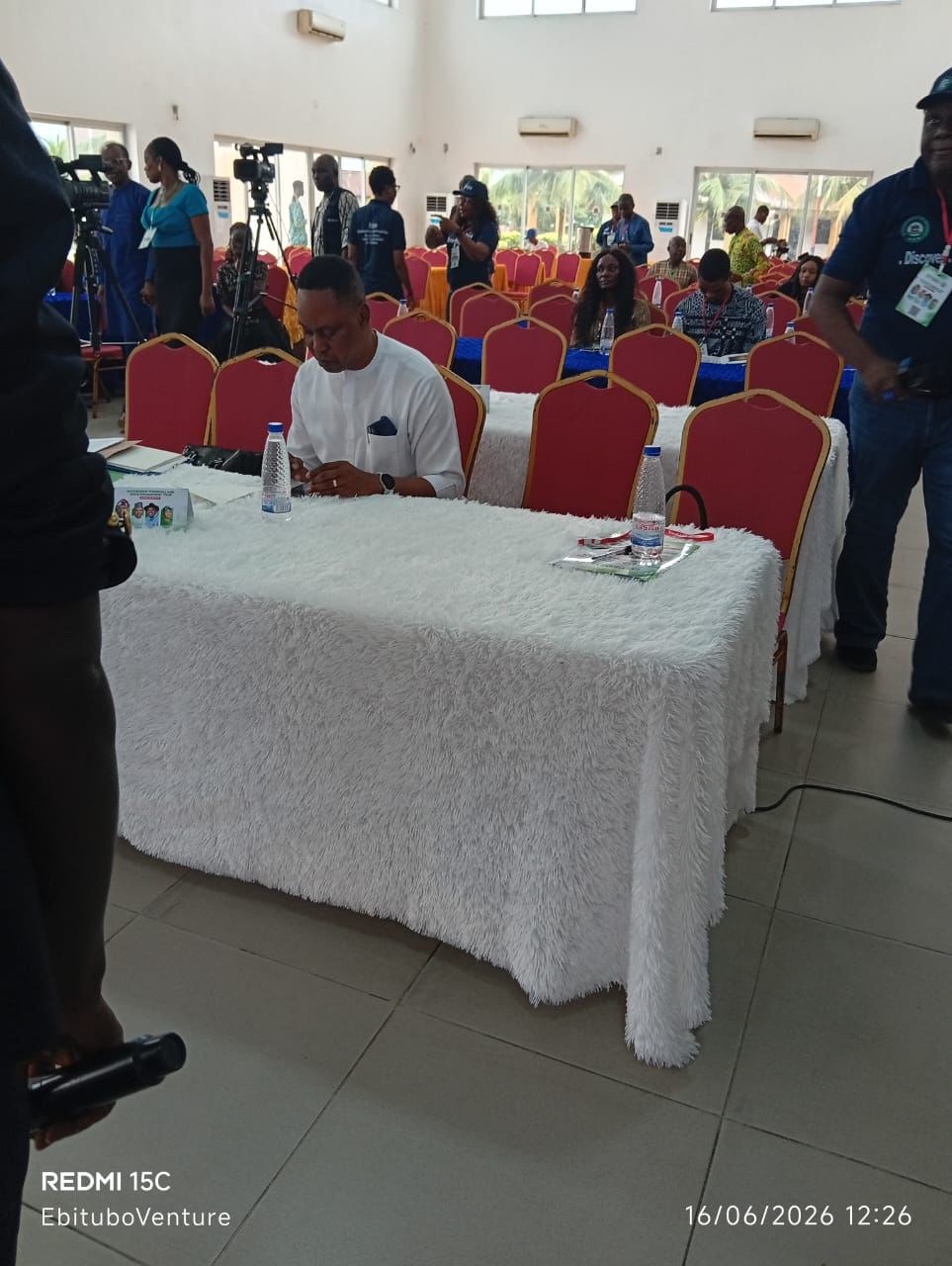
Princess Audu further stated that Nigeria can only achieve sustainable growth when all tiers of government work in synergy. She urged states to adopt targeted investment strategies by focusing on sectors where they possess clear comparative advantages, noting that global best practices show that successful investment destinations prioritise a few strategic sectors rather than attempting to promote everything at once.
Quoting the principle that “the essence of strategy is choosing what not to do,” she explained that states must make deliberate choices by identifying sectors where they can compete effectively, investing strategically in those areas, removing growth barriers, and consistently communicating those opportunities. According to her, clarity attracts capital, while focus attracts investors.
She also highlighted the growing importance of digital visibility, noting that in today’s global economy, an investor’s first interaction with any state is increasingly online. She explained that investors typically assess opportunities remotely by reviewing official websites, investment profiles, media coverage, and available data before making physical visits.
According to her, this reality requires states to develop strong and credible digital footprints supported by coordinated communication strategies that showcase reforms, infrastructure, sector strengths, and investment opportunities. She stressed that states must move from reactive to strategic communication, actively shaping their narratives to influence investor perception, as perception plays a critical role in investment decisions.
Princess Audu further emphasised that attracting investment is only one part of economic growth, noting that retaining existing investors is equally important. She explained that successful businesses already operating within a state often serve as the strongest ambassadors, driving expansion and attracting new investors through referrals.
She urged states to strengthen engagement with existing investors by addressing their concerns, removing bottlenecks promptly, and ensuring responsive and accountable government institutions. She noted that when investors thrive, they become advocates for the state’s investment climate.
She also underscored the importance of policy stability, noting that while investors can manage risks, they struggle with uncertainty caused by inconsistent policies, abrupt regulatory changes, and unclear procedures. She explained that strong institutions and predictable policies build confidence, which in turn attracts investment, creates jobs, and strengthens economic resilience.
The PEBEC team commended Bayelsa State for its efforts in developing digital investment systems and promoting an enabling environment for businesses.
The South-South Team Lead of PEBEC, Mrs. Sumaiyyah Yusuf, noted that although significant reforms and structures have been established, there remains a critical need to create awareness among citizens on available government services and access points.
She stressed that many Nigerians are unaware of designated platforms for accessing services, adding that bridging this information gap should be a key focus of the Bayelsa engagement. She reiterated that PEBEC’s mandate is to eliminate bureaucratic and legislative bottlenecks to enhance ease of doing business across the country.
In her remarks, the Director-General of the Bayelsa Investment Promotion Agency (BIPA) and SABER Focal Person, Ms. Patience Abah, stated that the engagement serves as a critical milestone and a collaborative bridge to align federal reforms with state-level implementation.
She explained that the engagement covers key reform areas including regulatory governance, streamlining the investment lifecycle, harmonisation of levies, and improving access to commercial dispute resolution. She added that the Bayelsa State Government, under the leadership of Governor Douye Diri, remains committed to building an open and investor-friendly economy.
According to her, PEBEC is working to eliminate bureaucratic bottlenecks, institutionalise a one-government approach, and create a predictable, secure and prosperous environment for businesses. She emphasised that feedback from the private sector remains central to reform efforts, describing it as the engine that drives sustainable economic growth.
Also speaking, Reform Leader Mr. Charles Wakji highlighted ongoing reforms in tax administration, including the adoption of technology-driven systems for tax assessment and collection. He noted that the new framework discourages cash-based transactions, enhances transparency, eliminates leakages, and reduces opportunities for manipulation and rent-seeking.
Stakeholders at the meeting identified key challenges affecting businesses, including regulatory delays, multiple taxation, and service delivery gaps. They called for sustained collaboration between government and the private sector to address these issues.
The engagement featured interactive sessions where participants provided feedback and proposed practical solutions to strengthen the business environment in Bayelsa State.
Participants expressed optimism that ongoing reforms would enhance economic competitiveness, attract investments, and create employment opportunities across the State.
By Ighovojah Gloria Afure
PEBEC Information Champion,
FIC, Yenagoa,
Bayelsa State.