

The Minister of State for Agriculture and Food Secuirty and the Supervising Minister for Cooperatives Affairs, Sen Dr Aliyu Sabi Abdullahi has said that a cooperative education is key towards creating a knowledge-driven, technology-enabled, and professionally managed cooperative sector in line with the Renewed Hope Cooperative Reform and Revamp Programme (RH-CRRP) 2025–2030.
Speaking at the Cooperative Education for Sustainable Economic Development Summit (CESDeS 2026) held in Kaduna, recently, Sen. Dr. Aliyu Sabi Abdullahi, said the summit theme, “Cooperative Education as a Tool for Inclusive and Sustainable Economic Development, directly informs the design of RH-CRRP which requires knowledgeable members, visionary leaders, and sound governance systems.
The Minister revealed that RH-CRRP 2025–2030 has seven strategic pillars. Cooperative education is included as Pillar 4 under Capacity Building, Cooperative Education and Human Capital Development. This pillar aims to equip cooperative leaders and members with the skills to manage enterprises effectively, embrace innovation, strengthen accountability, and compete in the digital economy.
Dr. Abdullahi charged the Federal Cooperative College, Kaduna, and other federal and state colleges to strengthen their curricula.
He highlighted that they should focus on cooperative governance, financial management, digital literacy, enterprise development, climate-smart agriculture, and cooperative technology adoption.
According to him, “the other pillars cover cooperative governance and legal reforms, financing and access to affordable credit, digitalization and data management, value chain development and market access, inclusion of youth, women as well as persons with disabilities, and strategic partnerships for global competitiveness”.
He outlined three flagship initiatives. The first is the National Cooperative Digital Architecture Platform (NCDAP). It will deploy the National Cooperative Smart Registry, Cooperative Verification Number, and Cooperative Member Identification Number to improve transparency and reduce fraud.
The second is the establishment of the Cooperative Bank of Nigeria. The bank will be cooperative-owned and will provide affordable credit, mobilize cooperative capital, finance agriculture and MSMEs, as well as expand financial inclusion.
The third is a review of the Nigerian Cooperative Societies Act, Cap N98 Laws of the Federation of Nigeria 2004. The review will create a modern regulatory framework that reflects digital transformation, financial innovations, data protection, and evolving governance standards.
The Minister also referenced a Ministerial Advocacy Tour and Stakeholders’ Engagement held in Kaduna on 18 June 2026, noting that the engagement with North-West stakeholders reaffirmed confidence in the cooperative model as a pathway for economic empowerment, financial inclusion, food security, and sustainable development.
He urged participants to use CESDeS 2026 to exchange ideas, build partnerships, and develop solutions that will support the implementation of RH-CRRP.
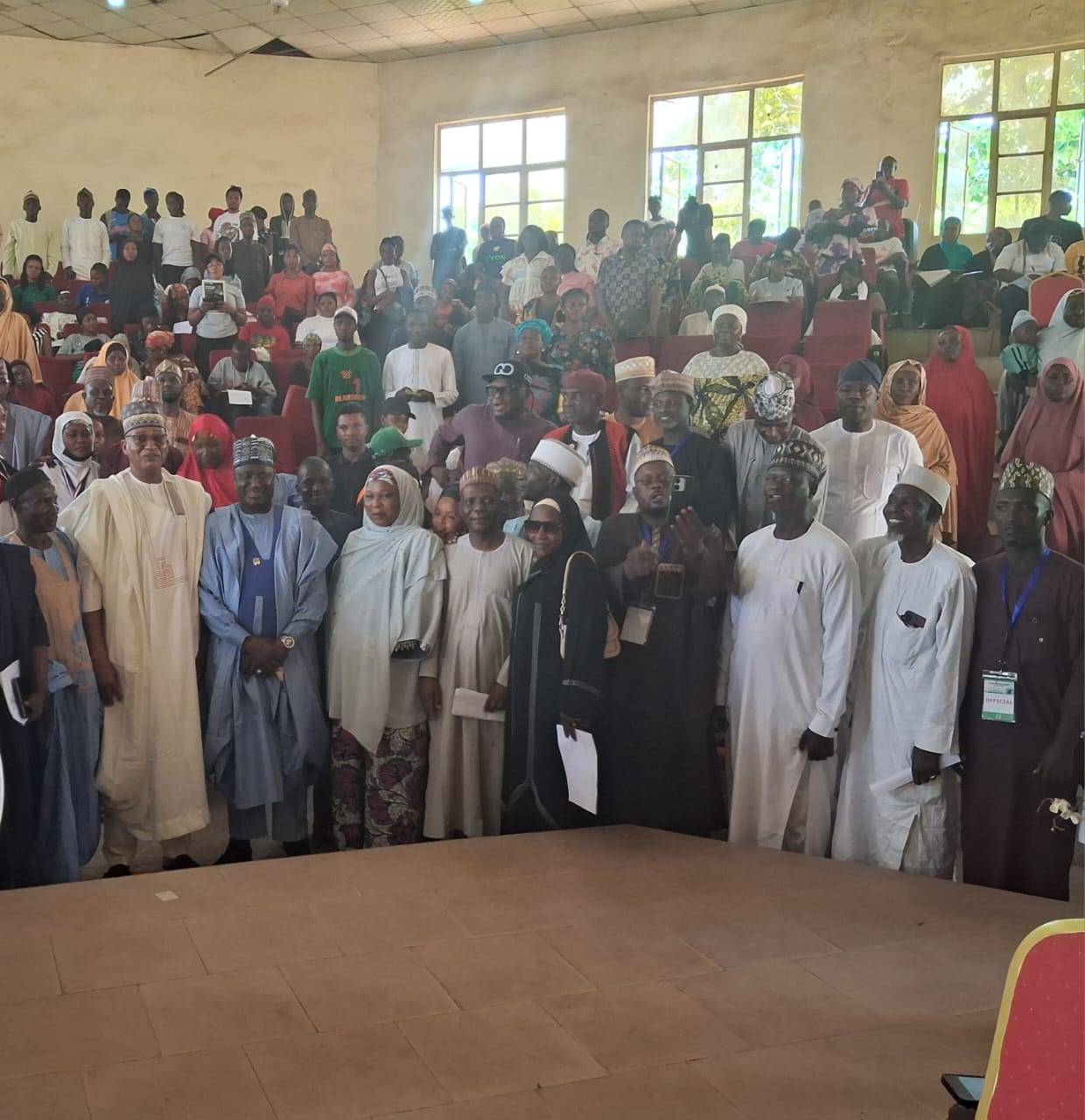
Sen Abdullahi commended the Provost, Dr. Awwal Ibrahim Mohammed, the management of the College, and the planning committee for organizing the summit which was attended by cooperative leaders, regulators, development partners, and state directors of cooperatives from across the country.
In his welcome address, the Provost of the Federal Cooperative College, Kaduna, Dr. Awwal Ibrahim Mohammed, stated that the summit responds to challenges including unemployment, poverty, inequality, food insecurity, and financial exclusion. He noted these issues require people-centered solutions that enable communities to participate actively in economic development.
He described cooperatives as member-owned enterprises built on self-help, democracy, equality, equity, and solidarity, and stressed that education, training, and information are core to their success.
According to him, “cooperative education builds leadership, entrepreneurial skills, financial literacy, and governance competencies, enabling cooperatives to drive wealth creation, job generation, food security, and rural transformation”.
Positioning the Federal Cooperative College, Kaduna, as a leading institution for cooperative education, Dr. Mohammed said the College has strengthened its programmes in cooperative studies, entrepreneurship, digital skills, financial inclusion, and capacity building.
The Provost called for greater adoption of digital transformation, innovation, and strategic partnerships to enhance the impact of cooperative institutions, and said the summit would provide a platform to develop actionable strategies and policy recommendations for the sector.
The summit was organized by the Federal Cooperative College, Kaduna, in collaboration with Impact Multipurpose Cooperative Society Limited (IMCOOPS) and the Zaria Local Government Affiliated Cooperative Society Limited.
Ezeaja Ikemefuna
Head, Department of Information
19/6/2026