
22 July, 2026-The Federal Ministry of Health and Social Welfare has announced plans to establish a Brain Health Desk under the National Mental Health Programme and commence the development of Nigeria’s first National Brain Health Agenda as part of efforts to improve prevention, diagnosis, treatment and long-term care for neurological disorders across the country.
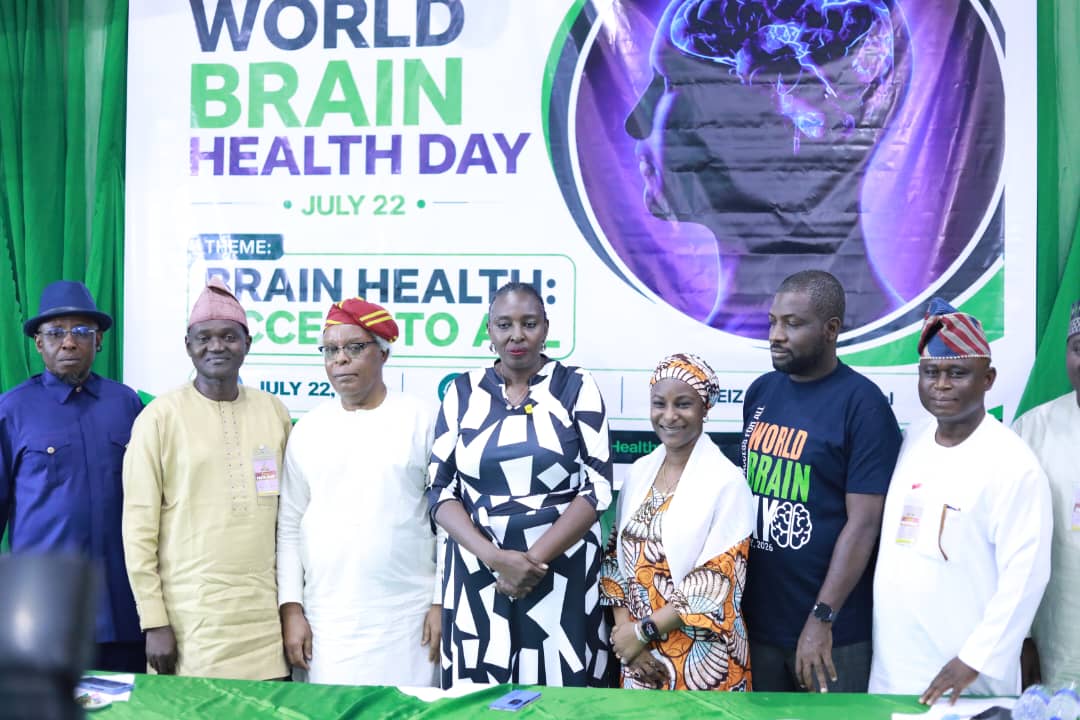
The Permanent Secretary of the Ministry, Ms. Daju Kachollom, mni, made the announcement while delivering her remarks at the commemoration of World Brain Day 2026 held on Wednesday, 22 July 2026, in Abuja, under the theme “Brain Health: Access for All.”
She described brain health as a critical pillar of Universal Health Coverage, stressing that quality brain health services must be accessible to every Nigerian irrespective of age, gender, income or location.
The Permanent Secretary noted that neurological disorders now affect more than 3.4 billion people globally, making them the leading cause of disability worldwide. She added that Nigeria continues to face a growing burden from conditions such as stroke, epilepsy, dementia, Parkinson’s disease, traumatic brain injuries and neurodevelopmental disorders, many of which are compounded by mental health challenges including depression and anxiety.
According to her, the establishment of the Brain Health Desk represents a major milestone in strengthening national leadership and coordination on brain health. The Desk will drive policy development, partnerships, advocacy, research, capacity building, surveillance and coordinated service delivery while working closely with relevant government institutions, teaching hospitals, professional bodies, academia, development partners, civil society organisations and the private sector.
Ms. Kachollom further disclosed that the Ministry will develop Nigeria’s first National Brain Health Agenda to provide a strategic framework for improving governance, expanding access to quality neurological services, strengthening workforce capacity, promoting research and innovation, and fostering multisectoral collaboration. The Agenda will align with the WHO Intersectoral Global Action Plan on Epilepsy and Other Neurological Disorders (IGAP) 2022–2031 while addressing Nigeria’s specific priorities.
She reaffirmed the Federal Government’s commitment, under the Renewed Hope Agenda of President Bola Ahmed Tinubu and the Nigeria Health Sector Renewal Investment Initiative, to strengthening primary healthcare, expanding access to quality healthcare services, improving the health workforce and advancing mental health services nationwide.
The Permanent Secretary also announced that World Brain Day will henceforth be included in the Ministry’s annual national health commemorations calendar to sustain awareness, advocacy and public engagement on brain health.
Calling for collective action, she urged professional associations, academic institutions, development partners, civil society organisations, the private sector, traditional and religious leaders, the media and all Nigerians to work together to reduce stigma, promote healthy lifestyles, encourage early diagnosis and expand access to rehabilitation services, essential medicines and assistive technologies for people living with neurological disorders.
She emphasised that investing in brain health is both a health and economic imperative, noting that protecting brain health throughout the life course strengthens productivity, drives innovation and contributes to sustainable national development.
“Investing in brain health is not only a health imperative; it is an economic imperative. By protecting brain health across the life course, we unlock human potential, strengthen productivity, foster innovation and lay the foundation for a thriving brain economy. Every investment we make in brain health is an investment in people, in families and in the future of our nation.” Daju emphasized.
Ms. Kachollom reaffirmed the Ministry’s vision of a Nigeria where every citizen has equitable access to quality brain health services and where neurological disorders are prevented wherever possible, detected early, treated effectively and managed with dignity and compassion.
In his opening remarks, the Director Public Health Department, Dr,. Charles Nzelu, said the event is a significant milestone in the country’s efforts to promote brain health under the global theme, “Brain Health: Access for All”, stressing that every Nigerian, irrespective of age, gender, socioeconomic status or geographical location, deserves equitable access to quality brain health services.
“Brain health is essential for learning, productivity, healthy ageing, social participation and national development”.he noted.
According to him, neurological disorders have emerged as one of the world’s greatest public health challenges, noting that Nigeria continues to face a growing burden of neurological diseases, with stroke remaining a leading cause of morbidity, mortality and long-term disability.
He noted that the World Brain Day celebration provides an opportunity to raise awareness, strengthen partnerships and promote practical solutions to Nigeria’s growing neurological disease burden,reaffirming the Federal Government’s commitment to ensuring that every Nigerian has the opportunity to attain the highest possible standard of brain health.
Dr. Tunde Masseyferguson Ojo, National Coordinator, National Mental Health Programme, in his welcome address acknowledged the Ministry’s strong leadership commitment on mental health and by extension brain health.
In her goodwill message, the Founder of Brain and Spine Foundation Africa, Engineer Chika Okwuolisa, described the Federal Ministry of Health and Social Welfare’s official commemoration of World Brain Day 2026 as a historic milestone, noting that it marks the first time Nigeria has formally observed the global event at the national level.
She commended the Ministry for prioritising brain health and aligning with the World Health Organization’s Intersectoral Global Action Plan on Epilepsy and Other Neurological Disorders. He also highlighted the adoption of the Action Plan during the inaugural African Neurological Summit held in partnership with the Ministry in 2025.
Engineer Chika, urged stakeholders to translate the World Brain Day commemoration into sustained action through stronger policies, increased investment, broader partnerships, and improved access to quality neurological care, emphasising that protecting brain health is essential to safeguarding Nigeria’s productivity, economic growth, and future.
Ado Bako
Assistant Director, Information and Public Relations.