

The Federal Government has reaffirmed its commitment to transforming Nigeria’s transport sector through the seamless integration of road, rail, air and water transportation, as it moves to reduce the country’s overwhelming dependence on road transport and attract greater private-sector investment into the sector.
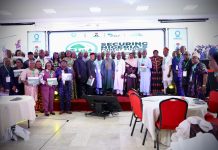
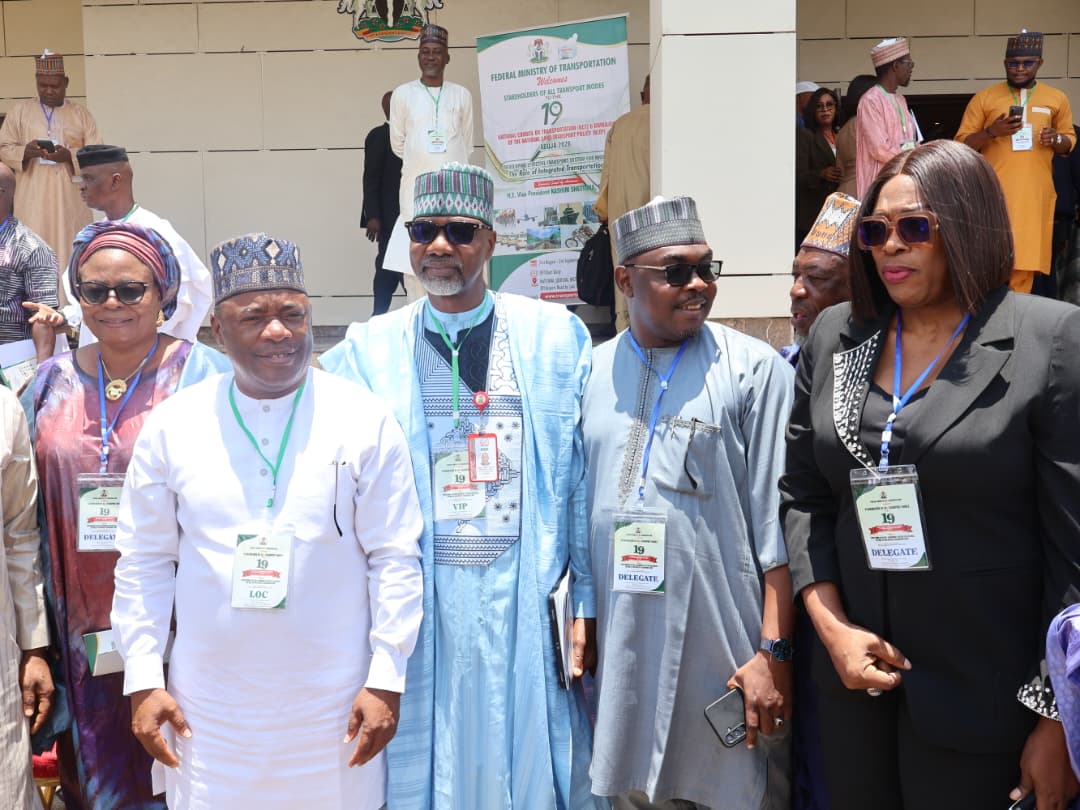
The call formed the central message at the ongoing 19th National Council on Transportation (NCT), being held at the National Judicial Institute, Abuja.
The Council, attended by transport bureaucrats, regulators, operators, captains of industry and other stakeholders, is themed “Developing an Effective Transport System for Nigeria: The Role of Integrated Transportation.”
The Permanent Secretary, Federal Ministry of Transportation, Engr. Funso Adebiyi, who is also Chairman of the Technical Committee of the 19th National Council on Transportation, said the Annual Council remained a critical platform for stakeholders to review progress, scrutinise setbacks, exchange ideas and replicate successful models across the country.
He said integrating Nigeria’s various transport modes would reduce logistics costs, minimise transit times and create a seamless network for commuters and freight.
According to him, the country’s economic growth demands an “unyielding commitment to intermodal synergy,” stressing that Nigerians should have the freedom to choose their preferred means of transportation when travelling between destinations.
“Indeed, Nigerians deserve the right to choose for themselves their preferred transport mode when planning to take a trip from point A to point B. It should be their own prerogative,” Adebiyi said.
The Permanent Secretary identified the unveiling of the National Land Transport Policy as one of the major highlights of the 19th Council.
According to him, the policy, approved by the Federal Executive Council, would provide a stronger framework for regulating the land transport sector and boost investors’ confidence.
“It’s better late than never,” Adebiyi said, describing the policy as a long-standing aspiration of stakeholders in the sector.
He also called for a fundamental shift in transportation financing, urging Nigeria to move beyond heavy reliance on government budgets and develop frameworks capable of attracting sustained private-sector capital.
Adebiyi advocated transparent public-private partnerships, robust transport funds and innovative asset-recycling models.
He further challenged states to formulate clear transport master plans and develop policies capable of de-risking investments and attracting both local and multilateral funding.
The Permanent Secretary urged participants to use the four-day Council to engage in frank, data-driven and results-oriented deliberations and produce actionable blueprints capable of turning Nigeria’s transport corridors into engines of economic growth.
Adebiyi disclosed significant progress in the Federal Government’s railway modernisation programme. He stated that the Lagos-Ibadan and Ibadan-Abeokuta rail lines are fully operational, while the Kaduna-Kano, Katsina-Maradi and Dutse rail extensions are at advanced stages of completion. He added that the Kano – Katsina line is expected to be commissioned by December.
He also highlighted the successful deployment of freight trains conveying 40-foot containers from Apapa Seaport to Ibadan, a development that has helped remove heavy-duty trucks from the highways and reduce accident rates.
The Permanent Secretary further announced plans for the development of a high-speed water ferry system from Lagos to Asaba, as well as the comprehensive standardisation of motor parks nationwide. The initiative, he stated, would introduce computerised manifests, standardised waiting lounges, police posts, and strict registration of drivers and vehicles to strengthen safety, security and accountability.
Adebiyi also disclosed the establishment of the Federal University of Transportation to build local capacity and produce highly trained personnel for the sector.
Declaring the NCT open, the Head of the Civil Service of the Federation (HoCSF), represented by the Permanent Secretary, Service Policy and Strategy Office, Office of the Head of the Civil Service of the Federation (OHCSF), Dr. Ishaya Mohammed Musa, described a robust transport system as the lifeblood of the national economy and a critical catalyst for the Federal Government’s ambition of building a US$1 trillion economy by 2030.
He urged the Council to develop a modern, multi-modal transport architecture capable of reducing logistics costs and improving the competitiveness of Nigerian businesses. He also commended the establishment of dedicated transport officer cadres as a strategic investment in institutional capacity, stressing that effective transport policies depend on the competence and professionalism of the workforce responsible for regulating and managing the sector.
In her welcome address, the Director, Transport Planning and Coordination, Ojinta Jane, emphasised that an interconnected transport network is vital for long-term economic stability and can reduce operational overheads for businesses. She highlighted the forthcoming launch of the National Land Transport Policy and urged state governments to adopt sustainable financing mechanisms, including Public-Private Partnerships and innovative asset-recycling models, to attract private-sector investment.
Delivering the keynote address, titled “Developing an Effective Transport System for Nigeria: The Role of Integrated Transportation,” Engr. Dr. Emmanuel Oche challenged the traditional car-centric approach to urban planning, stressing that building more roads without functional and integrated public transit systems is unsustainable.
He advocated a shift towards human-centred and sustainable transportation, encompassing mass public transit, active mobility such as walking and cycling, and shared transport.
Citing projections that Nigeria’s urban population will reach 70 per cent by 2050, and noting that 62 per cent of the population is currently below the age of 24, Oche recommended the establishment of a National Urban Mobility Authority and a National Integrated Transport Authority.
According to him, these institutions are necessary to strengthen governance, ensure intermodal coordination and professionalise the transport sector by moving away from informal and unregulated operations.
Kate Oluseyi Nwachuku
Head/ DD (Information & PR)