


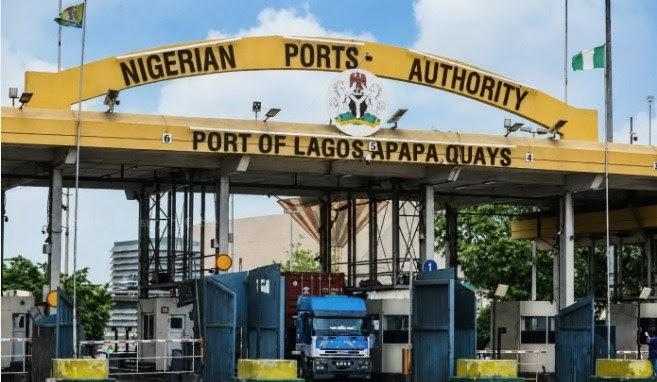
FIC REPORT (LAGOS STATE) – Nigeria’s seaports handled 35.7 million metric tonnes of cargo in the second quarter of 2026, a 12.3 per cent jump from the 31.8 million tonnes recorded over the same period last year, as the Federal Government’s maritime reform agenda continued to translate into measurable gains in trade volumes and vessel activity.
The figures were unveiled on Monday when the Nigerian Ports Authority (NPA) released its Operational Performance Report for the quarter, painting a picture of a port system attracting more ships, more containers and more cargo than it did twelve months ago.
Speaking on the results, NPA Managing Director Dr Abubakar Dantsoho said the numbers reflected steady progress across nearly every operational metric the authority tracks.
“What we are seeing is not an isolated spike but a sustained pattern of growth,” Dantsoho said, presenting the report to journalists in Lagos. “Our cargo throughput, our vessel calls, our container traffic — they are all trending in the same direction, and that direction is up.”
A breakdown of the figures shows inward cargo — goods arriving into the country — made up the bulk of activity at 56.8 per cent of total throughput, while outward cargo accounted for 41.9 per cent.
Transshipment cargo, though still a small slice of the pie, contributed 488,364 metric tonnes, or roughly 1.4 per cent of the total.
Dantsoho drew particular attention to the pace of growth in outward cargo, which climbed by 22 per cent, outstripping the 7.7 per cent rise recorded on the inward side. “This tells us our exporters are finding it easier to move goods out of the country,” he said. “That is exactly the kind of shift we want to see — a port system that supports Nigeria selling to the world, not just buying from it.”
Vessel traffic told a similar story of expansion. The number of ocean-going vessels completing calls at Nigerian ports rose by 14.4 per cent, from 1,050 in the second quarter of 2025 to 1,201 this year. More striking was the growth in the size of those vessels: their combined Gross Registered Tonnage surged by 22.2 per cent, from 40.87 million tonnes to 49.95 million tonnes.
“Larger vessels calling at our ports is a strong signal of confidence,” Dantsoho remarked. “Shipping lines do not deploy bigger ships to a port they consider inefficient or unpredictable.”
Smaller vessel operations kept pace. Service boats completing operations rose by 22.3 per cent to 4,347, with their tonnage jumping by 62.4 per cent to 1.73 million tonnes.
Containers and Cars
Container traffic — often viewed as a bellwether for broader trade health — grew by 11.3 per cent, reaching 602,392 twenty-foot equivalent units (TEUs), up from 541,229 TEUs a year earlier. Inward laden containers rose 6.3 per cent and made up just over half of all container movement, while outward laden containers slipped slightly, by 3.9 per cent. Empty containers, by contrast, increased by 13.9 per cent.
One figure stood out for its novelty: transshipment container traffic, which was effectively non-existent in the second quarter of 2025, reached 29,038 TEUs this year. Dantsoho described the shift as evidence that Nigerian ports are beginning to establish themselves as a regional transshipment option rather than merely a destination for cargo.
Vehicle imports also climbed sharply, up 18.3 per cent to 44,147 units from 37,306 the previous year. Dantsoho linked the rise chiefly to greater stability in the exchange rate, which he said had made importing vehicles more predictable and financially viable for dealers.
Taken together, Dantsoho argued, the figures underscore the resilience of Nigerian ports as hubs for both domestic and regional trade. But he was quick to add that the authority does not intend to rest on the quarter’s numbers.
“Our focus for the rest of 2026 is infrastructure — a comprehensive overhaul — alongside a deeper push into digital reform,” he said, pointing to ongoing modernisation work at the Apapa and Tin Can Island ports as well as continued development at the Lekki and Badagry deep sea port projects.
He said full rollout of the Port Community System and the National Single Window remained central to that agenda. “Once these systems are fully operational, we expect to see reduced costs, faster clearance times, and a Nigeria that stands as the trade nerve centre of West Africa,” Dantsoho said.
Dimaka Chioma
Deputy Director
Information/ Public Relations.
09 / 09 / 2026.