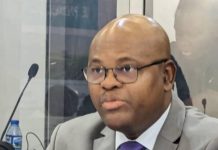

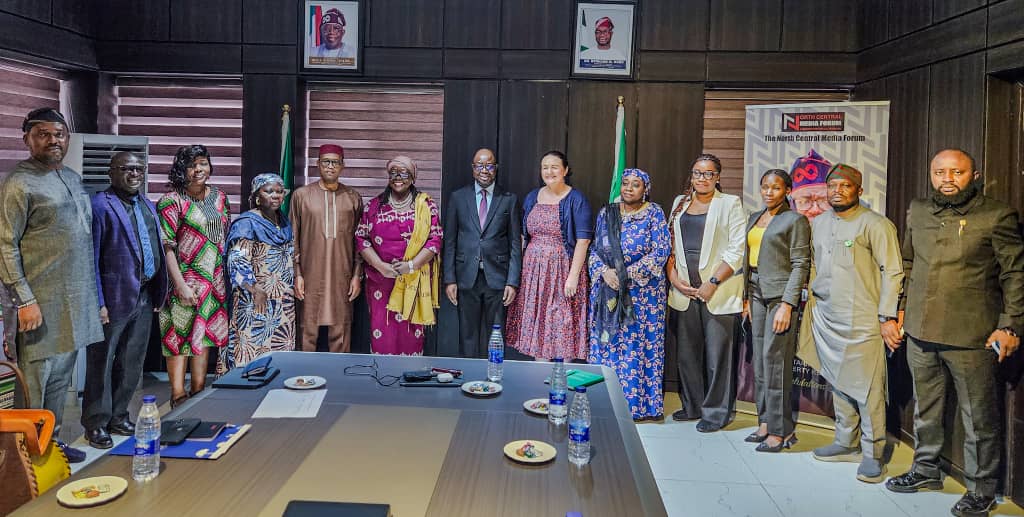
The Honourable Minister of Humanitarian Affairs and Poverty Reduction, Dr. Bernard M. Doro, has assured that, the Federal Government is committed to a smooth and sustainable transition of Nigeria’s humanitarian response, with the goal of strengthening national ownership and enabling the country to progressively finance and manage humanitarian assistance through its own institutions and resources.
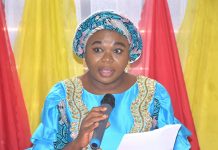
The Minister stated this when he received the United Nations Resident Coordinator/UNDP Representative in Nigeria, Ms. Elsie Attafuah and representatives of the United Nations Office for the Coordination of Humanitarian Affairs (UNOCHA) Ms. Danielle Parry. on a courtesy visit to the Ministry in Abuja.
Dr. Doro said the transition, scheduled to commence in January 2027, was necessary to prepare Nigeria to assume greater responsibility for humanitarian coordination, funding and delivery as international humanitarian support and the role of the United Nations and other international NGOs gradually reduce. He stressed that, the process would require sustained technical support, capacity building and close coordination, as well as the gradual development of effective systems, frameworks and institutional capacity.
He disclosed that the Ministry commenced the constitution of a technical task team to drive the transition process, with relevant government institutions, including the Ministries of Finance, Budget and Economic Planning, expected to play key roles. He added that, international and national NGOs, development partners and other stakeholders would also be incorporated to ensure a broad and inclusive approach.
The Minister emphasised the need for stronger advocacy and inter-ministerial collaboration, noting that, the complexity of humanitarian needs in Nigeria requires collective action, increased domestic investment and stronger national ownership of the transition process. He said, the objective was to build a sustainable humanitarian financing and response system that would enable Nigeria to meet the needs of vulnerable populations without depending indefinitely on support from international NGOs and external partners.
He welcomed the continued support of development partners during the transition period and expressed readiness to work with the UN, UNOCHA and other stakeholders to identify areas requiring technical assistance, capacity building and institutional support, noting however, that, such support should help strengthen national systems and prepare government institutions and local actors to assume full responsibility for humanitarian action.
Earlier, the UN Resident Coordinator/UNDP Representative, Elsie Attafuah, said the visit was primarily to review progress on the Joint Transition Action Plan and assess the support required to achieve the agreed targets ahead of the January 2027 transition.
She said the transition would require a different approach to humanitarian coordination and delivery, stressing that, it would not be “business as usual” and would require stronger government ownership, increased domestic capacity and effective collaboration among partners.
On the new United States humanitarian funding, Attafuah disclosed that extensive consultations had been undertaken with government, humanitarian partners, civil society and other stakeholders to determine areas of greatest need. She said $92 million had been allocated for a one-year funding arrangement, with priority attention to areas experiencing severe humanitarian crises, particularly the North-East, North-West and North-Central regions.
She explained that the allocation strategy had been concluded and humanitarian partners were being invited to submit proposals for the second tranche, with 46 partners invited to participate.
Attafuah also disclosed that, the first tranche had been released through interventions including healthcare, relief materials food items and other humanitarian assistance to vulnerable populations.
She reaffirmed the UN’s commitment to supporting Nigeria’s humanitarian transition and proposed a field mission for the Minister in November, to enable him to assess ongoing interventions and gain first-hand insight into the implementation of the humanitarian response.
The Minister and the UN representative reaffirmed the importance of continued partnership, coordination and shared responsibility in strengthening national systems, mobilising domestic resources and ensuring that Nigeria is adequately prepared to sustain humanitarian assistance when international funding and the operational presence of the UN and other international NGOs are reduced.
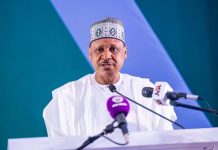
The Permanent Secretary in the ministry, Mr Olubunmi Olusanya welcomed the quest and assured them of the ministry’s total support for the transition programme.
Ogheneochuko Akpofure
AIO
For Director Information and Public Relations.