

……..The Muhammad Idris Contribution to President Bola Ahmed Tinubu’s Renewed Hope Agenda.
By Muhammad Gwani.
In the history of every administration, there are individuals whose contributions extend beyond the visible boundaries of their offices. They become interpreters of government policy, bridges between leadership and citizens, custodians of national narratives and important voices in the collective effort to build confidence in a nation’s future.
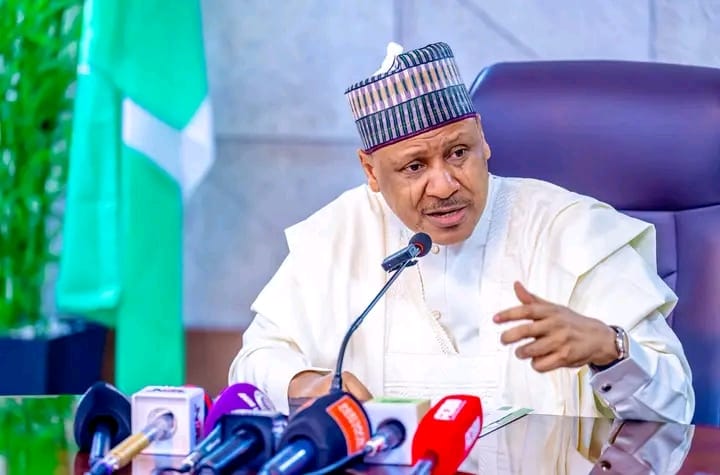
Under the administration of President Bola Ahmed Tinubu, GCFR, the Honourable Minister of Information and National Orientation, Alhaji Mohammed Idris, fnipr, has emerged as one of the important figures in translating the vision, policies, reforms and achievements of the Renewed Hope Agenda into messages that Nigerians can understand, engage with and evaluate.
Appointed and sworn in as Minister of Information and National Orientation on 21 August 2023, Mohammed Idris brought to the assignment more than three decades of experience in broadcasting, press, public relations and advertising.
His assignment came at a particularly significant moment in Nigeria’s history—a period when the Federal Government was undertaking major economic, institutional and social reforms while simultaneously confronting misinformation, public anxiety and the challenge of explaining difficult policy decisions to citizens.
Information as an Instrument of Governance
One of the most significant contributions of Minister Mohammed Idris has been his understanding that information is not merely about publicity. It is an essential instrument of governance.
The Renewed Hope Agenda is built around eight broad priority objectives:
Economic reform and inclusive growth; national security; food security and agriculture; energy and natural resources; infrastructure and transportation; education, healthcare and social investment; economic diversification, industrialisation and innovation; and improved governance and service delivery.
The challenge, therefore, has been not only to implement these policies but also to communicate them effectively to millions of Nigerians.
Minister Idris has consistently emphasised the importance of explaining government policies, programmes and reforms, while providing citizens with opportunities to understand their implications.
His Ministry’s Ministerial Press Briefing Series is a notable example. The initiative provides a platform for ministers to present their scorecards directly to Nigerians and the international community.
In 2024 alone, the series featured 25 ministers and reached millions of people through traditional and digital media platforms.
This approach has strengthened the connection between government action and public understanding.
Giving the Renewed Hope Agenda a Human Face
President Tinubu’s Renewed Hope Agenda is ultimately about improving the lives and opportunities of Nigerians.
Minister Idris has therefore worked to communicate the administration’s reforms not simply as government statistics, but as policies intended to create opportunities for families, businesses, young people and communities.
In 2025, he described the Renewed Hope Agenda as a practical framework for national transformation, stressing that it was designed to create measurable opportunities for prosperity across different sectors of the economy.
His public communication has highlighted areas including infrastructure, agriculture, energy, education, youth empowerment, entrepreneurship, healthcare and economic reforms.
This communication responsibility is particularly important because major reforms can initially generate uncertainty and hardship before their intended benefits become visible.
The removal of fuel subsidy is one example. Minister Idris has repeatedly explained the government’s argument that subsidy reform was intended to reduce waste and create fiscal space for investment in critical areas of national development.
Whether discussing economic reforms, infrastructure development or social programmes, the Minister’s role has been to ensure that government policies are presented within their broader objectives and expected national benefits.
A Stronger Fight Against Misinformation and Disinformation
In today’s digital environment, government communication faces a new challenge.
False information can travel across social media platforms within seconds, potentially creating confusion, distrust and social tension.
Minister Mohammed Idris has made combating misinformation and disinformation an important component of the Federal Ministry of Information and National Orientation’s responsibilities.
The Ministerial Press Briefing platform, for example, was designed not only to publicise government achievements but also to explain policies and decisively address misinformation and disinformation.
This is particularly relevant to Nigeria, where citizens receive information from television, radio, newspapers, websites, Facebook, X, TikTok, WhatsApp and numerous other platforms.
The responsibility of the information minister is therefore no longer limited to conventional press relations. It involves building a credible information ecosystem in which citizens can distinguish verified government information from rumours, manipulated narratives and deliberate falsehoods.
National Orientation and the Renewal of Values
Perhaps one of the most important aspects of Minister Idris’s portfolio is the word “Orientation.”
National development cannot be sustained by infrastructure and economic reforms alone.
It also requires responsible citizenship, national unity, respect for law, integrity, patriotism and a shared commitment to the Nigerian project.
The National Values Charter, championed through the Ministry and the National Orientation Agency, represents an effort to encourage a renewed social contract between citizens and the state.
Minister Idris has described the initiative as part of an effort to reset national attitudes and values and encourage citizens to give their best to Nigeria while also expecting effective service from government.
This is an important dimension of the Renewed Hope vision because national renewal must ultimately be both institutional and behavioural.
Communicating Development Across Nigeria
Another important contribution of the Minister has been the effort to take information about the Renewed Hope Agenda beyond Abuja.
Through Federal Information Centres, public sensitisation programmes, media engagements and collaborations with state-level information structures, the Ministry has sought to bring information about Federal Government programmes closer to citizens.
This decentralised approach is important because the success of national policies depends on whether ordinary Nigerians in Kaduna, Kano, Katsina, Sokoto, Kebbi, Zamfara, Jigawa, Lagos, Enugu, Rivers, Borno and every other part of the federation understand how they can benefit from government programmes.
The Ministry’s sensitisation efforts have included regional engagements, including programmes highlighting development initiatives in different parts of the country.
For a country as large and diverse as Nigeria, communicating government policies nationally is itself a major governance responsibility.
Defending the Record of the Administration with Facts, Minister Idris has also taken on the responsibility of presenting the administration’s scorecard.
In official briefings and publications, he has highlighted reforms and interventions covering the economy, healthcare, education, infrastructure, student financing, energy, transportation, local government administration and other sectors.
For example, a February 2025 ministerial briefing highlighted initiatives including NELFUND student support, healthcare investments, CNG development, passport reforms, infrastructure projects and the National Values Charter.
The Ministry’s third-anniversary review in May 2026 similarly presented the Renewed Hope Agenda as covering energy, agriculture, security, macroeconomic reform, infrastructure, human capital, economic diversification and governance.
Through such communication, the Minister has helped create a public record through which Nigerians can examine the direction and achievements of the administration.
A Bridge Between the Presidency and the People
The Information Minister occupies a unique position.
He is not the Minister responsible for every policy he communicates, but he is responsible for ensuring that citizens understand the policies and programmes of the Federal Government.
This makes the office a bridge between the Presidency, Ministries, Departments and Agencies on one side, and the Nigerian people on the other.
Minister Idris has approached this responsibility with an emphasis on engagement with journalists, editors, broadcasters, digital media practitioners, Commissioners for Information and other stakeholders.
His interaction with the media has demonstrated an understanding that government and the press, while occupying different constitutional and professional roles, both have responsibilities toward the Nigerian public.
A Minister Who Understands the Power of Communication
The success of any national development programme depends partly on whether citizens understand it.
A road may be constructed, but citizens need to know how it improves transportation.
A student loan programme may be established, but students need to know how to access it.
A healthcare intervention may be introduced, but communities need to know where and how they can benefit.
An economic reform may be necessary, but citizens need to understand why it was undertaken and what government is doing to cushion its effects.
This is where Minister Mohammed Idris’s contribution becomes particularly important.
His work has helped make communication itself part of the implementation architecture of the Renewed Hope Agenda.
My Personal Tribute to a Mentor and National Communicator
For me, Mohammed Idris is more than the Honourable Minister of Information and National Orientation.
He is a hero, mentor and example of purposeful public service.
His approach to information management demonstrates that public communication is not simply about defending government. It is about providing citizens with accurate information, explaining complex policies, promoting national understanding and strengthening confidence in democratic institutions.
His leadership has also reinforced the importance of professional information management within the Federal Ministry of Information and National Orientation and its field structures across the country.
As an information professional, I consider it a privilege to observe and learn from a Minister who has given the information portfolio a renewed strategic significance under President Bola Ahmed Tinubu’s administration.
The Road Ahead
President Tinubu’s Renewed Hope Agenda is an ongoing national project.
Its ultimate success will be judged not merely by speeches, policies or announcements, but by the tangible improvements Nigerians experience in their daily lives.
The responsibility of communicating that journey will remain critical.
As Nigeria continues along the path of economic reform, infrastructure development, human capital investment, national security, food security, energy transition, digital transformation and institutional reform, the country needs an information system capable of keeping citizens properly informed and meaningfully engaged.
That is the space in which Mohammed Idris has made his contribution.
His tenure demonstrates an important principle: a government that communicates effectively can build understanding; a government that communicates truthfully can build trust; and a government that combines information with national orientation can help build responsible citizens and a stronger nation.
Conclusion:
A Legacy of Communication, Orientation and National Service
The story of President Bola Ahmed Tinubu’s Renewed Hope Agenda is still being written.
Within that story, the contribution of Honourable Minister Mohammed Idris deserves recognition—not simply for the volume of information communicated, but for the strategic importance he has attached to information, public engagement, national orientation and the battle against misinformation.
He has helped make the Ministry of Information and National Orientation an important instrument for explaining the administration’s reforms, presenting its achievements, engaging the media, promoting national values and connecting government programmes with citizens.
For his commitment to this national assignment, his dedication to public communication and his service to the Federal Republic of Nigeria, Alhaji Mohammed Idris remains a Minister worthy of commendation and a source of inspiration to information professionals and public servants across the country.
As Nigeria advances under the leadership of President Bola Ahmed Tinubu, the continuing task is clear: to transform Renewed Hope from a governing vision into lasting prosperity, stronger institutions, greater national unity and improved quality of life for all Nigerians.
And in that journey, effective, credible and patriotic communication will remain indispensable.
Long live the Federal Republic of Nigeria.
Long live the Renewed Hope Agenda.
Signed:
Muhammad Gwani
AD FIRC KADUNA
12th September,2026.