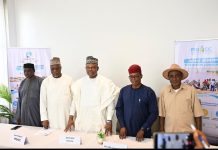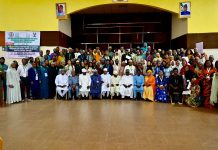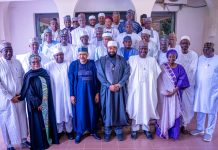



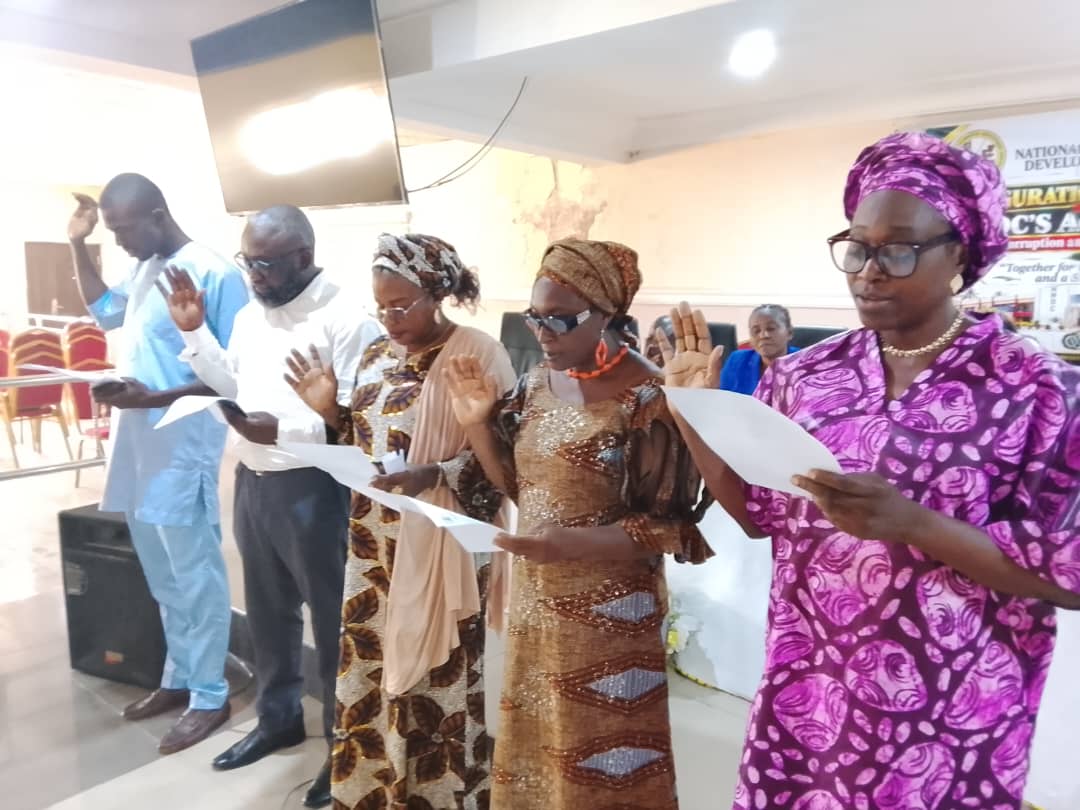
The Honourable Minister of Humanitarian Affairs and Poverty Reduction, Dr. Bernard M. Doro, has inaugurated a Joint Technical Working Group to advance the development of the Renewed Hope Resilient Livelihood Pathways Programme, an initiative designed to move vulnerable households from social assistance to sustainable livelihoods through productive agricultural activities.
Speaking during the inauguration in Abuja, Dr. Doro emphasised that, Nigerians deserve a pathway out of poverty through productive opportunities, noting that, government interventions must go beyond immediate relief to establish sustainable means of livelihood that enable vulnerable households to become economically productive and self-reliant. He stated that the initiative aligns with the Renewed Hope Agenda of President Bola Ahmed Tinubu, GCFR, particularly the commitment to lifting Nigerians out of poverty through sustainable and inclusive economic opportunities.
Following the inauguration, the Minister charged members of the Technical Working Group to work with a strong sense of urgency to develop a comprehensive, practical and technically viable implementation plan. He emphasised the need for transparency, clearly defined institutional responsibilities, effective coordination and regular reporting to ensure proper monitoring, accountability and successful implementation. He further directed the team to maintain regular engagement with the Ministry and the Bank of Agriculture, providing updates on progress and promptly addressing issues that may arise during the technical development of the programme.
The programme, being developed through a partnership between the Ministry and the Bank of Agriculture (BOA), is designed to support 63,000 vulnerable households across nine proposed pilot states, with approximately 7,000 households in each state. The proposed states are Kano, Jigawa, Kebbi, Bauchi, Plateau, Benue, Ondo, Ebonyi and Cross River. The initiative will provide a structured pathway into crop farming through agricultural input financing, targeted grant support, technical training, access to secured farmland and organised market linkages. It will also leverage the Ministry’s One Humanitarian, One Poverty Response System (OHOPRS) to support the identification and verification of eligible beneficiaries.
In his presentation, the Managing Director/Chief Executive Officer of the Bank of Agriculture, Mr. Ayodeji Oludare Sotinrin, outlined the proposed operational framework, explaining how the programme would connect verified vulnerable households with productive agricultural opportunities. He described the proposed in-grower aggregator model, under which participating households would access agricultural inputs, technical guidance and structured markets to improve production, facilitate repayment and strengthen household incomes.
Mr. Sotinrin explained that, the proposed first phase would focus on crop farming, supported by secured farmland, mandatory pre-disbursement training, agricultural input financing and organised produce offtake. Under the proposed arrangement, aggregators would coordinate input supply, provide technical support, monitor production and facilitate produce sales and loan repayment. He also highlighted the importance of transparent beneficiary selection, clearly defined institutional responsibilities and effective monitoring, noting that the proposed phased graduation approach would help participating households progressively strengthen their productive capacity and move towards economic independence.
In his closing remarks, the Permanent Secretary of the Ministry, Mr. Olubunmi Olusanya, emphasised the urgency of advancing the programme’s technical preparations and expressed appreciation for the strong working relationship between the Ministry and the Bank of Agriculture. He noted that the progress recorded following the recent signing of the partnership agreement demonstrated the value of sustained institutional collaboration in translating commitments into practical action. He assured the Bank of Agriculture of the Ministry’s continued support towards developing a workable and sustainable programme framework.
Earlier, the Director of the Social Development Department, Mr. Valentine Ezulu, delivered the welcome remarks, highlighting the significance and timeliness of the initiative in advancing the Ministry’s poverty-reduction mandate. He underscored the importance of institutional collaboration in creating sustainable livelihood opportunities for vulnerable populations.
The Ministry reaffirmed its commitment to strengthening partnerships and advancing innovative approaches that connect humanitarian assistance with productive opportunities, economic inclusion and sustainable poverty reduction. Through the proposed programme, the Ministry seeks to strengthen pathways that enable vulnerable households to build sustainable livelihoods and contribute meaningfully to national development, in furtherance of the Renewed Hope Agenda.
The Working Group is expected to review the proposed framework, harmonise institutional contributions and address the technical requirements for effective implementation, including beneficiary identification and verification, financing arrangements, land access, agricultural training, input delivery, market linkages, repayment mechanisms, monitoring and evaluation. The resulting comprehensive implementation plan will be presented to the Hon. Minister and the Managing Director/Chief Executive Officer of the Bank of Agriculture for consideration and further direction.
Mrs. Janet McDickson
Director, Information and Public Relations