


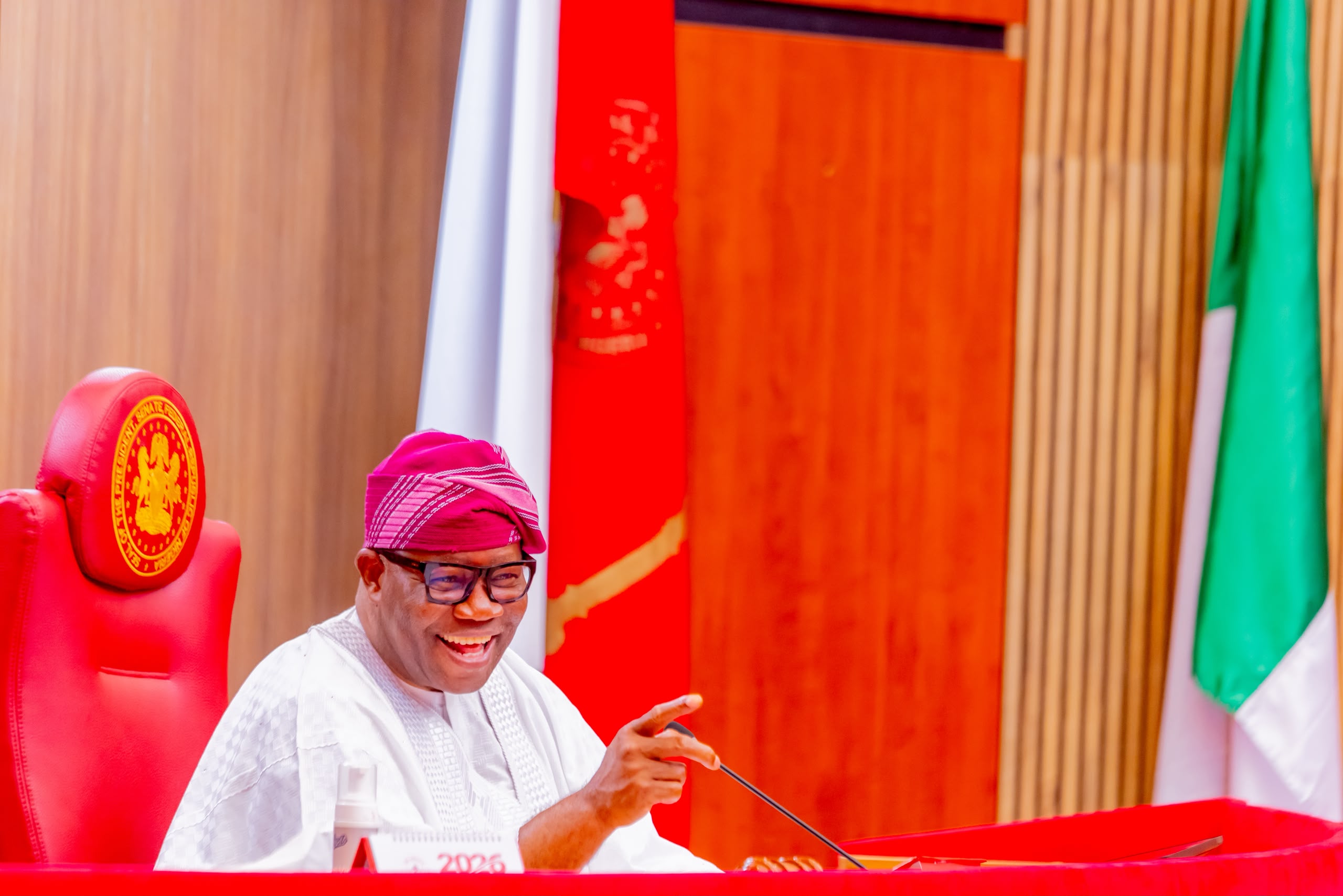
The Senate has called on the Federal Government to provide emergency funding from the Service-Wide Vote to strengthen Nigeria’s disease surveillance system and enforce mandatory health screening at all international airports, seaports and designated land borders to prevent the importation and spread of Ebola and other epidemic-prone diseases.
The resolution followed a motion of urgent national importance sponsored by Senator Francis Faduyile, who raised concerns over the reported spread of the Bundibugyo Ebola virus and the potential threat it poses to Nigeria’s public health system.
Presenting the motion, Senator Faduyile drew the attention of the Upper Chamber to reports of an Ebola outbreak originating from the Democratic Republic of Congo (DRC), with concerns over its reported spread to other African countries, including Uganda and Kenya.
He warned that the development underscored the possibility of infected travellers entering Nigeria through third countries, thereby exposing the nation to another major public health emergency.
The lawmaker further cited the Nigeria Centre for Disease Control and Prevention’s (NCDC) assessment of a high risk of Ebola importation, recalling the country’s experience in July 2014, when a single infected traveller brought the disease into Nigeria through Lagos.
The Senate acknowledged the Federal Government’s existing preventive measures, including the introduction of health declaration forms and enhanced screening procedures at designated entry points.
However, lawmakers expressed concern that restricting mandatory screening to travellers arriving from selected countries could create significant gaps in the nation’s disease surveillance and emergency response system.
The Upper Chamber also raised concerns over inadequate staffing, insufficient medical equipment and limited emergency response facilities at several entry points, stressing the need for a comprehensive review of the country’s public health preparedness.
It further observed that Nigeria’s existing burden of infectious diseases, including Lassa fever, cholera and diphtheria, made it imperative for relevant authorities to strengthen preventive measures against another major epidemic.
The Senate maintained that protecting the health and safety of Nigerians required proactive surveillance, adequate funding, effective coordination among relevant agencies and the availability of functional isolation and treatment facilities nationwide.
Consequently, the Senate urged the Federal Ministry of Health and Social Welfare, the NCDC and Port Health Services to make health screening compulsory for all arriving international passengers, irrespective of their nationality or country of departure.
The proposed measures include mandatory health declaration forms, temperature checks and symptom assessments, with enhanced screening for travellers who have visited or transited through affected areas within the preceding 21 days.
The lawmakers also called for the introduction of exit screening for departing international passengers during declared public health emergencies to strengthen disease containment and minimise the risk of cross-border transmission.
As part of efforts to improve operational readiness, the Senate urged the Federal Ministry of Health and Social Welfare, the Federal Airports Authority of Nigeria (FAAN) and the Nigeria Immigration Service (NIS) to ensure the deployment of adequate numbers of trained Port Health officers to all designated entry points.
It further called for the provision of functional thermal scanners, personal protective equipment, appropriate medical supplies and isolation facilities to guarantee effective screening and prompt management of suspected cases.
The Upper Chamber also urged the Federal Government to ensure that isolation and treatment centres across the 36 states of the federation and the Federal Capital Territory are adequately equipped and prepared to respond promptly to any suspected outbreak.
On the country’s legal framework for disease prevention and control, the Senate expressed concern over the continued reliance of Port Health Services on the Quarantine Act of 1926.
It therefore called for the replacement of the outdated legislation with a modern and comprehensive public health law aligned with the International Health Regulations (2005), to strengthen Nigeria’s capacity for disease surveillance, prevention and emergency response.
The Senate further urged the Federal Government to prioritise emergency funding from the Service-Wide Vote to enable relevant health agencies to undertake immediate preventive and preparedness measures.
It also called on the Federal Ministry of Finance and the Ministry of Budget and Economic Planning to make adequate financial provisions for the NCDC and Port Health Services in the 2027 budget, while ensuring the timely release of outstanding funds required for their operations.
The lawmakers emphasised that adequate funding, early detection and effective coordination among health and border-control agencies remained critical to protecting the country against emerging public health threats.
The Senate reiterated its commitment to strengthening Nigeria’s healthcare system through appropriate legislative interventions, oversight and support for measures aimed at safeguarding the lives and well-being of Nigerians.





EmemMaria Ntedodom Offiong, nipr
Deputy Director (Head: Information, Press and Public Relations)
+2347082203400
Emy.offiong@fmino.gov.ng
21st October, 2026.