

FIC REPORT (ABIA STATE) – The Federal Government has selected Abia State as the proposed location for the South-East Regional Rehabilitation Centre for returning migrants and other vulnerable persons, the Federal Commissioner and Chief Executive Officer of the National Commission for Refugees, Migrants and Internally Displaced Persons (NCFRMI), Dr. Aliyu Tijjani Ahmed, has disclosed.
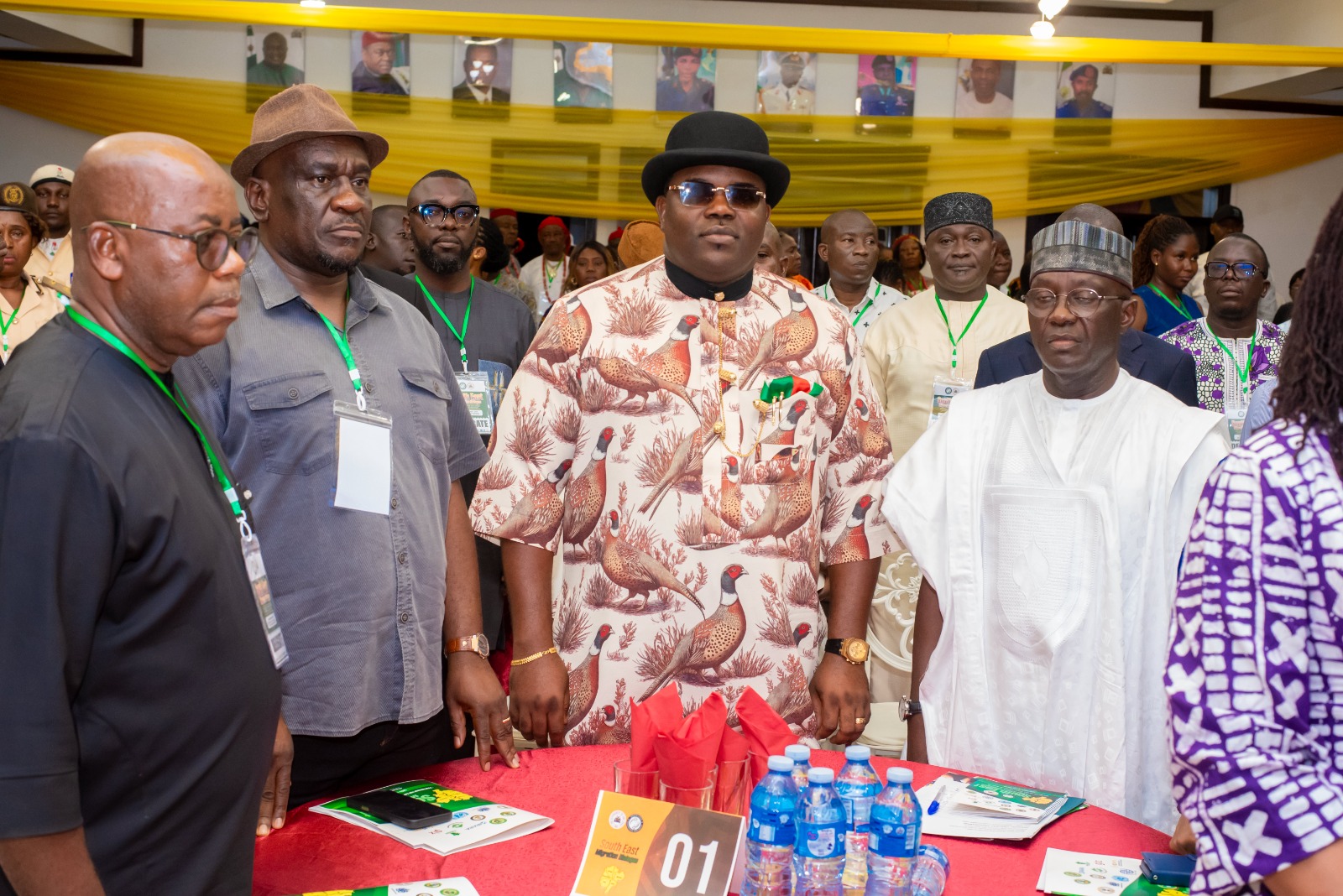
Ahmed made the disclosure in Umuahia during the inaugural South-East Migration Dialogue 2026, themed “Partnership for a Safe, Orderly and Regular Migration.”
He said the proposed centre would serve as a regional hub for the rehabilitation and reintegration of returning migrants and other vulnerable persons, providing skills acquisition, enterprise development and livelihood support to help beneficiaries rebuild their lives and achieve sustainable reintegration.
The Federal Commissioner commended the Abia State Government for hosting the regional dialogue and its support for returning migrants.
He particularly praised Governor Alex Otti for providing N1 million each to Abia indigenes who recently returned from South Africa, describing the intervention as a practical demonstration of government support for sustainable reintegration.
Ahmed said the reviewed National Migration Policy, adopted by the Federal Executive Council, provides an updated framework for managing migration in a safe, orderly, humane and development-oriented manner.
He called for stronger collaboration among governments, development partners, civil society organisations and other stakeholders to ensure that migration becomes a vehicle for development rather than a source of human capital loss.
The announcement came as Abia State Governor, Dr. Alex Otti, represented by his Deputy, Engr. Ikechukwu Emetu, FNSE, called for a coordinated South-East migration strategy capable of transforming migration into an opportunity for skills acquisition, investment, knowledge transfer and regional development.
He said migration had evolved beyond the issue of human mobility, becoming a strategic matter with implications for human capital development, economic growth, national security and Nigeria’s engagement with the global economy.
He urged the South-East to move beyond asking why its people were leaving and instead focus on ensuring that Nigerians who migrate abroad acquire skills, experience and capital that can contribute to the development of their communities and the country.
The Governor cited the experiences of countries such as India and the Philippines, where organised migration has generated remittances, skills and international networks, while noting that South Africa offered lessons on the consequences of poorly governed migration.
He advocated a structured migration system in which Nigerians are trained and certified locally, migrate through safe and legal channels, acquire experience abroad and contribute to national development through investment, knowledge transfer or eventual return.
Governor Otti said his administration was preparing young Abians for the emerging global economy through initiatives such as the Abia Leadership Academy and TechRise, which he said were equipping youths with leadership and digital skills.
He outlined five key priorities for the dialogue: the adoption of a coordinated South-East migration and development framework; improved migration data and digital skills; promotion of safe and legal migration; mobilisation of diaspora capital and expertise; and stronger protection and reintegration programmes for returning migrants.
The Governor stressed that the states were not seeking to assume the constitutional responsibilities of the Federal Government in immigration and foreign affairs, but would complement national efforts through skills development, data management, investment facilitation, migration protection and diaspora engagement.
He urged stakeholders to move “from brain drain to brain circulation, from remittances to investments, from irregular migration to safe mobility, and from policy declarations to measurable actions.”
Abia Strengthens Diaspora Engagement.
In a goodwill message, the wife of the Governor, Mrs. Priscilla Otti, represented by the Commissioner for Tertiary Education, Prof. Uche Eme Uche, said the South-East had a long history of migration, with its people travelling in search of education, employment, business opportunities and better livelihoods.
She expressed concern over the dangers confronting migrants, particularly women and children who are vulnerable to trafficking and exploitation, and called for stronger collaboration among government, traditional institutions, religious bodies, civil society organisations and families to promote safe migration.
Mrs. Otti disclosed that Abia had established the Abia Diaspora Commission to strengthen engagement with citizens abroad and had entered into a Memorandum of Understanding with the International Organization for Migration (IOM) to strengthen migration governance.
She said the administration’s “invest-migration” policy was aimed at making Abia sufficiently secure and prosperous for its people to remain at home, while encouraging citizens in the diaspora to return and invest their skills, resources and expertise in the state.
Also speaking, the South-East Zonal Coordinator of the South-East Migration Dialogue 2026, Mr. Jeto Nwadi, described the dialogue as an important regional platform for examining migration challenges and developing practical solutions.
Nwadi urged participants to move beyond identifying challenges to determining who should act, the partnerships required and how commitments could be translated into measurable results.
The dialogue brought together stakeholders from the five South-East states, federal institutions, development partners, civil society organisations, traditional and religious institutions, academia, the private sector, the media, migrant associations and diaspora communities.
Amah Ijeoma
FIC Correspondent office of the Deputy Governor.
09/09/2026