

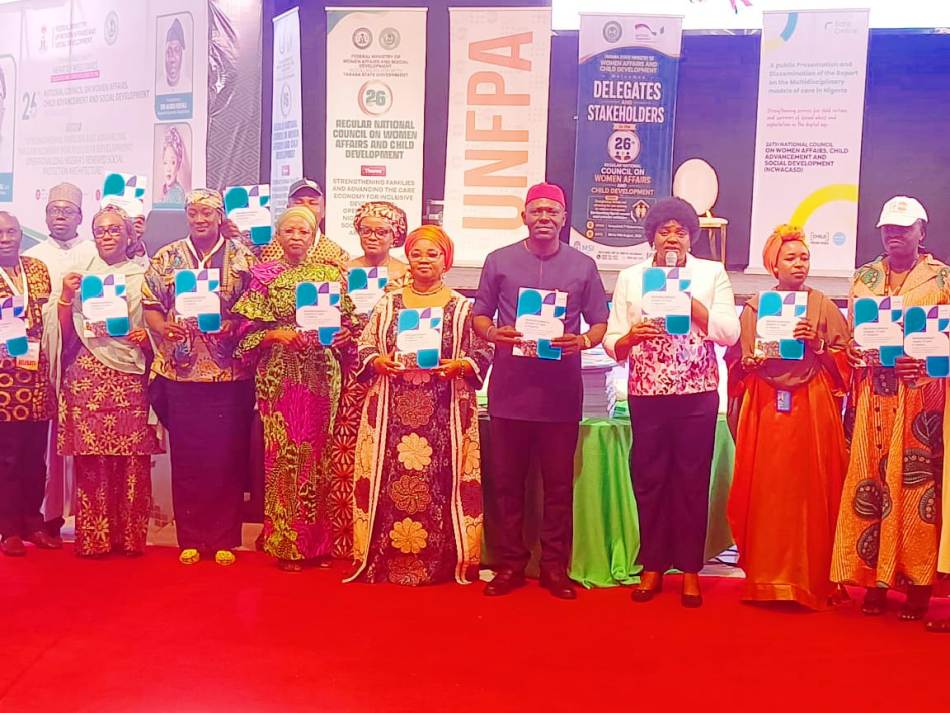
The Federal Government has renewed its commitment to ending Sexual and Gender-Based Violence (SGBV) against women and girls, calling for stronger coordination, adequate financing, survivor-centred services and sustained accountability to tackle the persistent scourge nationwide.
The Permanent Secretary, Federal Ministry of Women Affairs and Social Development, Mrs. Esuabana Nko Asanye, made the call in Jalingo, Taraba State, at the National Technical Working Group (NTWG) Meeting on Ending Sexual and Gender-Based Violence against Women and Girls, held as part of the 26th Regular National Council on Women Affairs and Social Development.
Representing the Honourable Minister of Women Affairs and Social Development, Hajiya Imaan Sulaiman-Ibrahim, FSI, the Permanent Secretary described Gender-Based Violence as one of the most serious violations of human rights and a major impediment to national development.
She said the impact of GBV goes beyond the immediate physical and psychological harm suffered by survivors, stressing that it also undermines families, weakens communities, reduces productivity and limits the ability of women and girls to contribute fully to national development.
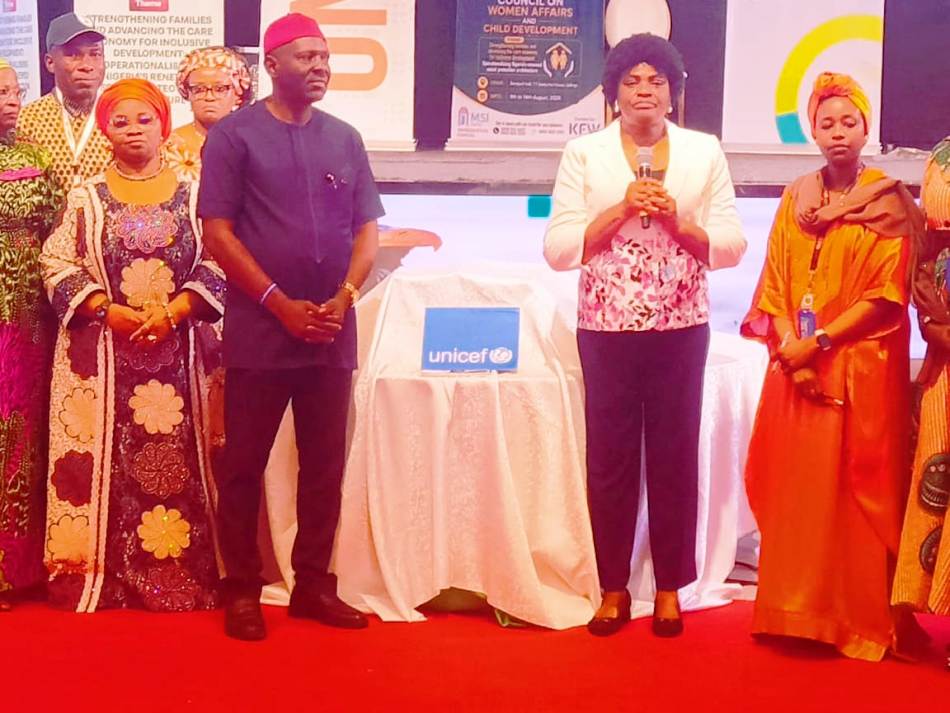
“Ending this violence is therefore not only a moral obligation but also a development imperative,” Asanye stated.
The Permanent Secretary noted that the Federal Government had demonstrated commitment to combating GBV through progressive legal and policy frameworks, including the Violence Against Persons (Prohibition) Act, the Child Rights Act and the National Gender Policy.
She, however, emphasised that legislation alone could not eliminate the menace, stressing the need for effective implementation, stronger institutional coordination, adequate financing and sustained accountability at all levels.
“Today, our task is to identify remaining gaps, share good practices across states, and develop actionable recommendations that will further strengthen Nigeria’s response to Gender-Based Violence,” she said.
The Permanent Secretary also acknowledged the continued support of the United Nations Population Fund (UNFPA), Development Partners, Civil Society Organisations, Traditional and Religious Leaders and Community-Based Actors for their contributions towards protecting the rights of women and girls.
She urged participants to use the meeting to deepen their understanding of Gender-Based Violence, Sexual and Reproductive Health, harmful practices and Protection from Sexual Exploitation, Abuse and Harassment (PSEAH), while developing practical solutions that could be adapted and scaled across the country.
The NTWG meeting brought together Honourable Commissioners for Women Affairs, Permanent Secretaries and Directors from the 36 States and the FCT, representatives of Ministries, Departments and Agencies, security institutions, development partners, Civil Society Organisations, academia, traditional and religious institutions and other stakeholders.
In a presentation titled “Why We Are Here,” the Director, Women Development Department, Federal Ministry of Women Affairs and Social Development, Mrs. Blessing Anunike, said the continued prevalence of violence against women and girls demonstrated the urgent need for a coordinated, multi-sectoral and sustained national response.
According to her, despite progress made through legislation, policies, institutional reforms and investments by governments, Civil Society Organisations and NikkiDevelopment Partners, significant challenges remain, including weak coordination across sectors, inconsistent implementation of GBV laws and policies, limited survivor-centred services, inadequate referral pathways, poor data harmonisation and persistent harmful social norms.
Anunike explained that the National Technical Working Group was established to provide a national multi-sectoral platform for strengthening coordination, policy dialogue, technical collaboration and collective action towards preventing and responding to all forms of GBV in Nigeria.
She said the platform was necessary because “GBV cannot be effectively addressed by any single institution,” noting that an effective response required the coordinated efforts of governments, the justice sector, law enforcement agencies, health institutions, social welfare services, civil society, traditional and religious institutions, development partners and communities.
The Director further disclosed that global statistics indicate that one in every three women experiences physical or sexual violence during her lifetime, with intimate partners being among the most common perpetrators.
Citing the 2024 Nigeria Demographic and Health Survey, she stated that 19 per cent of women aged 15–49 had experienced physical violence, while 23 per cent had experienced intimate partner violence and five percent had experienced sexual violence.
She added that Female Genital Mutilation prevalence remained at 14 per cent, while only 24 percent of women who experienced physical or sexual violence sought help and 58 per cent neither sought help nor told anyone.
According to the National GBV Dashboard covering 2020 to July 3, 2024, a total of 44,350 GBV cases were reported, comprising 37,511 female victims, representing 85 per cent, and 6,839 male victims, representing 15 per cent. The data also recorded 2,132 fatalities.
The most frequently reported forms of violence included physical violence with 17,075 cases, psychological/emotional violence with 14,482 cases, rape with 7,235 cases and defilement with 3,925 cases.
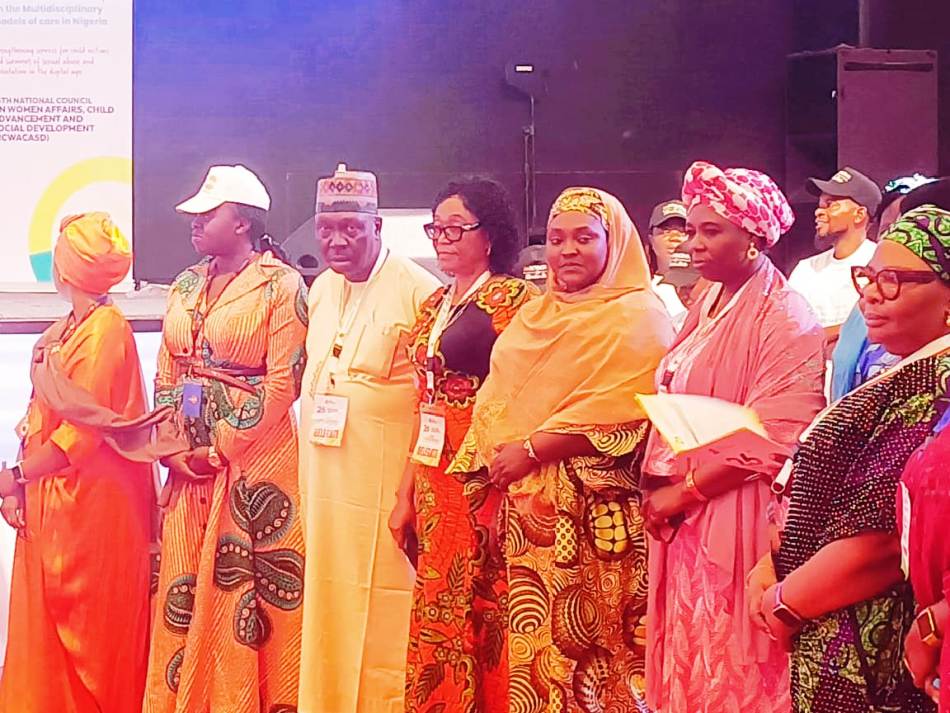
Anunike warned that the statistics represented only reported cases, noting that the actual burden of GBV was likely much higher because of stigma, fear of retaliation, economic dependence, weak reporting mechanisms and cultural norms that discourage disclosure.
She said the NTWG meeting provided an opportunity to review progress across states, strengthen institutional capacity, exchange experiences and best practices, identify service delivery gaps, deepen collaboration and agree on practical actions to improve GBV prevention and response nationwide.
The Director expressed optimism that the technical deliberations would generate evidence-based recommendations capable of strengthening Nigeria’s national response to SGBV and improving the lives of women and girls.
In her Vote of Thanks, the Taraba State Commissioner for Women Affairs and Child Development, Hon. Mrs. Mary Sinjen, FCNA, ACTI, expressed appreciation to the Federal Government, the Honourable Minister of Women Affairs and Social Development, the Permanent Secretary, delegates from the 36 States and FCT, Development Partners and other stakeholders for their contributions to the 26th Regular National Council.
Sinjen, on behalf of the Governor, Government and people of Taraba State, particularly appreciated the Executive Governor of Taraba State, Dr. Agbu Kefas, for his support towards the success of the Council.
She also commended the organising committee, security agencies, media, volunteers and all those who worked behind the scenes, expressing hope that the resolutions and partnerships emerging from the Council would translate into tangible improvements in the lives of women, children, families and vulnerable persons across Nigeria.
Ahmed Lawan Danbazau Mnipr
Head, Information Press and Public Relations Dept.
(FMWASD)