

The Federal Government has reaffirmed its commitment to eliminating rabies in Nigeria by 2030, calling for stronger collaboration among stakeholders in the human, animal and environmental health sectors to intensify mass dog vaccination, public awareness, surveillance and access to post-exposure prophylaxis.
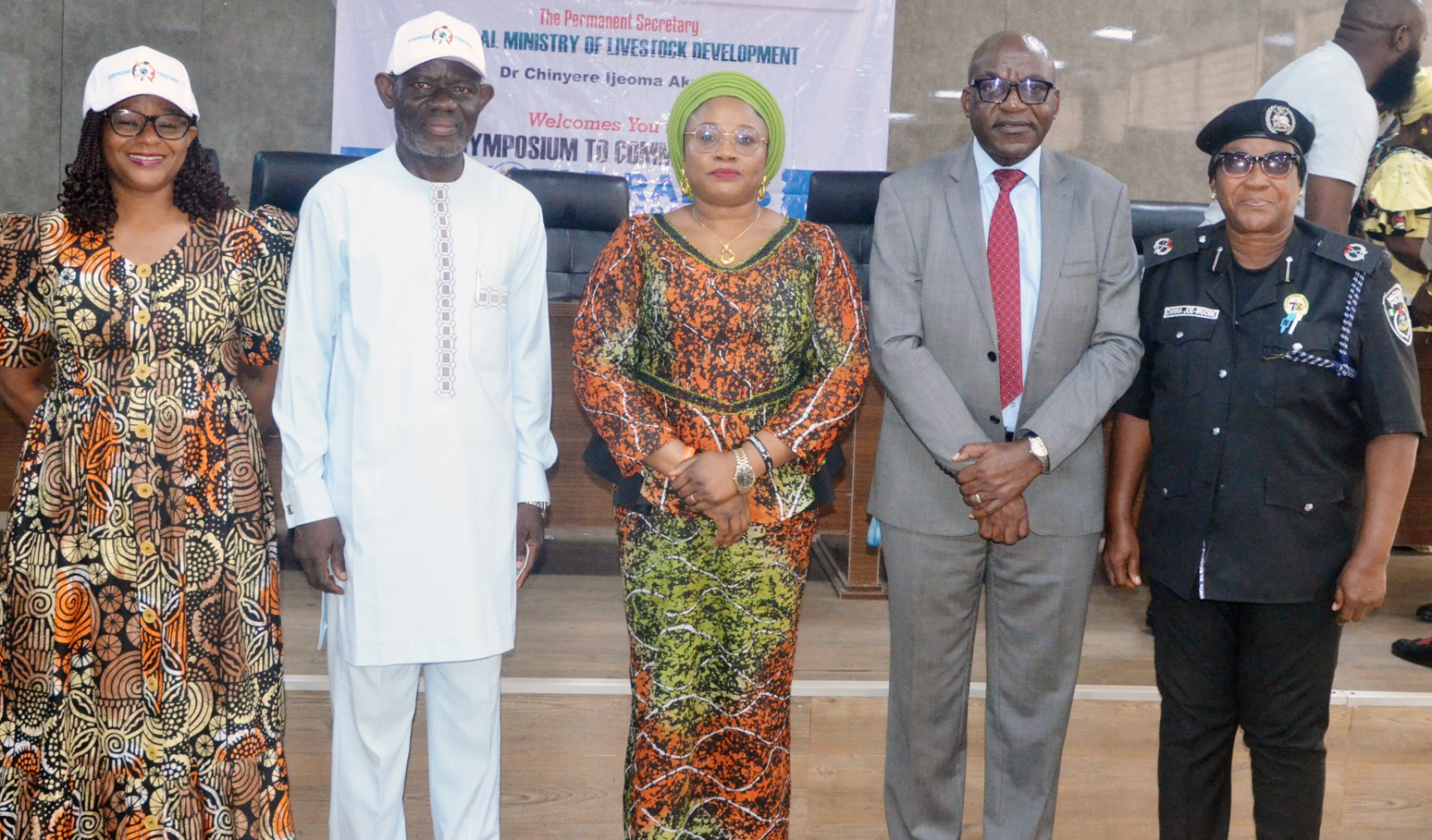
This call was made today Monday 28th September, at the year 2026 World Rabies Day Symposium held in Abuja to commemorate this years theme, “Stronger Together,” with the Permanent Secretary, Federal Ministry of Livestock Development, Dr. Chinyere Ijeoma Akujobi, Chairing the occasion.
In her opening remarks, Dr. Akujobi said that the commemoration was not about celebrating rabies, but about drawing attention to an ongoing public health challenge, remembering those who have lost their lives to the disease and renewing the collective commitment to ending preventable deaths from rabies.
She described rabies as one of the world’s most devastating yet preventable zoonotic diseases, noting that once clinical symptoms appear, the disease is virtually 100 per cent fatal.
She, however, stressed that, rabies deaths can be prevented through responsible animal ownership, vaccination, timely access to post-exposure prophylaxis and effective surveillance.
According to her, dogs account for more than 99 per cent of human rabies deaths globally, making mass dog vaccination one of the most critical interventions for protecting human lives and advancing efforts towards rabies elimination.
The Permanent Secretary said the Federal Ministry of Livestock Development remained committed to strengthening veterinary service delivery, disease surveillance and reporting, laboratory capacity and other public health interventions required to control and ultimately eliminate rabies.
She called on State Governments, Local Government Authorities, veterinary and human health professionals, development partners, traditional and religious leaders, communities and dog owners to support and participate actively in annual mass dog vaccination campaigns.
Dr. Akujobi disclosed that the Ministry procured 26,000 doses of rabies vaccines in the previous year and was working towards procuring additional doses, stressing the need for a coordinated national vaccination plan with clear targets and measurable outcomes towards achieving the 2030 elimination goal.
Also speaking, the Chief Veterinary Officer of Nigeria, Dr. Samuel Anzaku, said the Ministry had received strong political support in its efforts to combat rabies, stressing that successful elimination requires a coordinated One Health approach involving the veterinary, human health and environmental sectors.
Dr. Anzaku identified , inadequate vaccination coverage, limited access to post-exposure prophylaxis, weak surveillance systems and inadequate sustainable financing as some of the challenges confronting rabies control in Nigeria.
He, however, noted that the challenges also provide opportunities for innovative, evidence-based and collaborative interventions, assuring that the Office of the Chief Veterinary Officer remained committed to providing the technical leadership and coordination required to advance Nigeria’s journey towards rabies elimination by 2030.
In their goodwill messages, representatives of the Federal Ministry of Health, Core Group Partners Project, Nigeria Veterinary Medical Association, World Health Organization, War Against Rabies Foundation, Small Animal Veterinary Association of Nigeria, Federal Ministry of Environment, FCT Administration and Kick Out Rabies Development Initiative, among others, reaffirmed their commitment to supporting Nigeria’s efforts to eliminate rabies.
The stakeholders emphasised the importance of the One Health approach, calling for stronger inter-sectoral coordination, improved access to post-exposure prophylaxis, sustained community sensitisation, responsible dog ownership, strengthened surveillance and continuous mass vaccination of dogs.
The WHO representative stressed the importance of protecting children, who constitute a significant proportion of people affected by rabies, while calling for equitable access to post-exposure prophylaxis and increased public awareness of dog vaccination schedules.
The Core Group Partners Project reaffirmed its commitment to supporting community-based awareness, surveillance, reporting and demand creation for rabies vaccination at the grassroots level.
The commemoration concluded with a renewed commitment by stakeholders to work “Stronger Together” towards achieving a rabies-free Nigeria by 2030.
Henrietta Okokon
Deputy Director, Press and Public Relations
28 September 2026