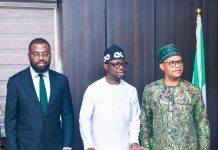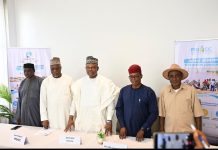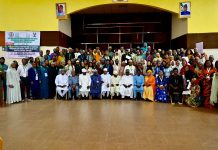


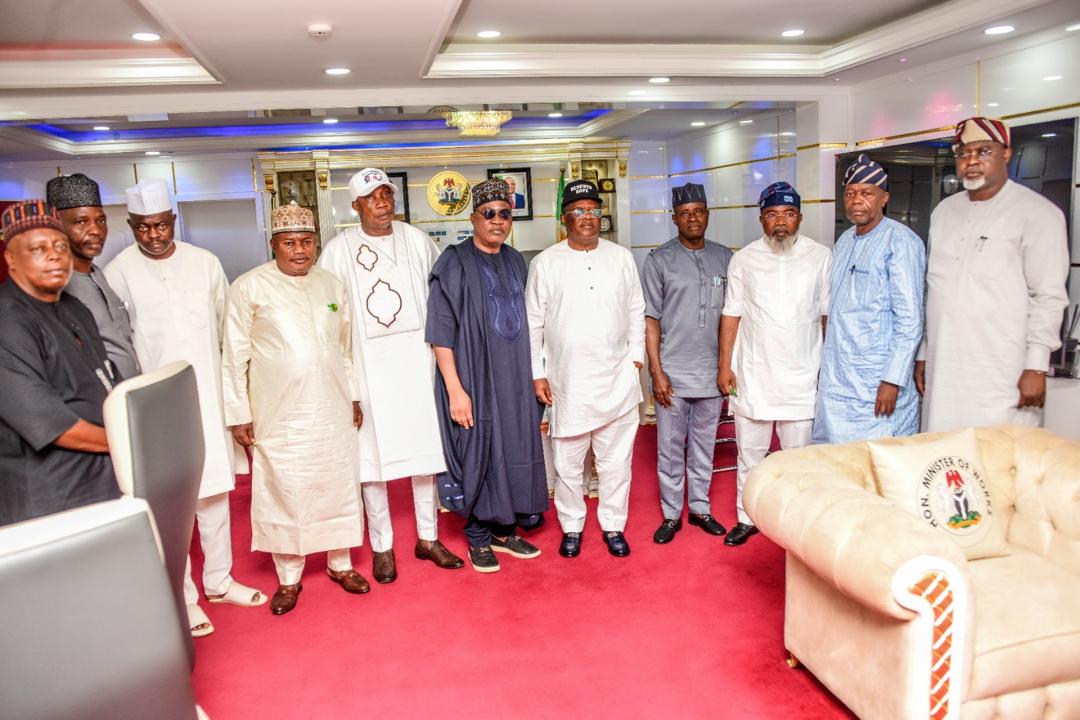
A high-level engagement between the Honourable Minister of Works, Sen. Engr. David Umahi, CON, FNSE, FNATE, and the Honourable Commissioner for Works, Kogi State, Hon. Salam Ozige Deedat, have reaffirmed the commitment of both the Federal Government and the Kogi State Government to the sustained development of critical road infrastructure across the state.
At the meeting, the Honourable Commissioner expressed appreciation for the ongoing federal interventions on major road corridors, particularly the Abuja–Lokoja–Okene axis and other adjoining routes, noting that successive administrations have contributed to these projects, but observing that recent efforts under the current Renewed Hope Administration have demonstrated greater visibility and impact. He further commended the Minister for his prompt visit to Kogi State upon assumption of office, describing it as a clear demonstration of his connection and commitment to the state despite it not being his place of origin.
In addition, he acknowledged the consistent presence of federal teams and contractors on sites, while also pointing out that although progress on key corridors such as the Abuja–Lokoja and Lokoja–Okene are evident, delays in some sections and flyover construction have created traffic challenges that require urgent attention.
Moreover, he highlighted other strategic routes, including Okene–Ajaokuta, Takete–Mopa–Isanlu–Egbe towards Kwara State, as well as the Lokoja–Okene corridor, stressing that they all demand accelerated intervention, especially given Kogi State’s strategic proximity to the Federal Capital Territory.
In response, the Honourable Minister explained that the major challenge confronting infrastructure delivery nationwide remains funding, even as the Federal Government continues to intensify efforts to address infrastructure deficits across all regions. He emphasised that the current administration is undertaking unprecedented road construction and rehabilitation works, noting that if past administrations had achieved similar levels of development, the present infrastructure pressure across the country would have been significantly reduced. He also reiterated that all parts of the country are demanding attention, adding that ongoing works are being systematically reviewed and restructured to ensure proper delivery and accountability.
Specifically addressing the Abuja–Lokoja corridor, the Minister stated that the road, which was previously in a deplorable condition, is now undergoing extensive reconstruction, with several contractors handling different sections. He explained that a 48-kilometre stretch formerly handled by Bulletine Construction is being restructured under concrete pavement due to funding and durability considerations, while an 86-kilometre section previously executed by Gitto has also been re-awarded and reorganised for renewed construction works. Similarly, he disclosed that additional sections, including a 56-kilometre stretch, are being rescoped from asphalt to concrete pavement after contractors voluntarily agreed to adopt a more durable construction method within the available cost framework. Furthermore, he noted that about 50 kilometres remain, which have now been divided between contractors such as JRB and Trucrete to accelerate completion.
In the same vein, he explained that other contractors, including CGC, CCECC, BUA, and CBC, are actively working on various segments of the corridor, with several portions already completed or ongoing under concrete pavement technology. He stressed that this transition to concrete construction is deliberate, as it ensures long-term durability and reduces maintenance costs, unlike previous asphalt methods that deteriorate quickly due to water penetration and inadequate shoulder protection.
While addressing concerns raised about national security, the Minister acknowledged the strong relationship between infrastructure and security, noting that poor road networks often exacerbate insecurity. Consequently, he revealed that the Ministry is considering integrating solar-powered lighting and CCTV surveillance systems along critical highways such as Abuja–Lokoja Expressway to enhance monitoring, safety, and response capabilities. He further assured that similar interventions will be extended to other strategic corridors to improve security and protect road users.
Additionally, he provided updates on several ongoing and planned national projects, including the Trans-Saharan Highway, which forms part of the President’s Legacy Road Infrastructure initiative and passes through Kogi, Benue, and Nasarawa States before terminating at Apo in the FCT. He also referenced the Makurdi–9th Mile corridor, the Kabba–Ado Ekiti road project, and other interventions under the Renewed Hope Infrastructure Programme, noting that several of these projects are captured within the 2024–2026 budget cycle, with funding already allocated but awaiting full mobilisation or contractor deployment in some cases.
Moreover, he urged stronger collaboration between the federal and state governments, encouraging sub-national governments to complement federal efforts by undertaking basic interventions such as stone-base construction and maintenance works, where necessary. He also advocated for the adoption of more durable road construction methods, particularly concrete pavement and reinforced mesh technology, which have proven effective in states where they have been implemented.
Mohammed A. Ahmed
Director, Information and Public Relations.
30 April, 2026.