
The Federal Government has reaffirmed its commitment to reducing Nigeria’s cancer burden by at least 30 per cent by 2030 through strengthened prevention, early detection, treatment, research, innovation and strategic partnerships.
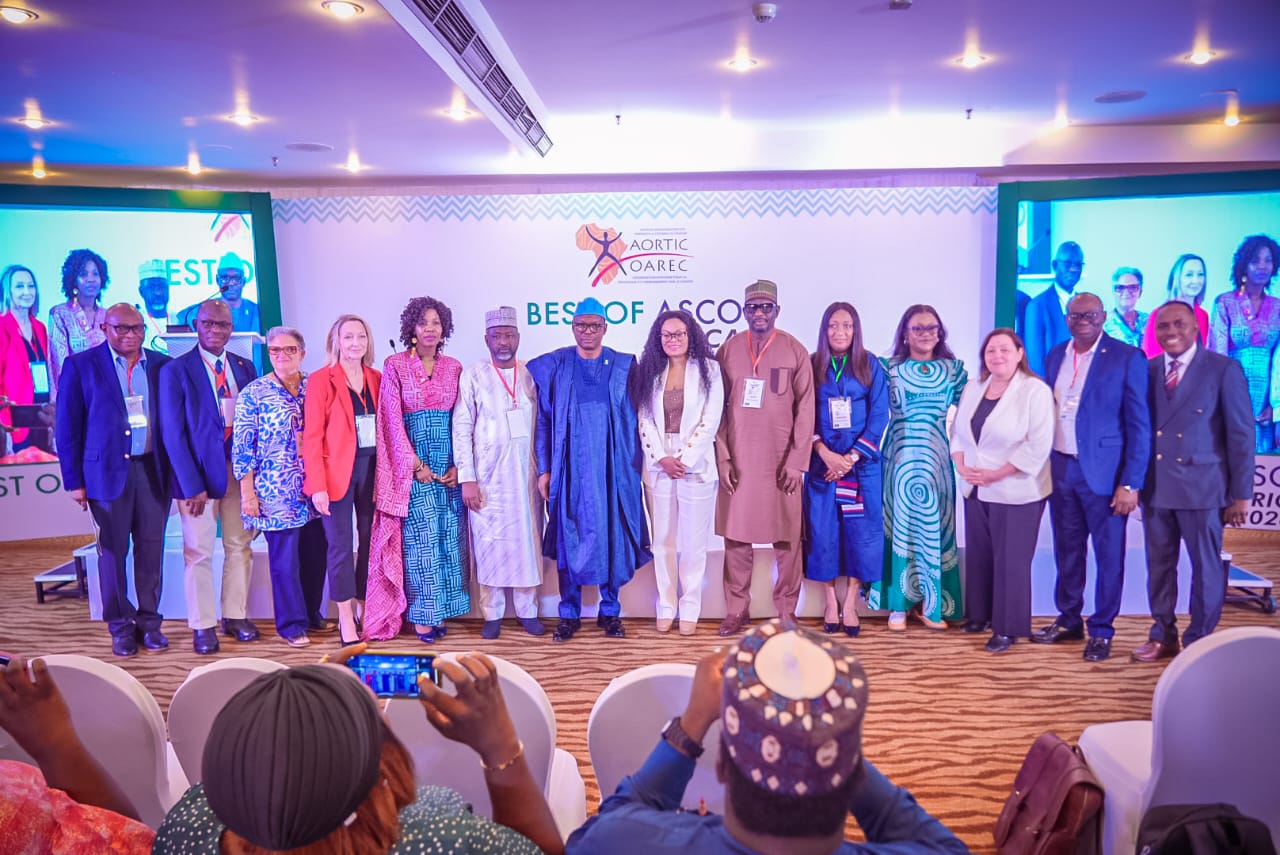
The Honourable Minister of State for Health and Social Welfare, Dr. Iziaq Adekunle Salako, gave the assurance while declaring open the African Organization for Research and Training in Cancer (AORTIC) Best of ASCO Africa 2026 Conference, held at the Transcorp Hilton Hotel, Abuja.
The conference, which runs from July 10 to 11th July, 2026, brings together oncology experts from across Africa to review and contextualise the latest scientific breakthroughs presented at the 2026 American Society of Clinical Oncology (ASCO) Annual Meeting.
The Minister described the conference as a critical platform for translating global oncology discoveries into practical, context-specific solutions capable of improving cancer care and patient outcomes in Africa.
Dr. Salako noted that Africa continues to face an alarming cancer burden, with the 2024 Global Cancer Observatory (GLOBOCAN) reporting over 1.18 million new cancer cases and more than 721,000 cancer-related deaths across the continent. He observed that Nigeria accounts for about 10.5 per cent of Africa’s cancer burden, placing it among the three most affected countries.
He attributed the increasing burden to lifestyle and environmental risk factors, population ageing, inadequate implementation of early detection programmes, weak treatment infrastructure and persistent health inequities.
The Minister stated that under the Renewed Hope Agenda of President Bola Ahmed Tinubu, GCFR, cancer prevention and control have become national priorities, leading to the development and implementation of the Nigeria National Cancer Control Plan (2026–2030).
According to him, the Plan provides a comprehensive roadmap covering cancer prevention, risk assessment, diagnosis, treatment, patient navigation, survivorship, research, data management, artificial intelligence, resource mobilisation, partnerships and oncology workforce development.
He disclosed that the Federal Government has inaugurated a multi-sectoral National Technical Working Group comprising clinicians, researchers, cancer survivors, civil society organisations, development partners and private sector representatives to coordinate implementation of the Plan using an implementation science approach that delivers measurable results.
Dr. Salako challenged African oncology professionals to move beyond simply adopting research findings generated elsewhere by conducting local studies that validate global evidence within African populations.
“Our challenge is not to take findings from other environments and apply them hook, line and sinker, but to replicate such research in Africa to establish their applicability within our own populations.”
The Minister stressed that cancer is no longer a distant threat but an urgent public health challenge requiring coordinated continental action. He noted that while the science of cancer prevention is well established and political commitment across Africa is stronger than ever, greater collaboration, sustainable financing and effective implementation are needed to significantly reduce cancer incidence and mortality.
He further called for a new era of Healthcare Pan-Africanism, urging African nations to elevate health collaboration alongside politics, security and trade by promoting joint research, knowledge sharing, workforce development and coordinated investments in cancer care.
According to him, initiatives such as Best of ASCO Africa demonstrate the importance of African-led platforms that contextualise global scientific advances to local realities while strengthening collaboration among oncology professionals across the continent.
Dr. Salako reaffirmed Nigeria’s readiness to provide leadership in advancing cancer research, education, advocacy and partnerships that will accelerate progress towards improved cancer prevention, treatment and survivorship across Africa.
He welcomed participants from across the continent, and commended the African Organization for Research and Training in Cancer (AORTIC), the Best of ASCO Africa Planning Committee and all partners for organising the conference and encouraged participants to leverage the scientific sessions to improve standards of cancer care throughout the continent.
Ado Bako
Assistant Director, Information & Public Relations.