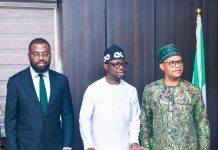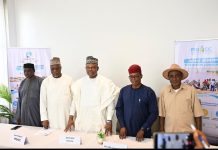

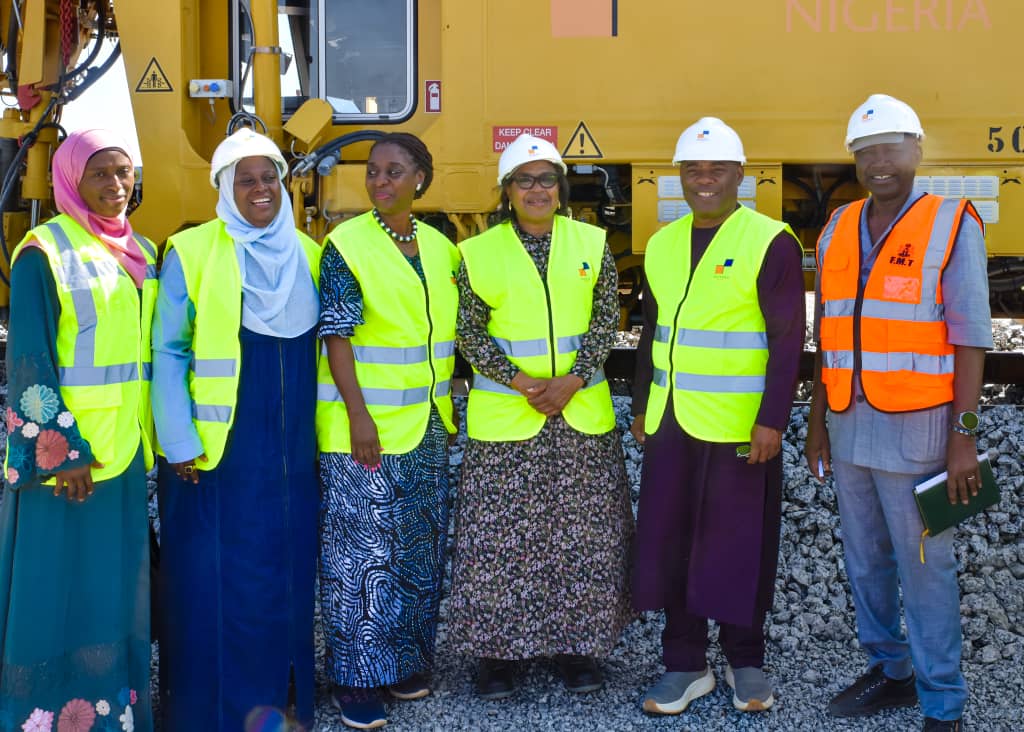
The Permanent Secretary, Federal Ministry of Transportation, Engr. Funsho Adebiyi, FNSE, has reaffirmed that the Kaduna–Kano and Kano–Daura–Katsina sections of the Kano–Maradi Railway Development Project remain on schedule for commissioning in December 2026.
Engr. Adebiyi gave the assurance during an inspection of the project by officials of the Debt Management Office (DMO), led by its Director-General, Patience Oniha, to assess progress on the Federal Government-funded railway project.
He described the pace and quality of construction as encouraging, noting that rail laying has commenced, while most construction materials have been delivered to project yards in Kazaure and Katsina. He added that rigorous quality assurance measures, including geotechnical investigations and laboratory testing of construction materials, are being carried out to ensure compliance with international engineering standards and global best practices.
Speaking on the level of completion, the Permanent Secretary disclosed that the overall project has attained between 70 and 75 per cent completion since it was awarded in 2021. He further stated that the Kaduna–Zaria–Kano section is between 80 and 85 per cent complete and is currently undergoing finishing works.
He also revealed that successful test runs have already been conducted on the Kano–Maradi section, adding that over 500,000 of the estimated 800,000 project components have been produced, while all the required rail tracks have already been procured.
Engr. Adebiyi noted that the project has created employment for over 4,500 workers, including about 200 expatriates, while also facilitating technology transfer through the training of Nigerian engineers and technicians in specialised railway construction.
He identified the procurement of rolling stock as the next major milestone towards achieving the December 2026 commissioning target.
On the challenges affecting the project, the Permanent Secretary cited vandalism of construction materials, land access issues in some urban areas, and illegal laterite mining along the Kano–Dutse corridor as key concerns.
He said the Ministry would strengthen collaboration with security agencies to protect project assets and continue engaging the Kano State Government and other relevant authorities to address illegal mining activities.
Engr. Adebiyi also commended the support of traditional rulers and host communities, noting that sustained stakeholder engagement has improved access to project sites. He further disclosed that several communities have withdrawn court cases after recognising the project’s economic and social benefits, thereby strengthening public support for its successful execution.
He reaffirmed the Federal Government’s commitment, under the Renewed Hope Agenda, to delivering modern railway infrastructure that will enhance connectivity, stimulate economic growth, and improve transportation across the country.
Speaking during the inspection, the Director-General of the Debt Management Office, Patience Oniha, described the loan secured by the Federal Government for the project as fully justified, noting that borrowing for critical capital infrastructure is consistent with the provisions of the Fiscal Responsibility Act.
She explained that the DMO, working with a consortium of financial institutions, arranged the financing because projects of such magnitude cannot be funded through annual budgetary allocations alone.
Oniha said the visit provided an opportunity to witness firsthand the impact of the financing, particularly in the areas of job creation, increased use of locally sourced materials, and the rapid pace of construction.
She noted that the project currently employs over 4,500 workers, the majority of whom are Nigerians, while the extensive use of locally produced construction materials is boosting domestic economic activity beyond the railway sector.
Describing the inspection as highly rewarding, Oniha reiterated the DMO’s commitment to supporting the financing of strategic infrastructure projects that advance the Federal Government’s Renewed Hope Agenda and national economic development.
Gift Osima Seddon
Assistant Director (Information & Public Relations)