


FIC REPORT (PLATEAU STATE) – Plateau State Governor, Caleb Manasseh Mutfwang, Esq, has described the purpose for the establishment of state police as a necessary step towards strengthening Nigeria’s internal security architecture, saying the journey towards decentralised policing is integral to national security.
?
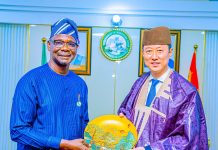
?The Governor disclosed this on Wednesday, September 9, 2026, during a meeting with the Plateau State Police Advisory Committee, where a progress report was presented to him at the New Government House, Rayfield, Jos.
?
?Governor Mutfwang commended President Bola Ahmed Tinubu for taking bold steps towards actualising true federalism, particularly through efforts to decentralise the nation’s security architecture. He said the current centralised structure of the Nigeria Police Force was too large for optimal effectiveness, stressing that “state police would enhance efficiency and enable states to respond more effectively to local security challenges and mechanisms must be established to minimise the possibility of abuse by governors or other authorities.”
?
?The Governor also commended the Nigeria Police Force, particularly the Police Mobile Force, for its contribution to maintaining peace on the Plateau, while stressing that the advocacy for state police was not borne out of a loss of confidence in the existing police structure but a gab necessary for action.
?
?Mutfwang directed the State Police Advisory Committee, which was inaugurated in March 2026, to subject its draft report to broader stakeholder validation before producing the final document.
He called for the involvement of academics, technocrats, traditional rulers and other relevant stakeholders, expressing optimism that the National Assembly would accelerate consideration of the state police initiative when it resumes.
He added that, as a member of the implementation committee of the Nigerian Governors’ Forum, the committee’s report would enable him to contribute meaningfully to the national process.
?
?The Governor disclosed that the procurement process for security cameras promised by President Tinubu had commenced, following a technical assessment of security infrastructure in the state.
He said Plateau had already made substantial investments in security, including a modern control centre, but emphasised the need to make existing infrastructure more operational and effective.
He further disclosed that additional military formations had been approved for deployment to Plateau, including battalions in Riyom, Mangu and Wase, as well as a brigade in Langtang, with efforts underway to identify temporary locations and land for permanent barracks.
?
?On community security, Mutfwang stressed the importance of involving traditional rulers in the proposed state policing framework, describing policing as a community affair.
He appealed to traditional rulers to help restore the spirit of communal responsibility, particularly in matters involving land for public infrastructure and security installations.
?
?Earlier, the Chairman of the State Police Advisory Committee, DIG Habila Joshak, said the current security architecture was inadequate to address emerging security challenges and urged stakeholders to contribute ideas towards creating a workable police service for Plateau State.
The Director-General of the Plateau State Peace Building Agency, Mrs. Julie Sanda, who presented the committee’s progress report, said the committee had completed preliminary reports from its various subcommittees and had undertaken consultations with traditional rulers, the State House of Assembly, security institutions and relevant federal authorities.
She disclosed that the committee had completed drafts of the Plateau State Police Service Establishment Law 2026 and Plateau State Police Service Regulations 2026, with further consultations planned across the 17 local government areas before final validation.
Bonkat Ramap Bitrus
Assistant Director
Head of Centre