

…….Calls for End to Exclusion of 45 Million Persons with Disabilities from Security Governance.
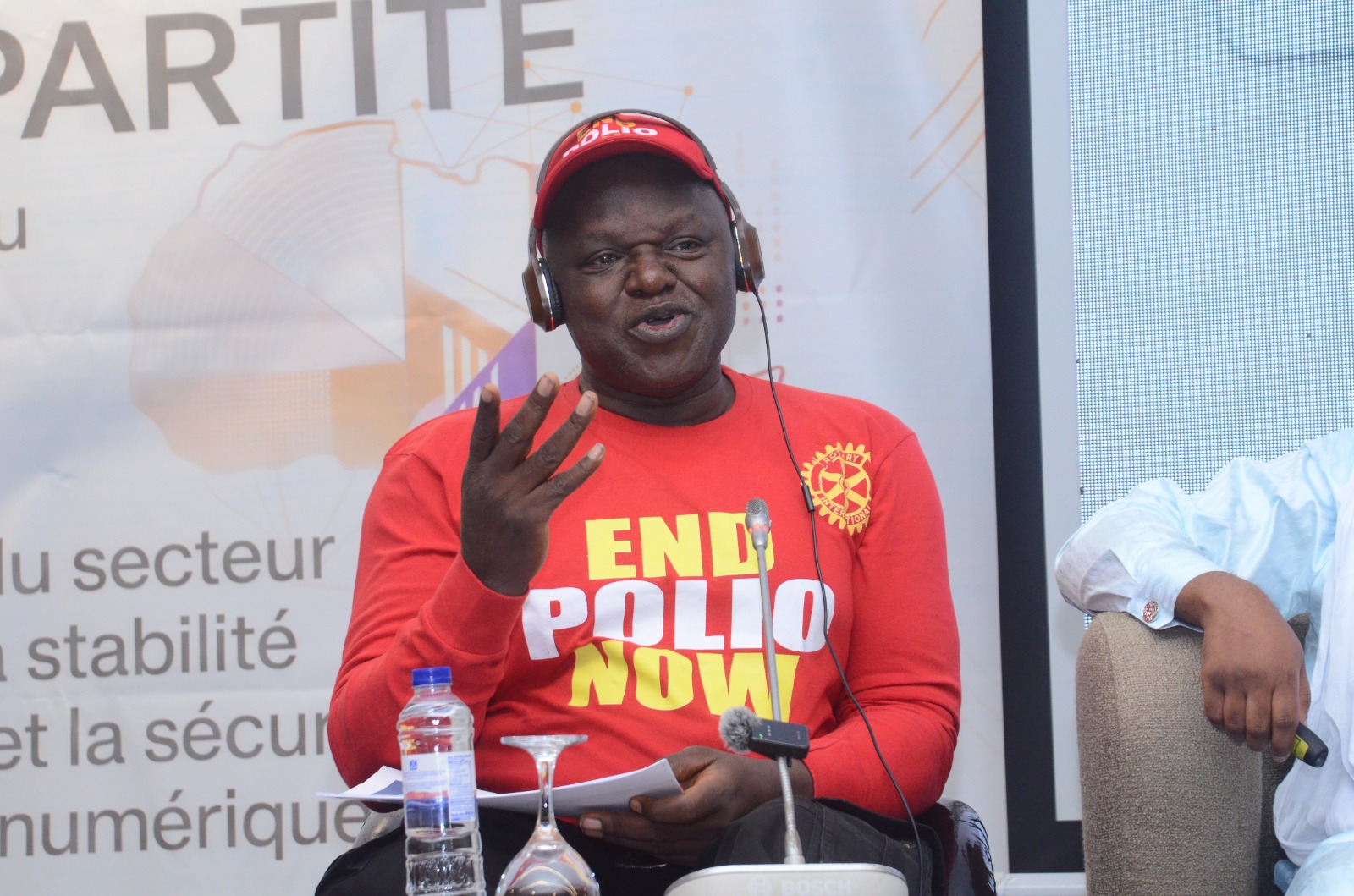
The Executive Secretary, National Commission for Persons with Disabilities (NCPWD), Hon. Ayuba Burki Gufwan, has presented a landmark position on “Persons with Disabilities in the ECOWAS Security Sector: Reform and Democratic Governance of the Security Sector” at the Regional Multi-Stakeholder Dialogue on Democratic Security Sector Reform and Governance, Institutional Stability and Human Security in the Digital Age, holding in Dakar, Senegal.
The high-level dialogue, themed “Advancing inclusive institutions, democratic accountability and human security in the digital age,” brought together security chiefs, policymakers, civil society, and development partners across West Africa.
Hon. Gufwan posed the central question guiding his intervention with key questions on how ECOWAS can protect persons with disabilities as rights holders, decision-makers, and contributors to peace and stability.
The Executive Secretary outlined three foundational realities that make inclusion urgent:
First, he drew the attention of policy makers on Exclusion from Policy and stated that disability exclusion is largely underestimated, isolated from core ECOWAS peace and security agendas, absent from security reform policies and humanitarian crisis responses.
His second submission was on high vulnerability, with 60 million persons with disabilities representing about 15% of the West African population.
He said PWDs experience heightened risks of systemic neglect and violence from humanitarian and security crises, conflicts, forced displacements, and police or military operations.
Third, he spoke on data and infrastructure gaps; noting that the region lacks standardized disability data collection, such as consistent use of the Washington Group questions, and institutional mechanisms to include Organizations of Persons with Disabilities (OPDs) in security sector dialogue.
He stressed that disability must be understood within security governance through three lenses, which are security as a human right, security as democratic governance, and persons with disabilities as agents.
On security as a human right, Gufwan hinged on equal protection from violence, terrorism, conflict, arbitrary detention, abuse, and discrimination.
On security as democratic governance, the Executive Secretary focused on Intelligence, justice, correctional, and oversight, which must be accountable, accessible and inclusive.
As regards persons with disabilities as AGENTS, Gufwan stated that PWDs must not be passive victims but as actors in policy development, conflict analysis, community peacebuilding, security research, and public accountability.
“Exclusion often results from environmental, institutional, communication, and attitudinal barriers, not simply from an individual’s impairment. Reform must address both the conduct of security personnel and the systems that determine who can access protection, influence decisions, and seek redress,” Hon. Gufwan stated.
Gufwan added his voice to why Disability Inclusion Matters in West Africa, noting that he has identified six intersecting security challenges that create distinct barriers to protection, participation, and recovery for PWDs:
One of it, he said, is in the area of conflict and displacement, which has to do with inaccessible evacuation routes, shelters, transport, and humanitarian distribution points.
The other, according to him, is communication barriers stressing that warnings and instructions are not available in sign language, audio, braille, plain language, or accessible digital formats.
More of the intersections include protection risks, elevation of violence, exploitation, abandonment, family separation, and gender-based violence.
He also identified access to justice, inaccessible police stations, courtrooms, complaints, and detention facilities.
The fifth area is political exclusion, which has to do with inadequate representation in peace talks, elections, negotiations, and oversight bodies.
His final position was on economic insecurity, loss of livelihoods, assistive devices, access to aid, and community support during crises.
On six Governance Principles for Reform, Hon. Gufwan proposed that democratic security sector reform must deliver on six principles with disability inclusion integrated across assessment, policy formulation, budgeting, implementation, monitoring, investigation, and institutional reform:
He said Legality Institutions must operate under the law and respect human rights, with civilian oversight that should see elected authorities, legislatures, courts, and independent oversight bodies do their jobs properly while affected communities, including OPDs, influence security policy and reforms are involved.
Gufwan also mentioned accountability, which has to do with misconduct, discrimination, abuse, and inaction, which are investigated and remedied.
He said facilities, information, services, technologies, and complaint processes should also be accessible for all people with different disabilities not forgetting that human security in form of policies advance safety, dignity, livelihoods, freedom and resilience are adhered to.
The objectives of the presentation sought to
examine the place of persons with disabilities in SSG across ECOWAS Member States, review international, African, regional, ECOWAS, and national legal and policy frameworks, Identify gaps in representation, accessibility, accountability, protection and participation.
Other objectives include highlighting digital transformation implications for disability-inclusive security governance and proposing actionable reforms for ECOWAS governments, security apparatus, and civil society.
Hon. Gufwan noted that Nigeria, through the NCPWD and the Renewed Hope Agenda of President Bola Ahmed Tinubu, is advancing disability-inclusive governance models such as the National Farm Cities Project and inclusive budgeting, and is ready to share lessons with ECOWAS.
He called on ECOWAS Commission, Member States and security institutions to adopt the Washington Group Short Set for data, mandate OPD participation in security sector reform, audit physical and communication accessibility of security institutions, and establish disability desks across police, military and civil defence formations.
Signed: Ishaku Kigbu (anipr)
Media and Publicity Unit
National Commission for Persons with Disabilities (NCPWD)
28/10/2626