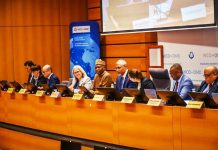



The Bureau of Public Procurement (BPP) has taken a significant step towards promoting inclusive procurement practices in Nigeria with a peer-to-peer learning initiative for procurement officers.
The initiative, organised in collaboration with the International Trade Centre (ITC) and Korea Public Procurement Services (PPS), aims to enhance procurement officers’ understanding of best practices in implementing affirmative Procurement policies.
The soon to be deployed National Policy on Affirmative Procurement seeks to create opportunities for marginalised groups, including women, youths, persons with disabilities, veterans, and the elderly, to participate in government contracting.
The policy proposes several measures to achieve this goal, including: reserving a minimum percentage of contracts for target groups; giving additional scoring margins to target groups during bid evaluation; requiring large contractors to allocate portions of their contracts via acceptable subcontracting to target-group businesses; and, enabling SMEs to pool their capacity and compete for larger contracts known as joint bidding and budding.
The peer-to-peer learning initiative held via webinar on Wednesday, February 11, 2026.
It featured presentation on an overview of the Policy by the Director-General of BPP, Dr Adebowale A. Adedokun, FCIPS, FCILT, ACFE represented by Head of Energy Infrastructure Department (EID) of BPP and Focal Person on the National Technical Working Group for National Policy on Affirmative Procurement, Engineer Eugenia Ojeah and Deputy Director for International Cooperation Division of Public Procurement Service of Korea, Mr Bongki Shin.
The webinar session was moderated by Ines Aguiar Machado of ITC.
While Engineer Ojeah outlined steps that shall be taken by Nigeria towards implementing and institutionalising its affirmative procurement practice, Mr Shin shared Korea’s experiences and best practices on affirmative procurement, including e-procurement systems and SME promotion.
Shin said that Korea’s affirmative procurement framework included 8 per cent set-aside for women-owned businesses; a significant portion of government contracts reserved for women-owned businesses; 5 per cent set-aside for youth-led businesses.
The BPP said it was satisfied with the knowledge derived from the peer learning, assuring participants at the webinar that the Bureau would finalise the National Policy on Affirmative Procurement and launch it with stakeholders.
Engineer Ojeah said that the policy would be rolled out with capacity-building programmes and a monitoring framework to ensure its effective implementation.
e-Signed
Zira Zakka Nagga,
Head of Press and Public Relations Unit (BPP)
February 13, 2026