


FIC REPORT (LAGOS STATE) – Nigeria’s quest to modernise its seaports may continue to deliver limited results unless government simultaneously tackles the infrastructure and logistics bottlenecks outside the terminals, stakeholders at the 4th Annual Maritime Lecture of the Maritime Reporters’ Association of Nigeria have warned.
At the MAMAL 2026 lecture held on Thursday in Victoria Island, Lagos, stakeholders argued that port competitiveness goes beyond installing modern equipment and automating terminal operations, stressing the need for efficient cargo evacuation, competitive charges, skilled manpower, effective regulation and supporting infrastructure.
The lecture, themed “Nigerian Ports Modernisation, Charges and the Competitiveness Question,”provided a platform for industry experts to examine the factors undermining the competitiveness of Nigerian ports.
One of the strongest interventions came from the Director, Technical and Operations, Tantita Security Services Limited, Captain Wareddi Enisuoh, who said modernising the ports without fixing the roads, bridges, waterways and other cargo evacuation routes would only relocate the congestion from the terminals to the port corridors.
“You cannot modernise a port without modernising your exit points, “Enisuoh said.
He argued that even if Apapa and Tin Can Island ports were fully automated, the gains would remain largely unrealised if cargo continued to encounter bottlenecks immediately after leaving the terminals.
“If you like, automate Apapa Port. If you don’t automate outside of Apapa Port or even Tin Can Island, you are still going nowhere,”he said.
Enisuoh drew attention to international examples, citing Togo’s one-stop-shop system, which he said had simplified port transactions by allowing users to make payments for various services through a more streamlined process.
He also referenced the Port of Los Angeles, where automation, artificial intelligence and GPS-enabled systems have enhanced container handling and cargo movement.
According to him, such technologies can improve the stacking, retrieval and movement of containers, reducing delays and increasing terminal efficiency.
But he questioned the value of sophisticated port systems when cargo faces multiple obstacles once it exits the terminal.
“But what happens when you come out of the port?”he asked, pointing to informal collection points, security checkpoints and other bottlenecks along cargo evacuation routes.
The Tantita executive also took aim at Nigeria’s overdependence on trucks for the movement of cargo from Lagos ports to other parts of the country, particularly the eastern region.
He said the heavy concentration of trucks on Lagos roads and bridges was putting enormous pressure on already strained infrastructure, while contributing to congestion and making road maintenance more difficult.
Rather than relying almost exclusively on road transport, Enisuoh called for increased investment in barging and inland waterways, arguing that a stronger multimodal cargo-evacuation system would reduce the number of trucks on the roads, ease pressure on bridges and help improve overall port efficiency.
He also urged the Federal Government to develop ports outside Lagos and reduce the concentration of maritime activities in the country’s commercial capital.
Enisuoh cited the Lekki Deep Sea Port, Warri Port and Port Harcourt Port, among others, stressing that approved deep-sea port projects should be developed to their full potential.
His position was reinforced by the Acting Rector of the Maritime Academy of Nigeria, Dr Kevin Okonna, who stressed that infrastructure and technology would not automatically translate into competitive ports without competent professionals to operate and sustain them.
Okonna said port competitiveness was ultimately about efficiency, innovation, safety, technology, effective regulation and quality human capital, stressing the importance of developing the skills required to manage modern maritime infrastructure.
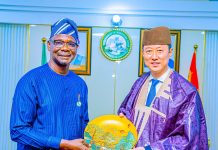
The lecture also featured the investiture of the President of the National Association of Government Approved Freight Forwarders, Chief Tochukwu Ezisi, as Patron of MARAN.
The discussions underscored a central message from the event: Nigeria’s port-modernisation drive must move beyond the terminal gates and embrace the entire logistics chain—from cargo handling and documentation to roads, waterways, technology and the human capacity required to make the system work.
Sourced and Reported by:
IYEDEH Onowouzou David
ACIO&PRO
11/09/2026 .