


The Federal Government has reaffirmed its commitment to strengthening collaboration with key industry stakeholders to increase fertilizer consumption, boost agricultural productivity, and advance Nigeria’s food security objectives.
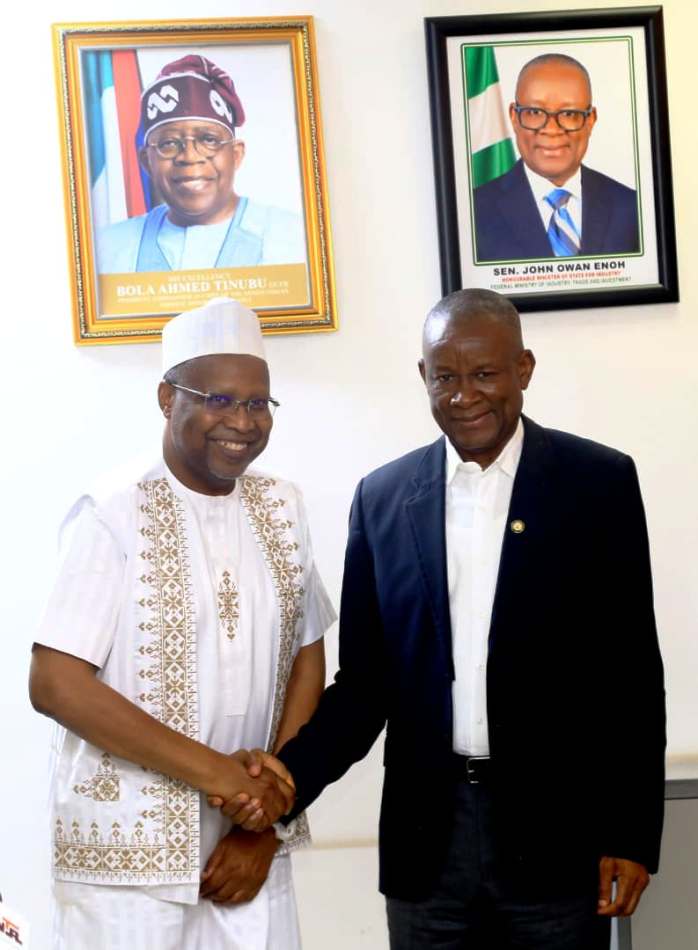
This was the focus of a strategic engagement between the Federal Government delegation led by the Honourable Minister of State for Industry, Senator John Owan Enoh, and the leadership of the Fertilizer Producers and Suppliers Association of Nigeria (FEPSAN), headed by its President, Abubakar Sadiq Kassim.
The meeting, held on Wednesday, 11 March 2026 in Abuja, provided an opportunity for both sides to review developments in Nigeria’s fertilizer industry and explore ways to deepen cooperation aimed at improving access to fertilizers for farmers across the country.
During the engagement, FEPSAN presented an overview of the fertilizer sector, highlighting the significant expansion recorded in recent years. The Association noted that the number of fertilizer blending and manufacturing plants in Nigeria has grown from about 38 in 2015 to over 100 across the country, reflecting increased private sector investment, higher production capacity, and expanded employment opportunities within the industry.
Despite these gains, the Association expressed concern over the relatively low level of fertilizer consumption in the country. While Nigeria currently has an estimated annual production capacity of about 16 million metric tonnes of assorted fertilizers, domestic consumption remains around 2 million metric tonnes.
The Association further noted that Nigeria’s fertilizer application rate remains below the continental benchmark. According to FEPSAN, farmers in Nigeria apply about 24 kilograms of fertilizer per hectare compared to the African target of 50 kilograms per hectare, underscoring the need for policies and interventions that will encourage higher adoption among farmers.
FEPSAN President, Abubakar Sadiq Kassim, emphasized that increasing fertilizer usage is essential for improving crop yields and ensuring sustainable agricultural growth.
“Nigeria has made remarkable progress in expanding fertilizer production capacity, but the key challenge now is ensuring that farmers are able to access and utilize these inputs effectively to improve yields and strengthen the nation’s food security,” Kassim said.
The discussions also underscored the growing importance of Nigeria’s fertilizer industry within the non-oil export sector. Companies such as Indorama Eleme Fertilizer & Chemicals and Dangote Fertilizer Limited were noted for their significant contributions to urea production for both export and domestic supply.
Participants also recalled the establishment of the Presidential Fertilizer Initiative following a state visit by former President Muhammadu Buhari to Morocco, which laid the foundation for local fertilizer blending by combining locally sourced materials with imported raw inputs.
In his remarks, the Honourable Minister of State for Industry, Senator John Owan Enoh, stressed the importance of stronger coordination between the Federal Ministry of Industry, Trade and Investment and the Federal Ministry of Agriculture and Food Security, noting that farmers remain the ultimate beneficiaries of the fertilizer value chain.
“Strengthening collaboration across government and industry stakeholders is essential to ensure that our fertilizer production capacity translates into real impact on farms, higher yields for farmers, and improved food security for the country,” the Minister stated.
Both parties agreed to deepen collaboration and explore practical strategies that will stimulate demand, support local production and ensure that fertilizers are readily accessible to Nigerian.famers.
Obilor -Duru Augustina Okechi
Head Press and PR
FMITI
11th March 2026