

Nigeria’s economic reform programme under President Bola Tinubu is steadily moving the country away from a cycle of economic vulnerability toward a more stable and growth driven path.
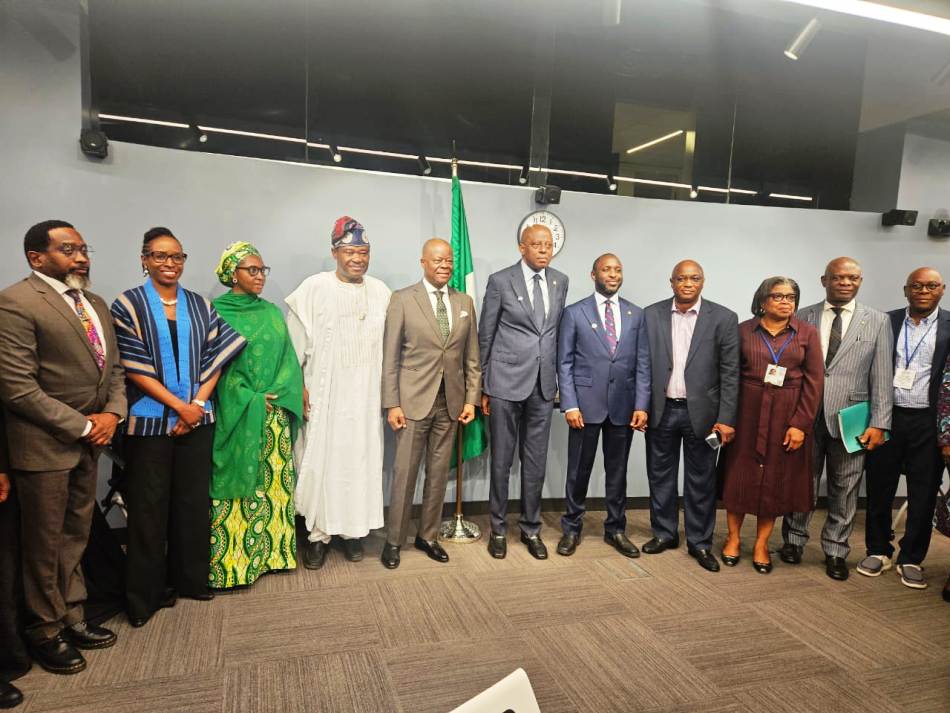
The Minister of Finance and Coordinating Minister of the Economy, Wale Edun, stated this during a press briefing at the Spring Meetings of the World Bank and the International Monetary Fund in Washington D.C.
He explained that the policy measures introduced since mid 2023 were designed not as temporary fixes but as structural changes that can sustain themselves over time while strengthening the economy against external shocks.
Edun noted that the global environment in which the meetings are taking place remains highly uncertain, with export tensions, trade disruptions and tightening financial conditions continuing to weigh on economies across the world.
Within this context, he said Nigeria’s approach is anchored on credible and disciplined macroeconomic management aimed at building lasting prosperity.
According to him, key reforms including the move to a market reflective foreign exchange system and the deregulation of fuel pricing are beginning to restore balance and reduce long standing distortions in the economy.
He added that these measures are already improving Nigeria’s capacity to absorb shocks that originate from outside its borders.
On inflation, Edun acknowledged that pressures remain, largely driven by energy costs, food prices and logistics challenges. However, he pointed out that government is responding through targeted social protection programmes and ongoing agricultural interventions to cushion the impact on citizens.
The Minister stressed that fiscal discipline remains central to the reform effort, with a clear departure from inefficient subsidy regimes and a renewed focus on prudent resource management.
Providing an update on key indicators, Edun said economic growth has exceeded four per cent, external reserves have risen to about 50 billion dollars and inflation is beginning to ease gradually. He added that public debt remains within sustainable limits.
Beyond the numbers, he said the reforms are unlocking domestic production and restoring confidence within the private sector.
The Minister cited major investments such as the Dangote Refinery as tangible evidence of renewed investor confidence, while noting that small and medium enterprises are benefiting from improved incentives.
He stated that Nigeria is now moving from stabilisation to a phase of accelerated growth and job creation, with power, agriculture, infrastructure and digital innovation expected to drive expansion.
Edun also disclosed that development partners at the meetings reaffirmed their support for Nigeria’s reform priorities, while investor interest continues to grow across energy, agribusiness and infrastructure sectors.
According to him, Nigeria is also pushing for reforms at the global level to reduce the cost of capital for developing countries, which remains a major constraint to growth.
The Minister expressed confidence that the country’s standing in the global economy is improving as its reform efforts gain recognition, adding that the policies will ultimately deliver sustainable growth and reduce poverty.
He further commended members of the Nigerian delegation and reaffirmed the Federal Government’s commitment to attracting investment and strengthening development partnerships.
In the same vein, the Governor of the Central Bank of Nigeria, Olayemi Cardoso, said the country remains firmly committed to sustaining reforms and preserving macroeconomic stability.
He explained that the meetings provided an opportunity to review Nigeria’s progress and reinforce institutional capacity needed to support long term economic resilience.
Cardoso noted that despite persistent global challenges, including geopolitical tensions and inflationary pressures, Nigeria has been able to contain external shocks through improved exchange rate stability and stronger reserves.
The Central Bank Governor emphasised that consistency in reform implementation is critical to building long term investor confidence.
Highlighting developments in the financial sector, he said the ongoing banking sector recapitalisation has mobilised 4.65 trillion naira in new capital.
As at the March 31 deadline, 33 banks had met the new capital requirements, significantly strengthening the resilience of the financial system and its ability to support economic growth.
He added that the exercise attracted strong participation from both domestic and international investors, reflecting sustained confidence in Nigeria’s banking sector.
Cardoso expressed optimism that continued reforms will reinforce stability, sustain growth and attract further investment into the economy.
Efe Ovuakporie
Head Information and Public Relations Unit
19th April, 2026.