

The Federal Government has reaffirmed its commitment to transforming Nigeria’s education system and expanding opportunities for young people through sweeping reforms in skills development, digital learning, research, and the creative economy under the Renewed Hope Agenda of President Bola Ahmed Tinubu.
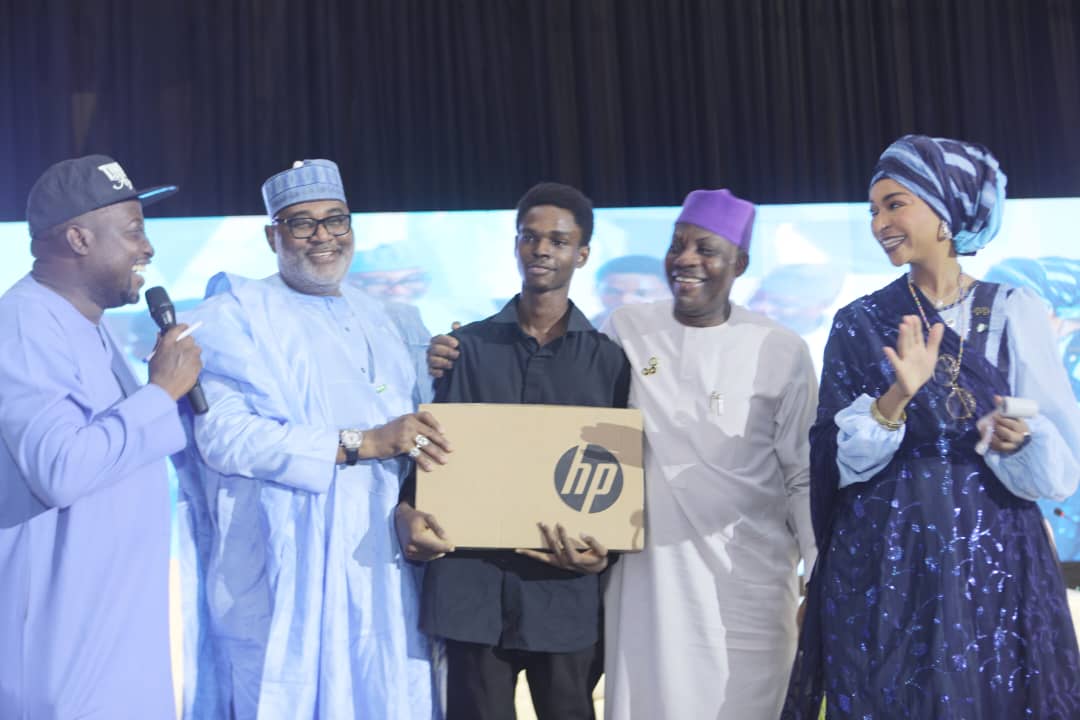
This was the focus of discussions at the Renewed Hope Conversations, University of Abuja Edition, where the Honourable Minister of Education, Dr. Maruf Tunji Alausa, CON, engaged students and stakeholders on the administration’s strategy for building a future-ready education system aligned with global standards.
Dr. Alausa explained that the Federal Government is deliberately shifting Nigeria’s education model from a largely theory-driven system to one anchored on skills, innovation and technology-driven learning.
According to him, reforms are focused on ensuring that graduates possess practical, digital and entrepreneurial competencies required to compete in a rapidly evolving global economy.
He disclosed that Artificial Intelligence, data science and emerging digital technologies are being integrated into Nigeria’s curriculum from basic to tertiary levels, while entrepreneurship education is being expanded through the Entrepreneurship, Innovation, Business and Certification (EIBC) Programme to produce job creators rather than job seekers.
To strengthen digital learning and research, the Minister revealed that tertiary institutions are benefiting from mini-grid power systems providing uninterrupted electricity, as well as free internet connectivity and modern learning management systems to improve teaching, research and innovation.
In addition, the Federal Government is undertaking a major digital infrastructure drive, including the rollout of approximately 90,000 kilometres of fibre optic infrastructure nationwide, prioritising schools, universities and other learning institutions to bridge the digital divide and support technology-enabled education.
Dr. Alausa also highlighted the administration’s strong emphasis on Technical and Vocational Education and Training (TVET), noting that over 160,000 students have already completed government-backed skills programmes, while a new expansion phase targeting an additional 100,000 beneficiaries attracted nearly 800,000 applications within days, reflecting the growing demand for practical and employable skills.
As part of efforts to promote innovation and entrepreneurship, the Federal Government has introduced a Student Venture Capital Grant initiative, offering up to ?50 million in equity-free funding to support innovative student-led enterprises and startups.
He also announced plans to establish a National Research and Development Fund to promote groundbreaking research and support the commercialisation of innovations from Nigerian institutions.
Also speaking at the forum, the Honourable Minister of Arts, Culture, Tourism and the Creative Economy, Barrister Hannatu Musa Musawa, highlighted the Federal Government’s commitment to repositioning Nigeria’s creative sector as a major driver of economic growth and youth employment.
She disclosed that the government has introduced the Creative Economy Development Fund (CEDF) to support emerging creatives, while also strengthening intellectual property protection frameworks to ensure creators receive fair value for their work. She further revealed that €100 million has been secured from the French Treasury to develop creative infrastructure across Nigeria, including regional creative hubs and animation parks aimed at expanding opportunities beyond major cities.
In his remarks, the Minister of State for Regional Development, Dr. Uba Maigari Ahmadu, outlined ongoing interventions aimed at promoting balanced development across the country through infrastructure rehabilitation, housing projects, educational support and rural development initiatives.
He noted that regional development commissions across the six geopolitical zones are implementing projects to rebuild communities affected by insecurity, restore livelihoods, reconnect rural populations to farmlands and expand economic opportunities beyond major urban centres.
The dialogue provided students with a unique opportunity to interact directly with policymakers, ask questions and gain insights into government programmes designed to support their academic, professional and entrepreneurial growth.
Collectively, these initiatives underscore the Federal Government’s integrated approach to national development leveraging education, skills, innovation, infrastructure and the creative economy to unlock the full potential of Nigeria’s youth and drive sustainable economic growth
Boriowo Folasade
Director, Press and Public Relations.