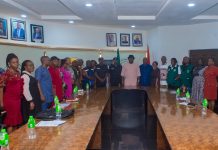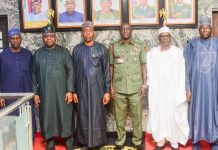


FIC Report (LAGOS STATE) – When Minister of Marine and Blue Economy Gboyega Oyetola declares open the Board of Directors meeting of the Port Management Association of West and Central Africa this week, the ceremony will be the least of it.
From May 18–20, 2026, the Nigerian Ports Authority will host port chiefs from 22 countries at a moment when port efficiency has shifted from academic debate to hard economics. “They are the difference between trade that flows and trade that stalls,” one official put it ahead of the meeting.
The theme, “Ports of the Future: Combining Logistical Resilience with Inclusive Community Development,” captures the stakes. Ports, organisers argue, are more than concrete and cranes. “They are the linchpin of the circular system of global trade,” a senior NPA official said. “Where they fail, the cost is paid in GDP, competitiveness and jobs.”
West and Central Africa’s ports handle more than 90% of the sub-region’s external trade, yet inefficiency continues to undermine competitiveness. Nigeria has felt the impact directly. The country lost Niger Republic’s transit cargo to Benin, Togo and Ghana after bottlenecks pushed shippers elsewhere, and Lagos still records wet bulk cargo stays of 4.3 days—well above global benchmarks.
The World Bank’s Container Port Performance Index draws a direct line between time in port and trade outcomes. Research shows that moving port efficiency from the 25th to the 75th percentile cuts shipping costs by 12% and is equivalent to being 60% closer to markets for the average country.
“That kind of improvement raises bilateral trade by about 25%,” a trade economist familiar with the data noted. The spillovers are measurable: a 10% increase in seaport freight traffic raises regional GDP per capita by 0.08% on average in EU port regions, with benefits spilling into neighboring areas.
Rotterdam and Singapore, which together handle over 40 million TEUs annually, have built their edge on digitalisation, port-to-port data exchange and green corridors. Their collaboration on the Green and Digital Shipping Corridor targets a 20-30% cut in greenhouse gas emissions by 2030 while accelerating paperless handling and just-in-time arrivals.
“The payoff is not just environmental,” an industry analyst said. “Digital trade lanes reduce delays, lower costs and improve predictability for shippers—factors that directly affect landed costs and consumer prices.”
Hosting the PMAWCA board meeting puts Nigeria at the center of that conversation. NPA Managing Director Abubakar Dantsoho, the first Nigerian to serve as PMAWCA President, has framed the gathering as a chance to reaffirm ports as “gateways to prosperity” and engines of economic integration.
Deliberations in Lagos will focus on where evidence shows intervention works. Officials say upgrading quays, channels and hinterland links is key to handling larger vessels and volatile supply chains, while 24/7 crane operations and digital platforms linked to customs can deliver measurable gains in competitiveness.
Borrowing from the Rotterdam-Singapore model, the meeting will also push for interoperable data exchange on vessel arrival, clearance and bills of lading. “For West Africa, where dwell times remain high, this is low-hanging fruit,” an NPA official said.
Harmonising standards, security protocols and trade facilitation measures across member ports is expected to reduce duplication and stop cargo diversion to more efficient corridors. At the same time, the board will examine how port expansion can translate into local jobs, skills and environmental safeguards. Rotterdam’s shift toward circular economy and innovation districts was cited as a model for how ports can anchor broader urban regeneration.
The outcome of the Lagos meeting will signal whether West and Central Africa can close the efficiency gap and keep more trade—and more value—within the sub-region.
Dimaka Chioma
Deputy Director
Information/ Public Relations.
18 /05 / 2026.