


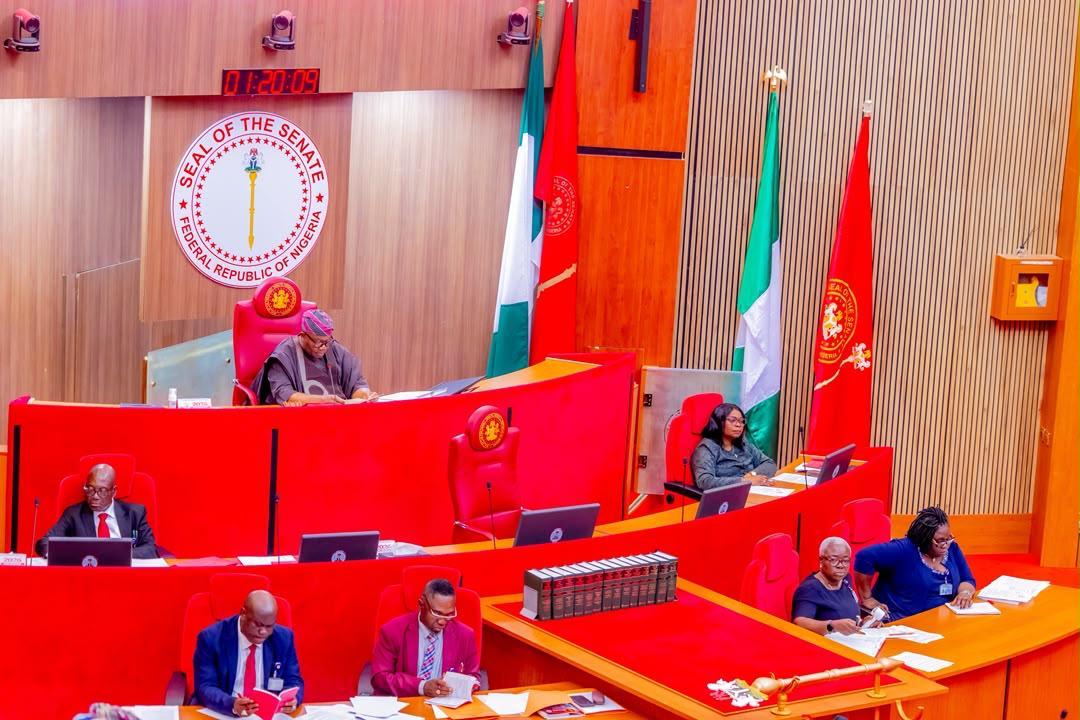
The President of the Senate, His Excellency Dr. Godswill Akpabio has expressed reservations about proposed decriminalisation of attempted suicide, maintaining that attempted suicide should remain a criminal offence.
Dr. Akpabio stated that removing existing penalties could inadvertently encourage the act, stressing the need for careful consideration of the wider legal and societal implications of the proposed legislation.
The Distinguished Senate President further observed that the matter involves provisions of both the Criminal Code and the Penal Code, making it necessary to involve State Houses of Assembly in the legislative process to avoid potential conflicts between federal and state laws.
He therefore emphasised the importance of a comprehensive public hearing that would accommodate relevant stakeholders and provide an opportunity for detailed examination of the proposed amendments.
The Senate has passed for second reading a bill seeking to establish a national framework for suicide prevention, decriminalise attempted suicide and provide rehabilitation and support for survivors.
The bill, sponsored by Senator Asuquo Ekpenyong, representing Cross River South Senatorial District, seeks to address existing contradictions in Nigeria’s legal framework concerning attempted suicide, while promoting a more comprehensive and health-focused approach to suicide prevention.
Leading debate on the bill during plenary, Senator Ekpenyong observed that while the National Mental Health Act recognises attempted suicide as a psychiatric emergency requiring medical attention and treatment, Section 327 of the Criminal Code and Section 231 of the Penal Code still criminalise the act.
He stated that the existing legal provisions discourage persons experiencing psychological distress from seeking timely assistance and often compel families to conceal suicide attempts for fear of prosecution and social stigma.
According to him, suicide is a complex public health challenge that requires a humane and coordinated response involving healthcare professionals, relevant government institutions, families and communities.
“At the heart of this bill is a simple question: when a Nigerian survives a suicide attempt, should the first response of the state be prosecution or protection?” Senator Ekpenyong asked.
The lawmaker maintained that decriminalisation without accessible healthcare and rehabilitation services would be incomplete, stressing the need to establish effective intervention mechanisms for persons experiencing mental health challenges.
He further warned that continued criminalisation could discourage survivors from reporting incidents or accessing treatment, thereby undermining efforts to obtain reliable national data and develop effective prevention strategies.
The proposed legislation seeks to replace imprisonment with mandatory medical assessment, referral, treatment and follow-up support for survivors.
It also provides for the establishment of crisis intervention helplines, specialised training for police officers, teachers and healthcare workers, public enlightenment programmes and a national data system to strengthen suicide prevention efforts across the country.
Following deliberations, the Senate passed the bill for second reading and referred it to its Committees on Judiciary and Health for further legislative consideration.
The committees are expected to conduct a public hearing, engage relevant stakeholders and examine the legal, medical and social implications of the proposed legislation before presenting their recommendations to the Senate.
The bill forms part of ongoing legislative efforts to strengthen Nigeria’s mental health framework, improve access to appropriate care and establish a coordinated national response to suicide prevention and rehabilitation.
EmemMaria Ntedodom nipr
Deputy Director (Head: Information, Press and Public Relations)
+2347082203400 Emy.offiong@fmino.gov.ng
14th October, 2026.