

………says Legislature’s work does not end at Presidential assent.
………Demands evidence, not rhetoric, on PIA performance.
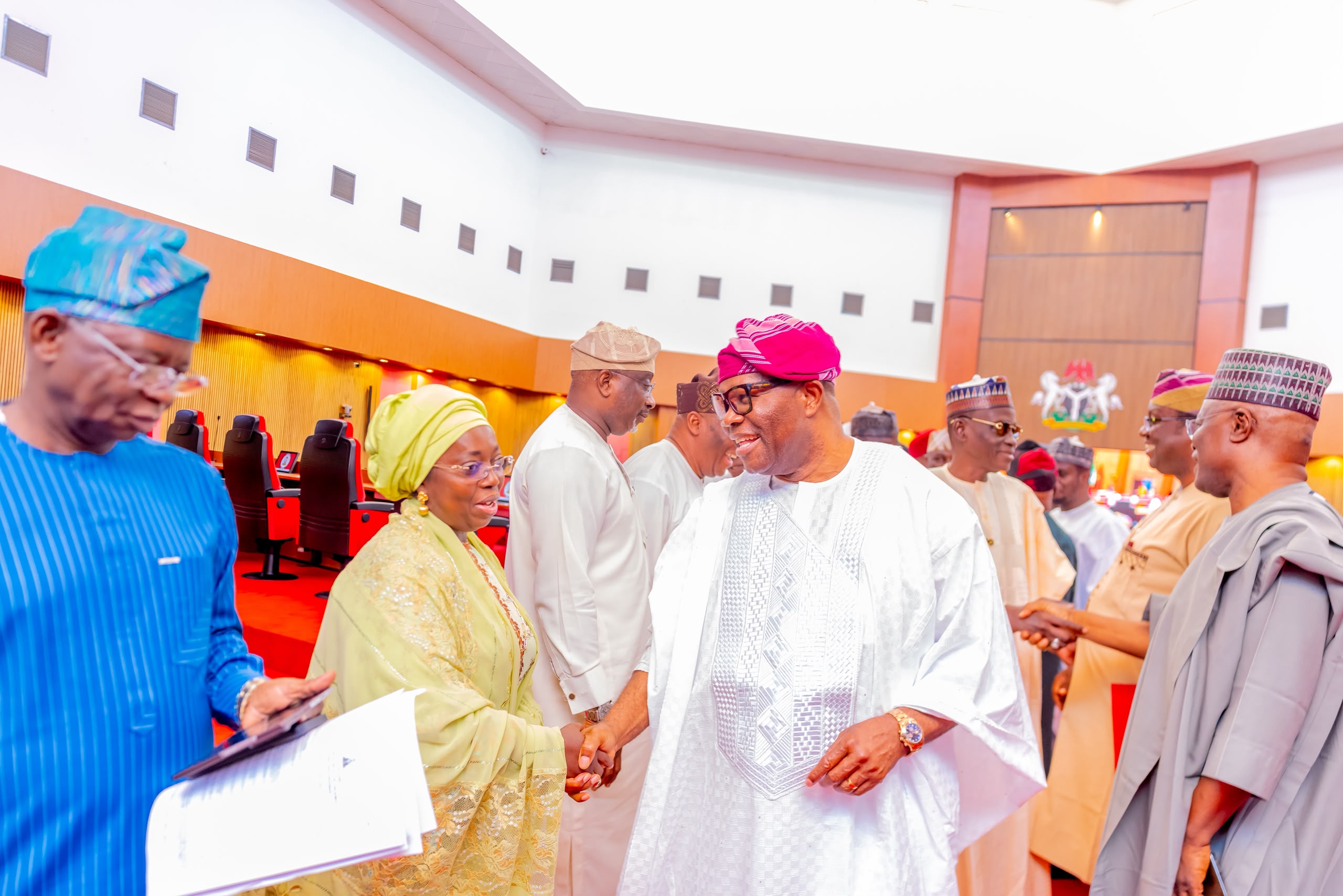
The President of the Senate, His Excellency, Distinguished Senator Godswill Obot Akpabio, GCON, today declared open the Stakeholders’ Engagement Programme on “The Petroleum Industry Act (PIA) Implementation Journey: Industry Impact and the Path Forward” at the loo Transcorp Hilton, Abuja.
The high-level engagement, convened five years after the enactment of the Petroleum Industry Act 2021, brought together regulators, operators, host communities and industry stakeholders to assess implementation progress.
In his opening address, Distinguished Senator Akpabio noted that five years ago, Nigeria took a historic step towards transforming its petroleum industry with the enactment of the PIA, signaling determination to build an industry governed by stronger institutions, greater transparency, competitive investment conditions and fairer distribution of petroleum wealth.
He stated that five years later, the critical question is whether the promise of reform has become the reality of progress.
“Has the promise of reform become the reality of progress? Have we translated legislation into institutional performance, investment into prosperity, and petroleum wealth into tangible improvements in the lives of Nigerians? These questions give today’s engagement its significance and urgency,” Dr. Akpabio said.
The Senate President commended NNPC Limited, Neo Mundo Limited and other institutions for convening the engagement, emphasizing that the gathering is not to merely celebrate a landmark law, but to assess its implementation, acknowledge achievements, confront shortcomings and determine how to realise its full promise.
Distinguished Senator Akpabio stressed that the PIA was designed to address longstanding challenges in petroleum governance, regulation and commercial operations, including establishing a new regulatory architecture, commercial transformation of the national oil company, revised fiscal framework and mechanisms for host-community development.
He noted that while these were significant legislative achievements, a law does not succeed merely because it has been enacted.
“A law does not succeed merely because it has been enacted. It succeeds when it delivers the results for which it was made. We must therefore move from the promise of reform to the proof of performance,” he said.
According to him, key performance questions must be answered with evidence: Are regulators delivering efficiency and predictability? Are fiscal arrangements attracting investment? Is the national oil company achieving its commercial objectives? Are production and energy infrastructure improving? Are host communities receiving promised benefits?
“These questions demand evidence, not rhetoric. Where progress has been made, we must consolidate it. Where expectations remain unmet, we must identify the causes and correct them. Our purpose is not to apportion blame, but cooperation must never become an excuse for avoiding accountability,” the Senate President added.
Dr. Akpabio reaffirmed the legislature’s oversight responsibility, stating that lawmaking begins a public obligation and does not conclude it.
“The legislature’s responsibility does not end when a Bill receives presidential assent. Through legislative oversight, we must determine whether the institutions established by our laws are functioning effectively and delivering their intended benefits. The 10th Senate is committed to this responsibility,” he said.
He warned of the high stakes, noting that every investment lost to uncertainty is an opportunity denied, every barrel lost to theft is wealth diverted from national development, and every avoidable regulatory delay imposes a cost on enterprise.
The Senate President called for an industry where regulation is firm but predictable, investment is profitable but responsible, institutions are independent but accountable, and national interests are protected without undermining legitimate enterprise.
He also emphasized the human face of petroleum development, stating that for host communities, the PIA must mean functioning development trusts, accountable resource management, improved infrastructure, environmental responsibility and sustainable livelihoods.
“Its success must be visible not only in corporate balance sheets and government revenue accounts, but also in the schools, hospitals, roads and living conditions of communities from whose lands and waters our petroleum wealth is extracted,” he said.
Dr. Akpabio charged stakeholders to go beyond speeches and produce a practical implementation assessment, prioritised recommendations, clearly assigned institutional responsibilities and realistic timelines to guide sustained engagement and legislative oversight.
He added that under the leadership of President Bola Ahmed Tinubu, GCFR, Nigeria is pursuing economic reforms aimed at stimulating investment and growth, and the National Assembly will continue to provide responsible legislative support and rigorous oversight.
“We have enacted the law. We have established the institutions. We have declared the promise of reform. Now we must deliver the results,” Dr. Akpabio declared.
He formally declared the programme open and wished participants fruitful deliberations.
EmemMaria Ntedodom Offiong nipr
Deputy Director (Head: Information, Press and Public Relations)
+2347082203400
Emy.offiong@fmino.gov.ng
21st October 2026.