


At a time when the global community is intensifying efforts to address climate change and promote sustainable economic development, Nigeria is taking significant steps towards repositioning public procurement as a powerful instrument for national transformation.
This commitment came to the fore at the 31st United Nations Climate Change Conference (COP31) in Antalya, Türkiye, where the Bureau of Public Procurement (BPP), in strategic partnership with the Chartered Institute of Procurement and Supply (CIPS), championed the integration of sustainability into government procurement practices.
The high-level engagement, held on Wednesday, November 18, 2026, at the Nigeria Pavilion, was themed “Procurement Must Lead: Turning Nigeria’s Climate Ambition into Implementation.” It brought together government representatives and international procurement professionals to explore how public procurement can translate climate commitments into practical economic, environmental and social benefits.
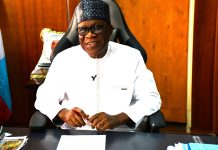
Leading Nigeria’s delegation and the conversation was the Director-General and Chief Executive Officer of the Bureau of Public Procurement, Dr. Adebowale A. Adedokun, FCIPS, who made a compelling case for repositioning public procurement beyond its traditional administrative responsibilities.
According to him, procurement should be recognised as a strategic instrument for national development, capable of stimulating industrial growth, supporting local businesses, creating employment and advancing environmental sustainability.
PROCUREMENT AS A DRIVER OF NATIONAL TRANSFORMATION
In his presentation, Dr. Adedokun emphasised that Nigeria’s climate commitments, particularly under its Nationally Determined Contributions (NDC 3.0), would require deliberate implementation strategies supported by effective procurement planning, appropriate specifications, transparent evaluation processes and sustainable contracting arrangements.
He explained that the success of climate policies would depend not only on government declarations and international agreements but also on the practical decisions taken in the procurement of goods, works and services.
He further highlighted the importance of aligning sustainable public procurement with President Bola Ahmed Tinubu’s Nigeria First Policy, noting that government purchasing power should be strategically deployed to strengthen domestic industries, promote local content, develop indigenous suppliers and improve the competitiveness of locally manufactured products.
For him, procurement decisions must deliver more than immediate financial savings. They should generate measurable economic, social and environmental value for the country.
He observed that public procurement accounts for an estimated 13–20 per cent of Gross Domestic Product in many economies, making it one of the most influential tools available to governments for shaping markets and accelerating sustainable development.
“Through this strategic partnership with CIPS, the Bureau is positioning Nigeria to play a more active role in shaping global conversations on sustainable public procurement while ensuring that international commitments translate into tangible benefits for the Nigerian economy and its citizens,”.
NIGERIA MOVES TOWARDS THE BELÉM DECLARATION
One of the major highlights of the engagement was Nigeria’s announcement of its decision to join the Belém Declaration on Sustainable Public Procurement.
The development represents an important step towards strengthening Nigeria’s commitment to environmentally responsible procurement practices and international cooperation on climate action.
The declaration, launched at COP30, provides an important framework for promoting sustainable procurement and encouraging governments to incorporate environmental and social considerations into public purchasing decisions.
Reacting to Nigeria’s announcement, the Deputy Vice-Minister of Brazil’s Ministry of Management and Innovation, Mr. Adauto Modesto Jr., welcomed the development and expressed optimism about the opportunities it presents for stronger cooperation between Nigeria and Brazil.
He highlighted the prospects for knowledge exchange, institutional partnerships and the strengthening of sustainable procurement frameworks.
He also shared insights into Brazil’s leadership in advancing the Belém Declaration, explaining the policy and institutional arrangements necessary to translate climate ambitions into practical government purchasing decisions.
Nigeria’s move towards the declaration therefore presents an opportunity to strengthen international collaboration while adapting global best practices to the country’s economic and developmental realities.
PROFESSIONAL PROCUREMENT PRACTICE AT THE HEART OF SUSTAINABILITY
Also contributing to the dialogue, the Chief Executive Officer of CIPS, Mr. Ben Farrell MBE, underscored the critical role of professional procurement practitioners in achieving sustainability objectives.
He emphasised the need for stronger professional standards, leadership, technical competencies and institutional capacity to ensure that sustainable procurement policies produce measurable outcomes.
Similarly, the CIPS Country Director for Nigeria, Mr. Chukwudi Uche, FCIPS, stressed the importance of translating climate commitments into clearly defined procurement priorities, measurable targets and market incentives.
He noted that procurement policies should encourage suppliers to embrace environmentally responsible practices, strengthen supply chains and contribute to a more sustainable economy.
Their contributions reinforced the importance of building a professional procurement ecosystem in which competence, accountability, innovation and sustainability are central to public-sector purchasing decisions.
BUILDING A RESILIENT AND COMPETITIVE NIGERIAN ECONOMY
The high-level dialogue, organised under the CIPS Great Conversation initiative, provided an important platform for examining the relationship between public procurement, climate action and economic development.
Participants agreed that government purchasing power, when properly directed, can stimulate private-sector investment, influence market behaviour, encourage sustainable production and consumption, and accelerate the transition towards climate-resilient economies.
For Nigeria, the implications are far-reaching.
Sustainable procurement can help create new opportunities for indigenous manufacturers, encourage technology transfer, strengthen local supply chains and promote inclusive economic growth. It can also support environmental protection while reducing the country’s dependence on unsustainable production and consumption patterns.
These objectives align with the broader national aspirations of economic diversification, industrialisation, employment generation and improved competitiveness.
BPP’S COMMITMENT TO A SUSTAINABLE FUTURE
The engagement at COP31 further demonstrates the Bureau of Public Procurement’s determination to expand the role of procurement in Nigeria’s development agenda.
Under the leadership of Dr. Adebowale A. Adedokun, the Bureau has reaffirmed its commitment to working with government institutions, professional bodies, development partners and private-sector stakeholders to ensure that procurement becomes a practical instrument for achieving Nigeria’s climate and industrial development objectives.
The dialogue also featured Mr. Maxfield Weiss, Global Head of Sustainability at CIPS, who moderated the discussion involving the Nigerian and Brazilian representatives.
Insights from the engagement are expected to contribute to the CIPS Great Response initiative and generate practical recommendations for strengthening sustainable public procurement in Nigeria and beyond.
BEYOND PROCUREMENT: A NEW DEVELOPMENT PHILOSOPHY
Nigeria’s participation in the COP31 dialogue sends an important message: public procurement is no longer simply about purchasing goods and services or awarding government contracts.
It is increasingly about making strategic choices that shape the economy, influence industries, protect the environment and improve the lives of citizens.
By championing sustainable procurement and taking steps towards the Belém Declaration, the Bureau of Public Procurement is helping to position Nigeria within an emerging global movement that recognises government purchasing power as a major driver of sustainable development.
Ultimately, the success of this vision will be measured not merely by declarations made at international conferences but by the impact of procurement decisions on Nigerian industries, local businesses, workers, communities and the environment.
As Nigeria moves towards a more sustainable and competitive economy, the message from COP31 is clear: procurement must lead, and its impact must be felt in the lives of the people.
Chijioke – Adindu Ijeoma ANIPR
Head (Information and Public Relations)
Bureau of Public Procurement