

The Federal Government has reaffirmed its commitment to transforming Nigeria’s livestock sector into a productive, modern and globally competitive industry capable of strengthening food security, creating employment, improving livelihoods and contributing significantly to national economic growth.
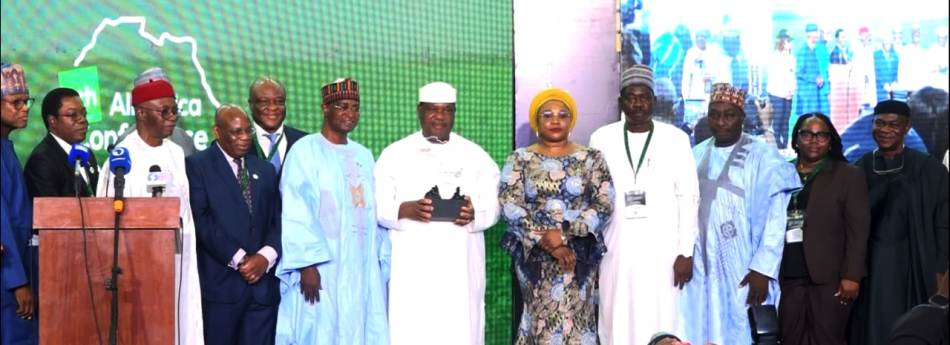
The commitment was reaffirmed as Nigeria hosted the 9th All Africa Conference on Animal Agriculture (AACAA) in Abuja on 10th July, 2026, with the theme: “Repositioning Animal Agriculture for Africa’s Food Security and Global Competitiveness.”
The conference brought together policymakers, scientists, researchers, livestock farmers, development partners, investors, private-sector leaders and other stakeholders from across Africa and beyond to deliberate on the future of animal agriculture and its role in food security, economic development and sustainability.
Representing the President of the Federal Republic of Nigeria, President Bola Ahmed Tinubu, GCFR, the Secretary to the Government of the Federation, Senator George Akume, commended the organisers for sustaining the conference and providing a platform for key players in Africa’s livestock industry to exchange knowledge, promote innovation and strengthen partnerships.
Senator Akume described Nigeria’s hosting of the 9th edition of AACAA as a significant opportunity to advance scientific exchange, policy dialogue, innovation and continental cooperation in animal agriculture.
He noted that, the theme of the conference was particularly relevant in view of the challenges posed by climate change, population growth, emerging and re-emerging animal diseases, conflicts, supply-chain disruptions and rising food prices.
According to him, these challenges are redefining the future of agriculture and require African countries to rethink how food is produced, processed, traded and consumed.
The SGF observed that, Africa possesses one of the largest livestock populations in the world, extensive rangelands, diverse agro-ecological zones and valuable indigenous animal genetic resources capable of supporting a resilient and competitive livestock economy.
He stressed that , livestock remains a major source of livelihood for millions of Africans, particularly women, young people and pastoral communities, adding that, the continent must harness these resources to meet domestic food requirements while positioning itself as a competitive player in international markets.
Senator Akume highlighted the establishment of the Federal Ministry of Livestock Development in July 2024 by President Tinubu as a landmark decision that underscores the strategic importance of livestock to Nigeria’s development.
He said the creation of the dedicated Ministry provides an opportunity to strengthen the sector’s contribution to food and nutrition security, economic diversification, rural development, employment generation, national security and export promotion.
He explained that Nigeria’s livestock development strategy focuses on animal health, breeding and genetics, feed and fodder development, pasture development, livestock infrastructure, value addition, market access, digital innovation, climate resilience and increased participation of women, youth and the private sector.
The SGF also called for stronger implementation of the African Continental Free Trade Area (AfCFTA), stressing that the agreement provides an opportunity for African countries to develop integrated livestock value chains and expand intra-African trade.
He urged countries to strengthen regional cooperation, harmonise sanitary and phytosanitary standards, improve cross-border livestock movement, facilitate investment and reduce unnecessary trade barriers.
Akume emphasised the need for Africa to move beyond fragmented interventions towards a coordinated continental livestock transformation agenda in which governments provide enabling policies, research institutions drive innovation, the private sector invests, development partners support scalable programmes and regional organisations promote policy coordination and harmonisation.
The Honourable Minister of Livestock Development, Hon. Idi Mukhtar Maiha, in his speech, said the livestock sector represents one of Africa’s greatest opportunities for strengthening food security, creating wealth, generating employment and driving sustainable economic growth.
He said the conference was particularly timely given the continent’s growing population and the combined challenges of climate change, conflicts, emerging and re-emerging animal diseases, supply-chain disruptions and rising food prices.
According to the Minister, Africa’s vast livestock resources, extensive rangelands, indigenous animal genetic resources and youthful population provide a strong foundation for building a modern and competitive livestock economy.
Maiha noted that,Nigeria had embraced a new direction in livestock development through the establishment of the Federal Ministry of Livestock Development by President Bola Ahmed Tinubu in July 2024.
He described the creation of the Ministry as a watershed in Nigeria’s agricultural development history, providing dedicated institutional leadership for livestock and recognising the sector’s critical role in food security, economic diversification, rural development, employment generation and export promotion.
The Minister said the Ministry was implementing comprehensive reforms under the national livestock development framework, with emphasis on animal health, breeding and genetics, feed and fodder development, pasture development, infrastructure, value addition, market access, women and youth empowerment, digital innovation, climate resilience and private-sector participation.
He added that, the livestock transformation agenda was designed to improve productivity, strengthen value chains, promote modern production systems, enhance animal health services, strengthen disease surveillance and biosecurity, improve breeding and genetics, expand feed production and attract increased investment into the sector.
Maiha further stressed the importance of regional integration and called on African countries to leverage the AfCFTA by strengthening collaboration, harmonising standards, improving cross-border livestock movement and facilitating investment.
He urged governments, research institutions, the private sector, development partners and regional organisations to work together towards a coherent continental livestock transformation agenda.
According to him, repositioning animal agriculture is essential to achieving the aspirations of Agenda 2063, the Sustainable Development Goals (SDGs) and the economic resilience being pursued by African countries.
In her welcome address, the Permanent Secretary, Federal Ministry of Livestock Development, Dr. Chinyere Ijomah Akujobi, expressed appreciation to President Bola Ahmed Tinubu and the Federal Government for the importance attached to livestock development and for supporting Nigeria’s hosting of the conference.
Dr. Akujobi said the presence of the President, represented by the Secretary to the Government of the Federation, sent a strong message about the strategic importance of livestock development and the transformation of animal agriculture in Nigeria and across Africa.
She welcomed delegates from across Africa and beyond, noting that the theme of the conference was timely given Africa’s growing population, changing food systems, climate challenges and expanding markets.
According to her, the conference provided a valuable platform for participants to share experiences, exchange knowledge, strengthen partnerships and explore innovative approaches to advancing animal agriculture across the continent.
She expressed confidence that the participation of policymakers, researchers, livestock farmers, development partners, professional bodies and private-sector stakeholders would enrich the deliberations and generate practical ideas capable of translating into meaningful action.
On behalf of the Ministry and the 9th All Africa Conference on Animal Agriculture Local Organising Committee, the President of the All Africa Society for Animal Production, Prof. Mizeck Chagunda, welcomed delegates to Nigeria and commended the Federal Government, the Federal Ministry of Livestock Development and all partners for making the 9th edition of the conference possible.
Prof. Chagunda recalled that when the proposal to host the conference in Nigeria was initially presented, reaching the stage of the actual event appeared to be a distant prospect, but commended the organisers and stakeholders for turning the vision into reality.
He described Nigeria’s hosting of the conference as a significant achievement, particularly coming only two years after the establishment of the Federal Ministry of Livestock Development.
Prof. Chagunda called for the transformation of Africa’s livestock sector from one largely characterised by low productivity and fragmented value chains into a globally competitive industry capable of delivering food security, creating wealth and employment and driving sustainable economic growth.
He noted that Africa’s extensive rangelands, diverse agro-ecological zones, large livestock population and valuable indigenous animal genetic resources provide a strong foundation for achieving this transformation.
He therefore called for stronger collaboration among governments, scientists, research institutions, development partners and the private sector to unlock the continent’s livestock potential inherent in Africa.
He further emphasised the importance of science, innovation, animal health, genetics, veterinary governance, biosecurity, climate resilience and regional cooperation in improving productivity and positioning Africa’s livestock industry for greater participation in international trade.
In a keynote address delivered on behalf of development partners and stakeholders and represented by the Senior Special Adviser to the President on Livestock Development, Professor Attahiru Jega, represented by Dr. Bolu Watiife stated that, emphasis was placed on the need for stronger partnerships to accelerate livestock transformation across Africa.
The stakeholders noted that, no single government, institution or organisation could achieve sustainable livestock transformation alone, stressing the importance of collaboration among governments, development partners, research institutions, private-sector actors, livestock farmers and communities.
They reaffirmed the shared commitment of organisations including USDA, GIZ, CEVA, FAO, USSEC, Heifer International and AU-IBAR to supporting the transformation of animal agriculture through technical cooperation, capacity development, research, innovation and investment.
The stakeholders identified animal health, disease surveillance, genetics and breeding, feed and fodder development, climate-smart livestock production, value-chain development, digital innovation and market integration as critical areas requiring strengthened cooperation.
They stressed that healthy animals are the foundation of productive livestock systems, food safety and access to regional and international markets, calling for increased investment in veterinary services, biosecurity, disease prevention and control.
They also highlighted the importance of improved livestock genetics, breeding and reproduction, while stressing the need to protect and sustainably utilise Africa’s valuable indigenous animal genetic resources.
On climate change aspect, the stakeholders called for greater adoption of climate-smart and resilient livestock production systems, sustainable pasture and rangeland management, as well as efficient utilisation of water resources.
The 9th All Africa Conference on Animal Agriculture is expected to further strengthen scientific exchange, policy dialogue, regional cooperation, investment and partnerships towards repositioning animal agriculture as a major driver of food security, employment, improved livelihoods and sustainable economic transformation across Africa.
Henrietta Okokon
Deputy Director, Information and Public Relations
10th July, 2026