

The Federal Government has charged the 36 States and the Federal Capital Territory (FCT) to move beyond policy declarations and translate resolutions of the National Council on Women Affairs, Child Advancement and Social Development into concrete action, measurable results and improved living conditions for women, children, families and vulnerable Nigerians.
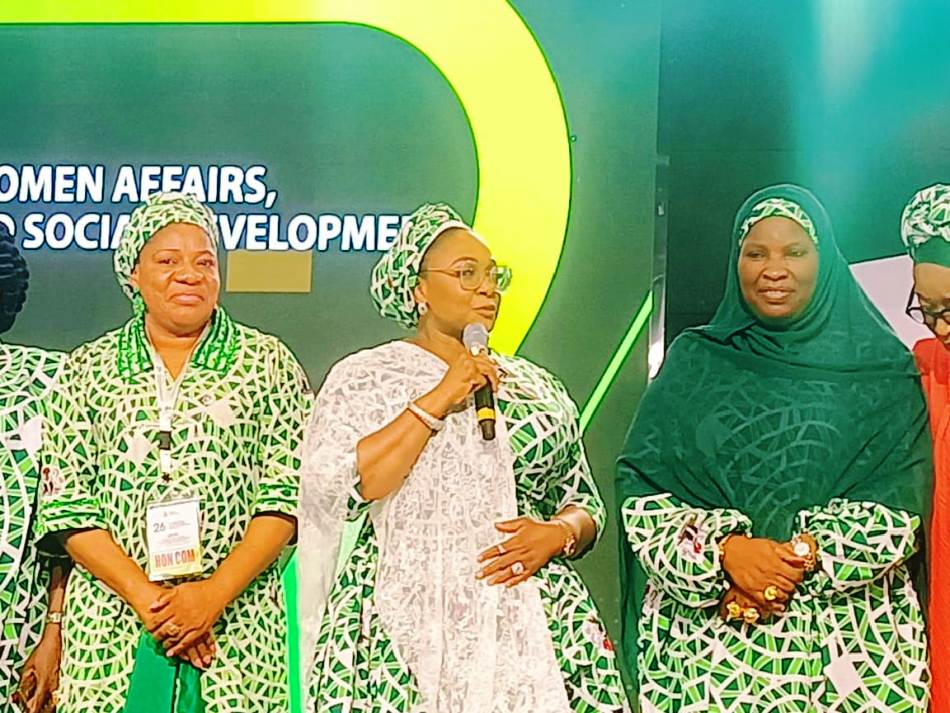
The Honourable Minister of Women Affairs and Social Development, Hajiya Imaan Sulaiman-Ibrahim, FSI, gave the charge at the formal opening of the 26th National Council on Women Affairs, Child Advancement and Social Development in Jalingo, Taraba State, with the theme: “Strengthening Families and Advancing the Care Economy for Inclusive Development: Operationalising Nigeria’s Renewed Social Protection Architecture.”
The Minister declared that the National Council, as the highest policy advisory platform on women affairs, child advancement and social development, must no longer be treated as mere annual ceremonial gathering, but as a national delivery platform where the Federal Government and the States agree on priorities and hold one another accountable for implementation.
“This Council is not a ceremony. It is not an annual gathering at which we exchange courtesies, take photographs and disperse. It is a delivery platform, and next year we will report against what we resolve this week,” she said.
Hajiya Imaan stressed that the deliberate focus on “operationalising” Nigeria’s renewed social protection architecture was intended to shift attention from policy formulation to implementation at the grassroots.
According to her, the central question was no longer what government’s position on women, children and families was, but whether those policies and interventions were actually being delivered in communities across the country.
She noted that the declaration of 2026 as the Year of Families and Social Development by President Bola Ahmed Tinubu, GCFR, had placed families and the systems that protect them at the centre of national transformation.
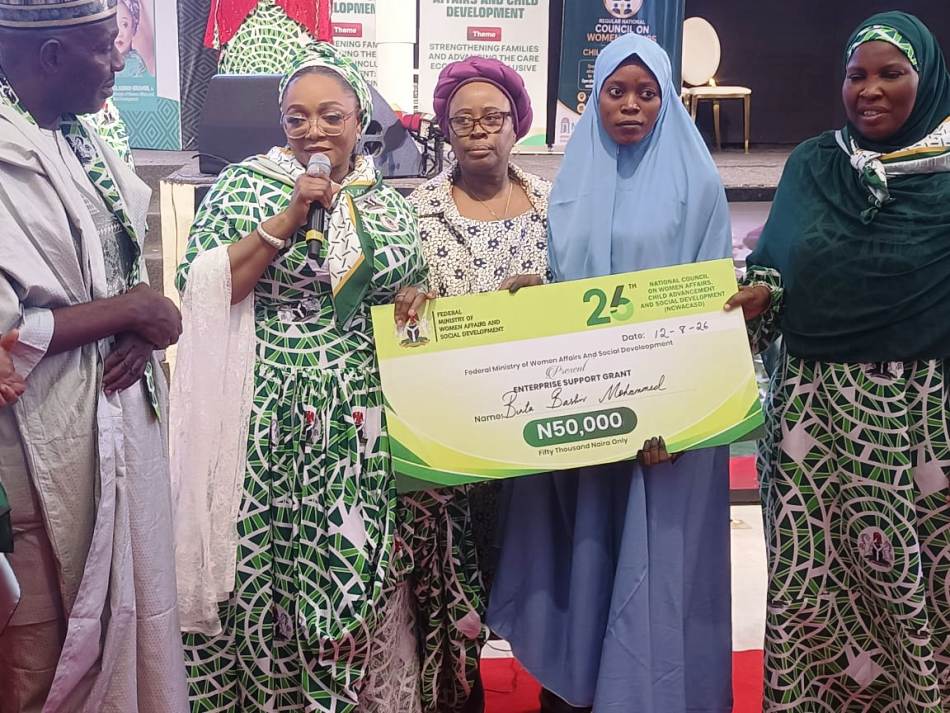
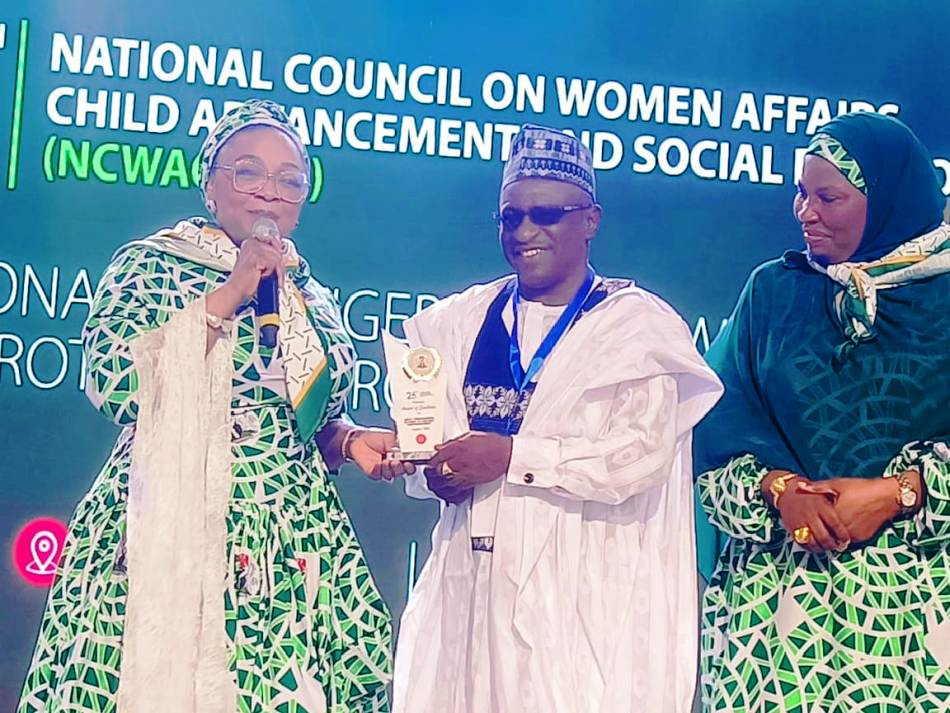
“The family remains the foundation of every society. It is within families that values are transmitted, children are nurtured, human capital is developed and communities are strengthened. When families thrive, societies prosper,” the Minister stated.
The Minister disclosed that the Federal Ministry of Women Affairs and Social Development had developed, reviewed and validated 38 new policy instruments, bringing its portfolio to 42 instruments, covering national policies, guidelines, action plans, implementation frameworks, monitoring and evaluation mechanisms, standard operating procedures, legislative amendments and a proposed Bill.
She explained that the instruments addressed critical areas including childcare, adoption, orphanages and residential care, child protection, shelters for survivors of sexual and gender-based violence, gender mainstreaming, workplace gender equality, menstrual health and hygiene, women’s economic empowerment, social protection, disability services, family support and community inclusion.
She urged States to domesticate and implement the instruments within the current financial year.
“These instruments were built to be domesticated, not admired. I ask each State to receive them, adapt them to your context, secure Executive Council approval where required, and begin implementation within this financial year. The Ministry will provide the technical support. What we cannot provide is your political will,” she said.
Care Economy is Economic Infrastructure — Minister
Hajiya Imaan also called for deliberate investment in the care economy, describing care work as critical economic infrastructure rather than a private responsibility to be absorbed silently within households.
She said the disproportionate burden of unpaid care work carried by women remained a major barrier to their participation in the formal economy.
According to her, investment in childcare, elderly and disability care, community health, early childhood development and social care infrastructure would simultaneously create decent jobs, reduce women’s unpaid care burden and increase their participation in productive activities.
“Care is not a private matter to be absorbed silently within the household. It is infrastructure, and it should be treated, financed and regulated as such,” she declared.
The Minister gave the example of a crèche established within a market, noting that such an intervention should be viewed not merely as welfare support but as a productivity intervention that enables women to work and earn.
She further emphasised that recognising care work was consistent with Nigeria’s international obligations, including CEDAW, the Convention on the Rights of the Child, relevant African human rights instruments, the Beijing Declaration and Platform for Action, and the Sustainable Development Goals.
Highlighting progress under the Renewed Hope Social Impact Interventions across the 774 Local Government Areas, the Minister said the Nigeria for Women Programme Scale-Up (NFWP-SU) was expanding the proven Women Affinity Group model nationwide.
She disclosed that the first phase of the Nigeria for Women Programme mobilised more than 560,000 women into over 26,000 Women Affinity Groups, which collectively saved more than ?4.9 billion and accessed approximately ?15.6 billion in livelihood grants.
The Scale-Up phase, she said, is designed to reach 4.5 million women through 300,000 Women Affinity Groups nationwide, in partnership with the World Bank.
She cited Katsina State, where more than 57,000 women across three Local Government Areas have saved ?349 million from their weekly contributions, as an example of the impact that can be achieved when States move with speed.
Reflecting on her recent visit to women’s groups in Taraba State, the Minister said Nigerian women had no shortage of enterprise, but required systems that enabled them to grow and scale their businesses.
“We have never been dealing with a shortage of enterprise in the Nigerian woman, only a shortage of the systems that let her enterprise grow and scale,” she said
Speaking further, the Minister highlighted the Renewed Hope Women Agro-Value Expansion Programme (RH-WAVE), which she said was repositioning women from subsistence farming to structured and bankable agribusinesses.
She disclosed that the Ministry had signed a landmark Memorandum of Understanding with the Bank of Agriculture to unlock concessional financing at below 10 per cent, with a target of at least three million women farmers over the next three to five years.
She added that more than 33,000 women had already expressed interest in the pilot programme.
The Minister also highlighted the Women in Nigeria’s Gas Sector Empowerment Project (WINGS) and Women on Wheels, stressing that both initiatives were designed around a common principle of enabling women to own productive assets rather than merely rent them.
“Our approach is primarily not to give a woman a bag of rice that finishes in one month. Our focus is to enable women to accumulate and retain capital by receiving an income-generating asset that she comes to own,” she said.
On social protection, Hajiya Imaan said Nigeria’s system must evolve from fragmented and largely one-off interventions into a coordinated, predictable and shock-responsive architecture.
She identified four critical features of an effective social protection system: a single credible register; predictable financing through dedicated budget lines; shock-responsive mechanisms capable of expanding during crises; and household-level case management that follows beneficiaries rather than programmes.
“A social protection architecture worthy of the name has four features: a single credible register, predictable financing on a budget line rather than a project cycle, shock-responsive design that can expand when flood or conflict or displacement strikes, and a case management system that follows a household rather than a programme,” she said.
She challenged States to assess their social protection systems against these benchmarks and incorporate the findings into the Council’s resolutions.
The Minister further called for stronger coordination among Federal and State Governments and development partners, proposing a quarterly Federal, State and development partner technical coordination platform to align programmes, work plans and interventions.
She also urged all States to designate data focal officers, adopt national data-sharing protocols and submit quarterly reports.
On quality of Memoranda
Hajiya Imaan expressed concern over the quality of some memoranda presented to the Council, stressing that memoranda should be treated as policy instruments rather than requests for attention.
She disclosed that 126 memoranda were presented at the Council, with several stepped down during the technical sessions.
The Minister urged States to ensure that future memoranda contain clear problem statements, evidence, costed implementation plans where appropriate, named implementing institutions, timelines and means of verification.
“A memorandum to this Council is not a wish, and it is not a request for attention. It is a policy instrument,” she said.
She also announced the introduction of performance awards for States, recognising excellence in the domestication of national instruments, budgetary commitment, programme delivery and reach, data reporting and innovation.
“What is measured improves, what is recognised is repeated, and the States doing excellent work in this sector deserve to be named. From this Council forward, performance at the National Council will be assessed, published and rewarded,” she said.
The Minister consequently challenged each State to undertake specific actions before the next Council, including:
Domestication and implementation of relevant national policies, guidelines and standard operating procedures.
Others are: “Expansion and co-financing of the Nigeria for Women Programme Scale-Up,
deliberate investment in the care economy, including childcare, early childhood development, elderly and disability care.
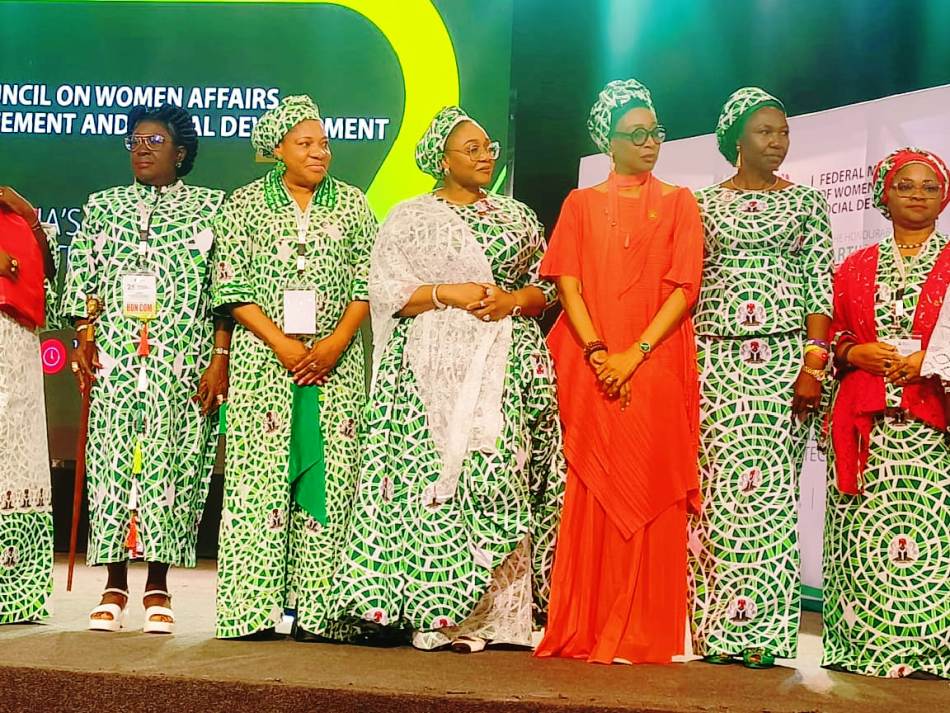
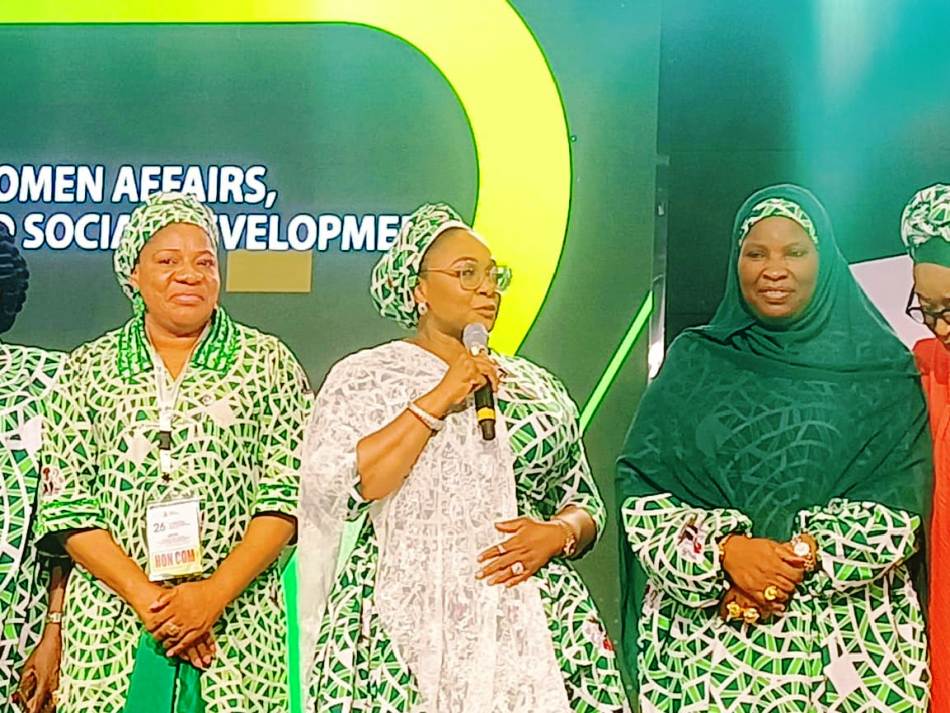
Strengthening of social protection systems through credible registers, dedicated financing, shock-responsive mechanisms and household-level case management.
Quarterly reporting of gender and social development data.
Full implementation of the Child Rights Act and Violence Against Persons (Prohibition) Act.
Participation in the National Gender Policy review and the quarterly Federal-State coordination platform.”
She also called for the deliberate engagement of traditional rulers, religious leaders and men as partners in advancing gender equality and transforming harmful social norms.
Declaring the Council meeting open on behalf of the Executive Governor of Taraba State, Dr. Agbu Kefas, the State Head of Service, Dr. Hamidu Kara, welcomed delegates from across the country and reaffirmed the State Government’s commitment to education, healthcare, skills development, women empowerment, child protection and social inclusion.
He described the Council’s theme as timely and relevant, stressing that a strong nation begins with strong families.
“When women are empowered, families become stronger; when children are protected and educated, communities become more resilient; and when vulnerable persons are supported, development becomes more inclusive,” the Governor said.
He encouraged delegates to use the Council to exchange practical ideas and develop sustainable recommendations capable of producing tangible improvements in the lives of Nigerian families.
Earlier, the Permanent Secretary, Federal Ministry of Women Affairs and Social Development, Mrs. Esuabana Nko Asanye, in her welcome remarks, expressed appreciation to the Taraba State Government for hosting the Council and disclosed that 126 memoranda were presented, with 96 accepted for consideration.
She reiterated the importance of building strong and resilient families, particularly in view of the President’s declaration of 2026 as the Year of Families and Social Development.
The Dean of the College of Commissioners of Women and Friends in Nigeria and Commissioner for Women Affairs, Cross River State, Hon. Edema Irom, described the theme as both timely and strategic.
She reaffirmed the commitment of State Commissioners to translating Council resolutions into practical programmes, particularly in women’s economic empowerment, prevention of gender-based violence, child protection, social services and partnerships.
“No more in Nigeria will anybody say to a woman, ‘What have you been doing since morning?’ We will measure the care economy,” she declared.
The Taraba State Commissioner for Women Affairs and Child Development, Hon. Mary Sinjen, said hosting the Council provided an opportunity for States to share experiences, strengthen partnerships and develop practical strategies capable of translating national policies into grassroots impact.
She stressed that the outcomes of the Council must not end in books but should be reflected in the lives of women, children and vulnerable Nigerians.
Adding a powerful child-centred perspective to the Council, the Speaker of the Nigerian Children’s Parliament in Taraba State, Hon. Queen Dooga Gbashi, commended the Federal Government under President Bola Ahmed Tinubu for its efforts to improve the rights, protection and future of Nigerian children under the Renewed Hope Agenda.
She specifically welcomed the ongoing review of the Child Rights Act 2003, describing it as an important step towards strengthening child protection.
The young parliamentarian called for greater child participation in policy development, alongside sustained investment in education, healthcare, nutrition, social protection, child protection, digital inclusion and meaningful participation of vulnerable children.
“We believe that when Nigeria invests in its children, Nigeria invests in its future,” she said.
Delivering the keynote presentation, Professor Nana Tanko of the African Policy Research Institute (APRI) called for a unified, technology-driven and integrated social protection system capable of reducing shocks, building resilience, targeting the poorest and eliminating leakages.
She highlighted the importance of digital infrastructure, unified databases, better targeting, transparent payments and improved monitoring, while stressing that the Renewed Hope Social Impact Interventions across the 774 LGAs should serve as integrated gateways for family support rather than disconnected schemes.
Professor Tanko emphasised that operationalisation required clear policies, standard operating procedures, reliable data, sustainable financing, skilled personnel and accountability.
In a goodwill message delivered on behalf of the United Nations Population Fund (UNFPA) Country Representative, Ms. Muriel Mafico, Gender/Reproductive Health Analyst Deborah Tabara commended the Minister’s leadership, particularly her advocacy for greater representation of women in decision-making.
UNFPA also noted progress in reducing Female Genital Mutilation in Nigeria, while drawing attention to persistent challenges including gender-based violence, child marriage, maternal healthcare access and barriers to reproductive health services.
The organisation reaffirmed its commitment to supporting evidence-based programming and efforts to ensure that every woman and girl can plan her family, survive childbirth and live free from gender-based violence and harmful practices.
Also speaking, Rinmicit Temlong-Aboki, Gender Lead, Albright Stonebridge Group, called on States to support the domestication of the Women’s Economic Empowerment Policy, noting that only three States had fully implemented the policy while 16 were at various stages of domestication.
She urged delegates to support the Federal Ministry’s efforts to advance women’s economic empowerment as a foundation for achieving gender equality.
The 26th National Council brought together representatives of the Federal and State Governments, development partners, civil society organisations, traditional and religious institutions, academia, private sector actors, organisations of persons with disabilities, youth representatives and other stakeholders to deliberate on policies and strategies for strengthening families, advancing the care economy and operationalising Nigeria’s renewed social protection architecture.
The Council is expected to produce resolutions that will guide implementation across the Federal Government, the 36 States and the FCT, with emphasis on measurable delivery, stronger coordination, improved data systems, women’s economic empowerment, child protection, social inclusion and stronger family support systems.
Ahmed Lawan Danbazau Mnipr
Head, Information
Press and Public Relations Department
FMWASD