

The Honourable Minister of Solid Minarals Development, Dr Dele Alake, has charged agencies in the Solid Minerals sector and personnel of the Ministry to think outside the box and develop fresh 7-Point agenda to move the sector to the next level.
According to him, some of the initial seven point agenda of the Ministry will not be abandoned as they are at various levels of completion.
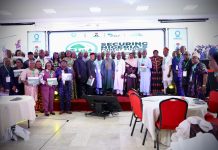
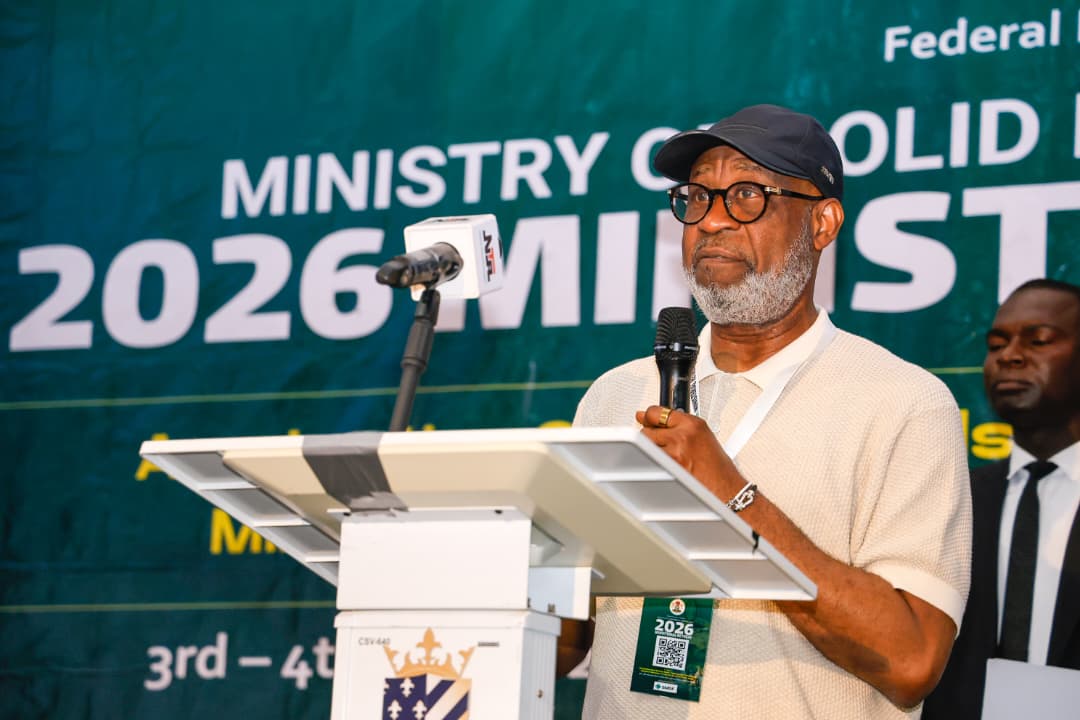
Dr. Alake gave the charge while speaking at the 2026 annual Ministerial Retreat in Abuja. It was themed “Aligning the Ministerial 7- Point Agenda with the Presidential Mandate”
He said “I want to charge every one of us to come up with initiatives, initiatives that will take us beyond those seven points items on our agenda. For all I care, if we can set up a new seven point agenda above for it, I will be running, and we’ll be going and flying higher.
“Like I said, we won’t abandon this current seven point agenda, because they are in various stages of completion, some years, some, you know, various percentages, so we must continue to consolidate all of those, while setting new goals and casting our eyes on new horizons.
“We must crest the mountain of success at all times, that has to be a watch word, so this retreat we must ask ourselves the questions, which areas do we need to improve or set new agenda.
“Yes, our agenda, as listed, is known: economic transformation, growth diversification, revenue generation top education youth empowerment industrialization local value addition security transparency, which is very high on my own score.” he added
Charging the participants on drafting a the new seven-point agenda, he said that achieving real, measurable progress in the sector depends first and foremost on institutional effectiveness — a change in mindset and the human factor.
Policies, programs and investments, he noted only translate into sustained results when individuals demonstrate the right values, professionalism and commitment.
Stressing that Institutional effectiveness is a foundational requirement and personal responsibility of every individual to manifest appropriate values, ethics and professionalism.
The Minister said without human element, even best-in-class initiatives will fail to achieve intended outcomes.
Another area, the Minister pointed out, is increase the sector’s contribution to GDP.
He said said efforts should be made to move beyond revenue increases to measurable GDP impact so that the benefits are clearly seen nationwide.
Dr. Alake said that the participants should also propose bold, creative ideas, noting that initially “ridiculous” ideas can become transformative.
The Minister also urged them to find ways to attract sustainable, higher-value investment.
The Current investments in the sector, he said, are only starting points, and that the goal is to get investments that realize the full value chain of raw materials.
Dr. Alake also harped on creative policy, an improved investment environment, tighter security, and public–private collaboration.
He also tasked the participants on promoting value addition and beneficiary transfer to local communities.
The Minister emphasized on beneficiation and ensuring direct, tangible benefits to host communities via strong Community Development Agreements (CDAs) and corporate social responsibility (CSR).
Disclosing that he has requested a list of companies that failed to sign or implement CDAs, he warned of imminent drastic measures, including revocation of titles for non-compliance.
Recalling past precedent, the Minister said that there was a prior mass revocation of over 3,000 titles.
When companies honor CDAs, he said communities are incentivized to maintain peaceful conditions, creating a positive cycle for continued investment.
He pushed for more drastic measures to combat illegal mining and enhance sectoral security.
Noting that the Ministry’s role is mainly regulatory and to create enabling laws, he said confronting armed illegal miners requires constitutional security agencies.
He said the ministry has proposed strengthening mining marshals and increasing operational capacity, iincluding plans for armored vehicles, fences, arms and ammunition, adding that budgetary cash backing is essential for its implementation.
But he noted that new, outside-the-box ideas are still needed to bolster enforcement and institutional capacity.
The Minister emphasised that the retreat should generate implementable ideas, cross-fertilize perspectives, and allow frank feedback.
In his welcome address earlier, the Permanent Secretary of Solid Minarals Development, Engr Faruk Yusuf Yabo, said the retreat is a strategic leadership session meant to align vision, strengthen resolve, and accelerate delivery of the Ministry’s mandates under President Bola Ahmed Tinubu’s Renewed Hope Agenda.
Accordingly, he said, it is more than a routine meeting, but an occasion one to translate policy into measurable results.
Noting that Nigeria is richly endowed with critical and strategic minerals, including lithium, gold, tin, columbite, lead, zinc, gemstones, iron ore, coal, and limestone, he said the resources can underpin industrialisation, economic diversification, job creation, increased export earnings, and broader national prosperity.
Mineral wealth alone, he said, does not guarantee development, but outcomes will depend on the quality of leadership, the effectiveness of institutions, and collective commitment to implementation.
The Permanent Secretary emphasizes that the era of “business as usual” is over and that performance will be judged against clear deliverables.
He only listed the Seven Ministerial Priority Areas the Minister’s reform agenda is concentrated on, which he said are national deliverables and benchmarks for assessing the Ministry’s performance.
In his goodwill message, the Chairman of the Senate Committee on Solid Minerals Development, Senator Ekong Sampson, noted that the sector has recorded milestones but it is now time for harvest.
But he noted that the budgetary provision to the sector is not enough to speed up harvest and implementation in the sector.
Speeding up the harvest, he said, is the easiest way to drive Nigeria’s diversification.
On his part, the Chairman of the House Committee on Solid Minerals Development, Jonathan Gaza, said that the 7 point agenda addressed the root of Solid Minarals Development in the country, but faulted the meager sum been released to the sector.
He, therefore called on President Bola Tinubu to treat the sector with the priority it deserves.
The Permanent Secretary of the Ministry of Steel Development, Abba Rimi, said his Ministry stands ready to collaborate with Solid Minerals Development ministry towards national development.
He was optimistic that the retreat will contribute to Nigeria’s mining development agenda.
The Director of Planning, Research and Statistics at the Ministry of Solid Minerals Development, Mohammed Abba Abdullahi, noted that the Ministry’s priorities are concrete benchmarks by which the President will judge performance.
He relayed the Honourable Minister’s directive to internalize and convert these priorities into measurable, time-bound outcomes.
The retreat, he said, has clear, strategic purposes to review and realign current deliverables with Presidential and Ministerial mandates; deepen understanding of the CDCU Framework for Performance Management; strengthen leadership cohesion and cross-departmental and inter-agency collaboration; institutionalize a results-based management culture across the Ministry and its agencies; and validate and finalize the Ministerial Performance Management System (MPMS) to guide 2026 work.
The Director also set practical expectations: identify implementation gaps and strategies to close them; make concrete commitments with ownership of deliverables, timelines and KPIs; and strengthen synergy between the Ministry’s Departments and supervised Agencies.
By the end of the retreat, he said, the team should achieve a shared understanding of 2026 deliverables, refined performance-tracking tools and templates, and renewed energy and cohesion to deliver the “Renewed Hope” agenda through solid minerals development.
He emphasized the national importance of the Ministry’s work: the solid minerals sector can diversify the economy, create jobs, generate revenue, and drive industrialization.
Kania Maliki Andeyaba
Head (Press and Public Relations Department)
3rd July, 2026