

…….Nigeria has reaffirmed its commitment to refugee protection and the principle of non-refoulement, while calling for stronger international burden- and responsibility-sharing in support of host countries.
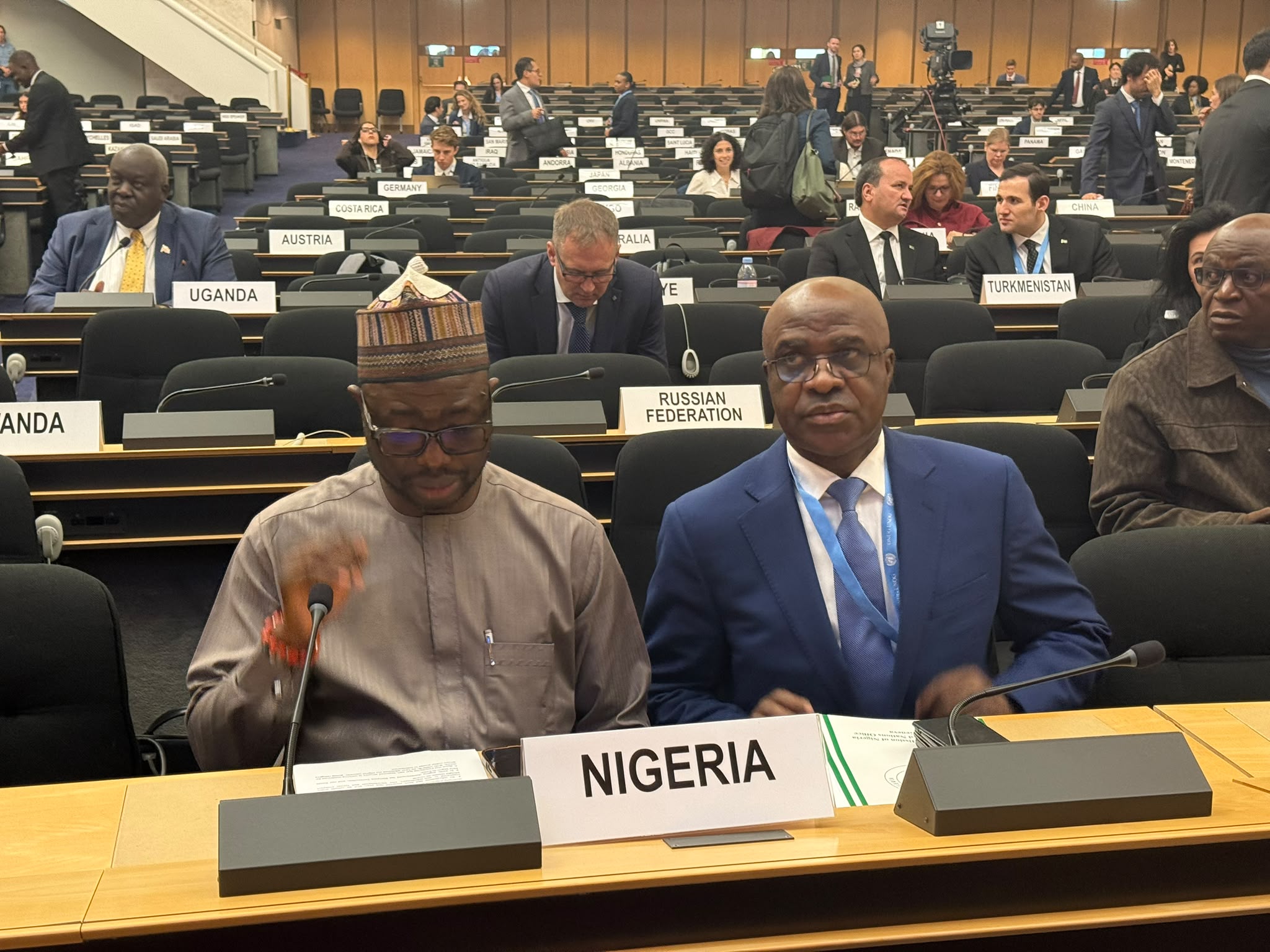
The Honourable Minister of Humanitarian Affairs and Poverty Reduction, Dr Bernard M. Doro, delivered Nigeria’s statement at the 77th Session of the Executive Committee (ExCom) of the High Commissioner’s Programme, holding in Geneva, Switzerland, from 12th to 16th October 2026.
He congratulated His Excellency Dr Barham Salih on assuming office as High Commissioner and assured him of Nigeria’s full support. Dr Doro said Nigeria’s delegation had noted with satisfaction the High Commissioner’s comprehensive report on the operational and policy priorities of his Office, and commended him and his team for a job well done. He also thanked Mr Filippo Grandi for a decade of leadership, and thanked the Chair and Bureau for steering the session.
Dr Doro said that 75 years on, amid record displacement and shrinking resources, the 1951 Refugee Convention remains as vital as ever.
He told delegates that Nigeria maintains a fair and efficient asylum system under the NCFRMI Act of 2022, with borders open to those fleeing persecution. “As of September 2026, we host over 142,000 refugees and asylum seekers from 42 countries, and have received over 24,000 returnees, and over 6.7 million internally displaced persons,” he said.
No refoulement has been recorded this year, the Minister said, adding that, Nigeria remains firmly committed to non-refoulement. He said the country’s statelessness and Global Compact pledges remain on course.
He announced that, Nigeria domesticated the Kampala Convention in 2026, and that Nigerian States have begun to follow.
Dr Doro said, improved security since the Committee last met is creating conditions for return. Together with UNHCR, Nigeria has advanced the Digital Gateway, which gives refugees secure online access to information He pointed out.
Dr. Doro added that, Resettlement Cities for internally displaced persons now exist in seven locations, supporting the phased, voluntary closure of camps in safety and dignity.
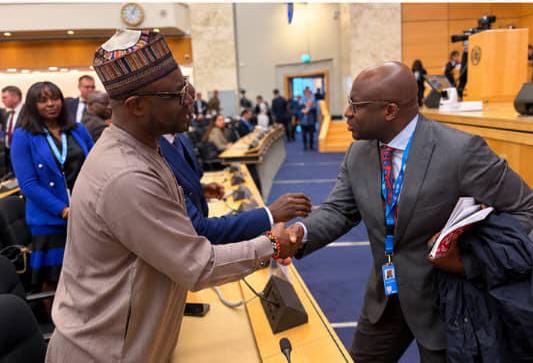
The Minister said that, under Tripartite Agreements, over 7,000 Nigerian refugees returned voluntarily this year, while 14,000 more in Cameroon have registered to return. An agreement covering 2,000 in Niger is being finalised. He thanked Cameroon, Chad and Niger for their generous hospitality.
On local integration, Dr Doro said former Liberian and Sierra Leonean refugees have integrated locally, with some now leading businesses. According to him, refugees in five States receive land, farm inputs and skills training, while the new Public-Private Partnership Department of the National Commission for Refugees, Migrants and Internally Displaced Persons (NCFRMI) is helping to reduce aid dependency.
He called on all States to recognise Nigeria’s Convention Travel Documents and facilitate visas for their holders.
Dr Doro said displaced persons and host communities are being enrolled in the national identity system, opening access to banking, schools and social services. Refugees are included in State action plans and social registers, and that ten mobile documentation buses will soon reach remote areas.
The Minister said, Nigeria reaffirmed its five 2023 pledges in December 2025. “But no host country can do this alone,” he said, stressing that, greater burden- and responsibility-sharing, including expanded resettlement and complementary pathways, is essential. He called on UNHCR to explore the possibility of scaling up funding by partnering with regional and sub-regional financial institutions such as the African Development Bank and the ECOWAS Bank for Investment and Development.
Dr Doro thanked donors for their support in a difficult funding climate.
He expressed Nigeria’s appreciation to the High Commissioner pointing that, Nigeria values its partnership with UNHCR and will continue to build on it.
E-signed:
Janet McDickson Noah
Director, Information and Public Relations.