

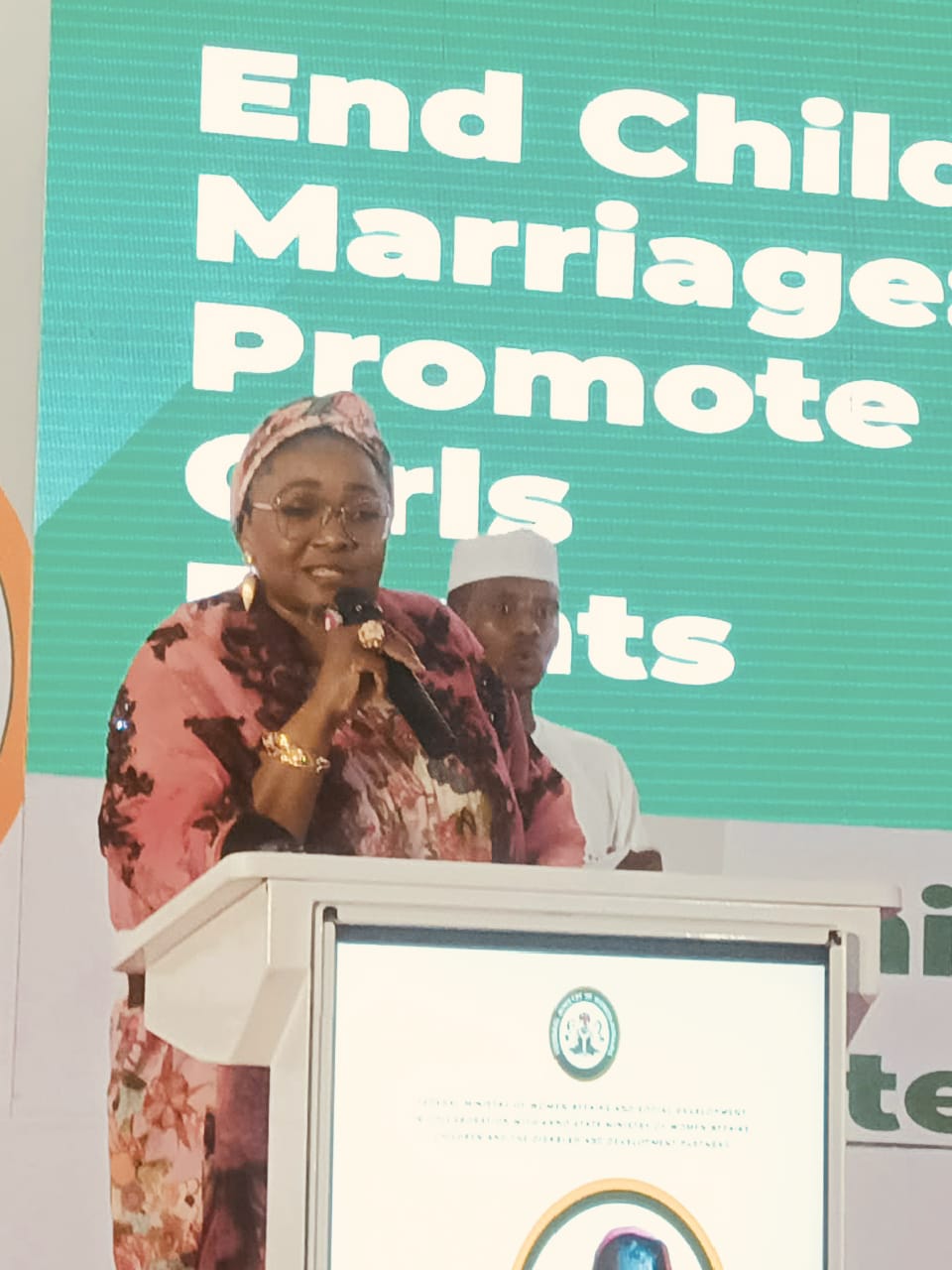
The Federal Government has launched the National Strategy and Costed Action Plan on Ending Child Marriage in Nigeria (2025–2030), with the Honourable Minister of Women Affairs and Social Development, Hajiya Imaan Sulaiman-Ibrahim, FSI, calling for coordinated action, sustained investment and stronger accountability to protect the rights and future of Nigerian girls.
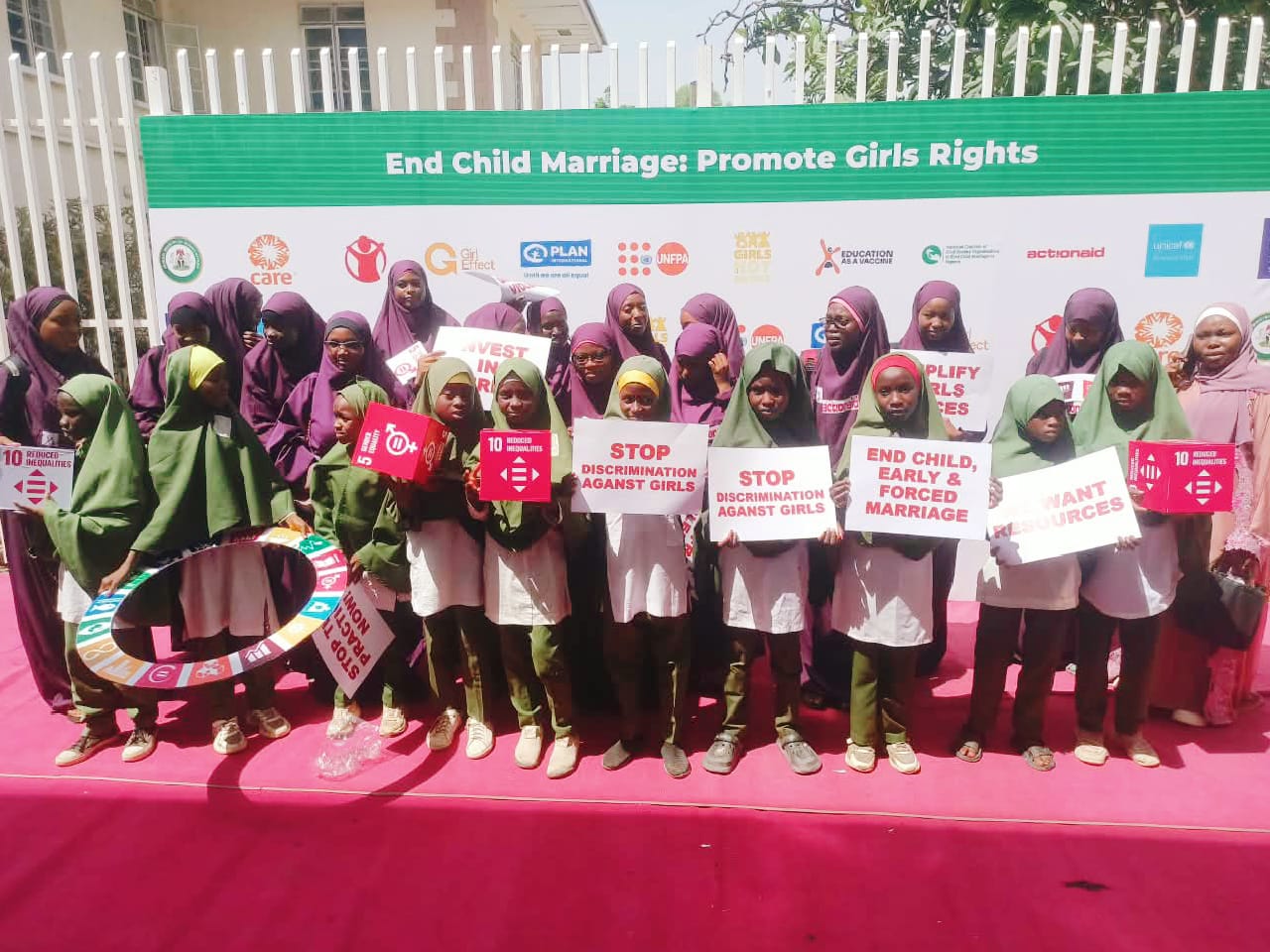
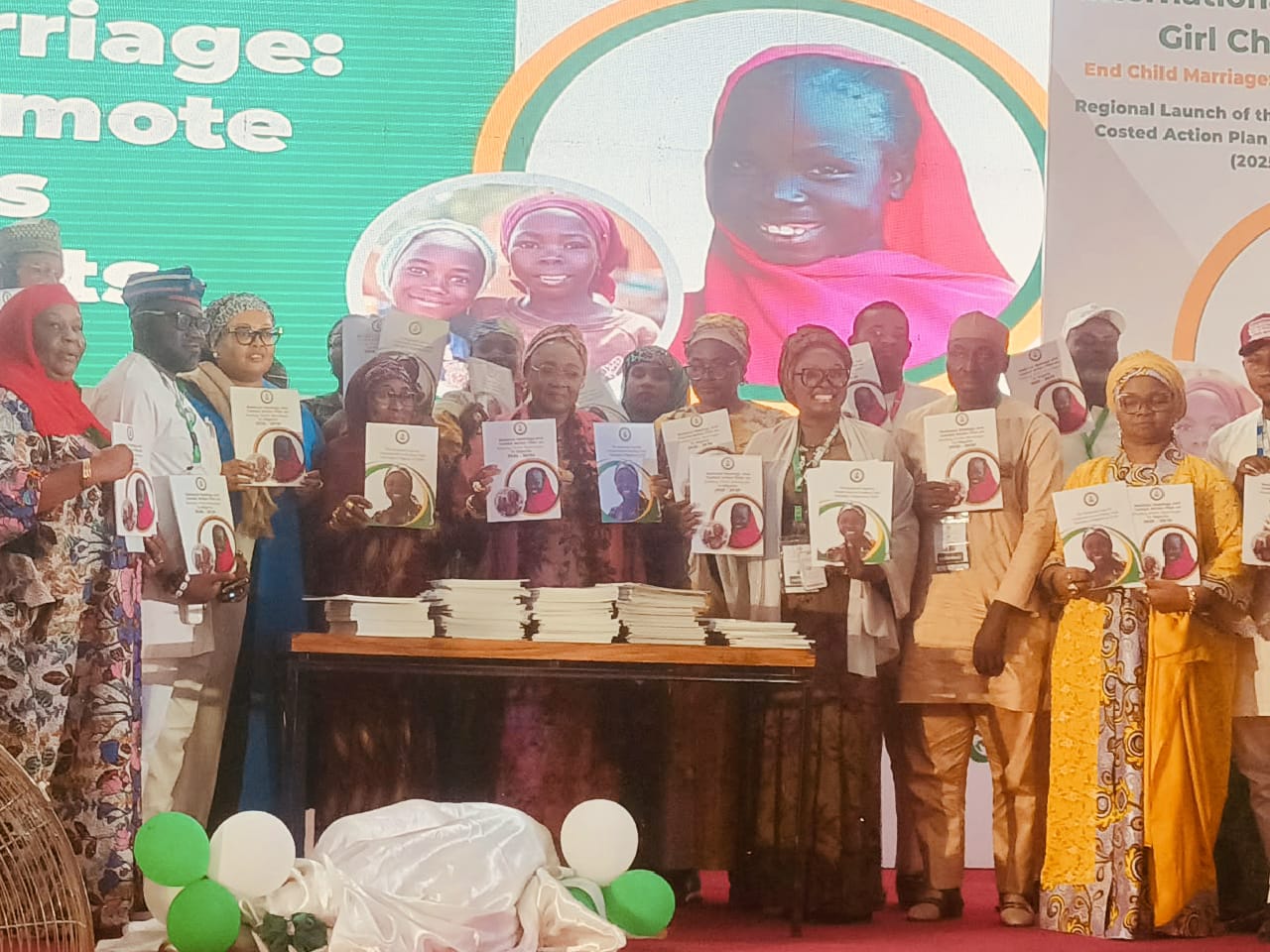
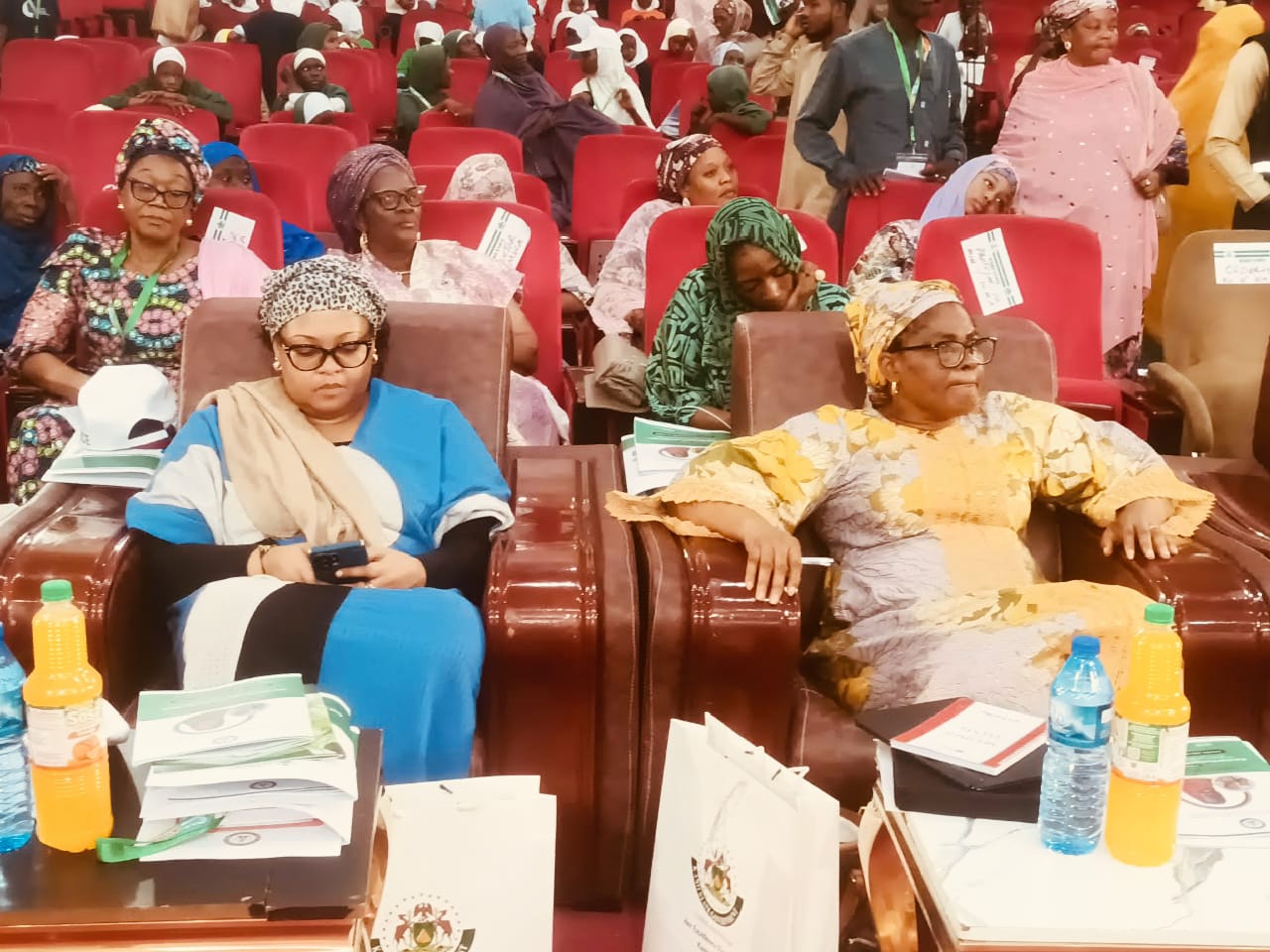
The Minister made the call in Kano on Tuesday, 13 October 2026, during the commemoration of the 2026 International Day of the Girl Child, themed “End Child Marriage and Invest in Girls’ Rights!”, where she formally launched the Strategy and Costed Action Plan to strengthen interventions against child marriage, particularly across Nigeria’s North-West and North-East geopolitical zones.
She described the occasion as a significant step towards translating the Federal Government’s commitment to child protection into practical interventions supported by adequate financing, institutional coordination, effective implementation and measurable outcomes.
“Let me be clear about how we will judge success. It will not be measured by the speeches made or the documents launched today. It will be measured by the number of girls who stay in school or return to it; the number of communities that adopt protective practices; the quality and reach of support services; the resources committed and actually released; and the measurable reduction in the conditions that keep a girl from completing her secondary education and leave her exposed to child marriage,” the Minister stated.
Hajiya Sulaiman-Ibrahim noted that child marriage remains a major obstacle to girls’ education, health, personal development and economic independence, often exposing them to early pregnancy, domestic violence, restricted opportunities and intergenerational poverty.
She explained that the practice is sustained by interconnected challenges, including poverty, insecurity, school exclusion, gender discrimination, harmful social norms, inadequate social protection and limited opportunities for adolescent girls.
According to her, addressing child marriage therefore requires a comprehensive, multisectoral response that integrates education, healthcare, child protection, social welfare, family support and economic empowerment.
The Minister linked the initiative to President Bola Ahmed Tinubu’s declaration of 2026 as the Year of the Family and Social Development, stressing that the national aspiration to strengthen families and communities cannot be achieved while girls are denied opportunities to complete their education and fulfil their potential.
She reaffirmed the Federal Government’s commitment to strengthening child protection frameworks, improving the implementation of relevant laws and policies, expanding access to essential services and ensuring that institutions responsible for protecting children are accountable for results.
The Minister called on Ministries, Departments and Agencies, state governments and local government authorities to identify their respective responsibilities under the Strategy and integrate the required interventions into their programmes and budgets.
She also urged traditional and religious leaders, parents, civil society organisations, development partners and community stakeholders to work collectively towards eliminating the social and economic conditions that expose girls to early marriage.
Emphasising the transformative power of education, she cited the contributions of distinguished Nigerian women, including Nana Asma’u, Hajiya Gambo Sawaba, Professor Hauwa Ibrahim, Professor Ruqayyatu Ahmed Rufa’i, Professor Aisha Sani Maikudi, Amina J. Mohammed, Dr. Halima Yelwa Adamu and Professor Zaynab Alkali, as examples of what girls can achieve when given opportunities to learn and develop.
“The girl child of today can be the doctor, professor, lawyer, ambassador, scientist, business leader or policymaker of tomorrow. Our duty is to create the conditions in which every girl can realise that potential,” she said.
She commended the Kano State Government under Governor Abba Kabir Yusuf for initiatives supporting girls’ education, including scholarships, free bus transportation for girls and the domestication of re-entry guidelines for married adolescent girls.
She urged other states to adopt similar measures to improve school enrolment, retention and completion.
The Minister subsequently formally launched the National Strategy and Costed Action Plan, expressing the hope that it would accelerate coordinated and adequately resourced national action towards a Nigeria where every girl is safe, educated, empowered and free to fulfil her potential.
In his address, the Executive Governor of Kano State, His Excellency Engineer Abba Kabir Yusuf, represented by the Honourable Commissioner for Women Affairs, Children and People with Special Needs, Hajiya Amina S. Abdullahi, reaffirmed the state government’s commitment to expanding educational opportunities and strengthening child protection.
The Governor described investment in girls as an investment in stronger families, a productive economy, stable communities and the future of generations.
He disclosed that the state had established the Office of the Senior Special Assistant to the Governor on Girl-Child Education and a network of 88 Girl-Child Education Advocates across its 44 local government areas to strengthen advocacy, community engagement and support for girls’ education.
Engr. Abba also highlighted the Adolescent Girls Initiative for Learning and Empowerment (AGILE), the Girl Child Initiative Shuttle Bus Programme, free and compulsory education policies, alternative learning opportunities, life-skills interventions and social assistance for vulnerable households.
According to Governor Yusuf, programme records indicate that tens of thousands of learners have benefited from alternative learning interventions, more than 148,000 girls have participated in life-skills activities, and cash-transfer support has reached over 100,000 beneficiaries across the state.
Governor Kabir acknowledged that significant challenges remain, including the number of out of school children, the risks of child marriage and other forms of violence, and the economic pressures confronting families.
“The measure of our collective success will not be the speeches we deliver today, but the girls who remain in school, the children protected from violence, the families who receive support, and the communities that see a better future for their children,” he said.
The Governor called on parents and caregivers to protect their daughters from abuse, exploitation and early marriage, while urging traditional and religious leaders, schools, development partners and civil society organisations to strengthen community-based interventions.
Earlier in the welcome address of the state commissioner for women, Affairs, Hajiya Amina S. Abdullahi, delivered by the Permanent Secretary of the State Ministry, Hajiya Aisha Abdulkadir Makkatu, described the gathering as a collective declaration of resolve to protect children’s rights and secure their future.
She noted that ending child marriage aligns with the Islamic principles of Maslahah—the pursuit of public interest and prevention of harm—and the higher objectives of Sharia, including the protection of life, intellect, dignity and posterity
The United Nations Children’s Fund (UNICEF) commended the Federal Ministry of Women Affairs and Social Development for its leadership in bringing together ten northern states for the initiative and appreciated the Kano State Government for hosting the event.
In remarks delivered by UNICEF Child Protection Specialist Mona Aika on behalf of the Chief of UNICEF Field Office, Kano, Mr. Shafeeq Ur-Rehman, the organisation described child marriage as a serious threat to children’s rights, education and future opportunities.
Citing the 2024 Nigeria Demographic and Health Survey, UNICEF noted that approximately one in three young women nationally, and nearly one in two in the North-West and North-East, were married before the age of 18.
The organisation called on participating states to translate the Strategy into funded programmes, stronger education and protection services, and measurable results.
“A costed plan must become a financed and implemented plan, reflected in state priorities, budgets, strong services and measurable results,” UNICEF stated.
It reaffirmed its readiness to work with government, civil society, communities, development partners and girls themselves to advance lasting change.
Similarly, the United Nations Population Fund (UNFPA), represented by Dr. Audu Alayande, underscored the importance of sustained investment in girls’ education, health, protection and empowerment.
Citing the 2024 Nigeria Demographic and Health Survey, UNFPA stated that 33.4 per cent of women aged 20–24 had been married before age 18, while 11.4 per cent had married before age 15.
The organisation emphasised that ending child marriage requires collective action to address poverty, gender inequality and harmful practices while ensuring access to education, adolescent-responsive health services and protection mechanisms.
UNFPA also highlighted its Adolescent Girl Initiative and second-chance education programmes in Northern Nigeria, which it said had supported the enrolment, retention and completion of secondary education for more than 45,500 adolescent girls.
It pledged continued collaboration with government institutions, development partners and civil society to ensure that girls can exercise their rights, acquire relevant skills and participate meaningfully in national development.
Also in a goodwill message, Country Director, Girl Effect Nigeria, on behalf of Boladale Akin-Kolapo, the organisation described the launch as a defining moment in Nigeria’s efforts to eliminate child marriage.
“Every girl deserves a childhood, not a marriage. A classroom, not a burden. A future defined by her dreams, not by circumstances beyond her control,” the message stated.
Girl Effect highlighted its Ilimi Haske project in Rimin Gado Local Government Area, supported by the Children’s Investment Fund Foundation (CIFF), which it said was supporting 647 girls to remain in or return to school through education, life skills, family support and community engagement.
The organisation also announced its Ending Child Marriage initiative in Dawakin Kudu Local Government Area, supported by the Gates Foundation, with a target of reaching 1,700 girls through community-driven interventions involving parents, religious leaders and other stakeholders.
It reaffirmed its commitment to working with the Federal and Kano State Governments, the Emirate Council and community structures to ensure that national policy translates into meaningful change at the grassroots.
Save the Children International, represented by its Director of Finance, Mr. James Ameh, on behalf of Country Director Duncan Harvey, commended the Federal Ministry for developing the Strategy and stressed that implementation, adequate financing and accountability would determine its success.
The organisation called for costed state-level action plans, stronger child protection systems, safe and inclusive schools, social protection for vulnerable families and opportunities for girls to develop leadership, life and livelihood skills.
It further emphasised the need to involve girls in monitoring progress and shaping decisions affecting their lives.
“Most importantly, we must see girls themselves participating in monitoring progress and shaping the decisions that affect their lives,” the message stated.
Education as a Vaccine (EVA), represented by its Head of Programme, Igwe Blessing N., also reaffirmed the commitment of the Strengthening Systems and Communities to End Child Marriage (SSCE) consortium to supporting implementation of the Strategy.
The consortium, supported by the Malala Fund, comprises Education as a Vaccine, the Civil Society Action Coalition on Education for All (CSACEFA), OneLife Initiative and YouthHubAfrica.
Its interventions focus on Adamawa, Bauchi, Borno, Kaduna and Kano states, alongside national-level engagement, with emphasis on strengthening policy coordination, accountability and access to education for adolescent girls.
EVA stressed that keeping girls in school, supporting their transition through secondary education and creating opportunities for married and pregnant adolescent girls to return to learning were critical to ending child marriage.
The organisation called for sustained government leadership, dedicated domestic financing, multisectoral coordination and stronger accountability mechanisms, while urging traditional and religious leaders, parents, men and boys to challenge harmful practices.
Ahmed Lawan Danbazau, Mnipr
Head, Press and Public Relations Dept
FMWASD