


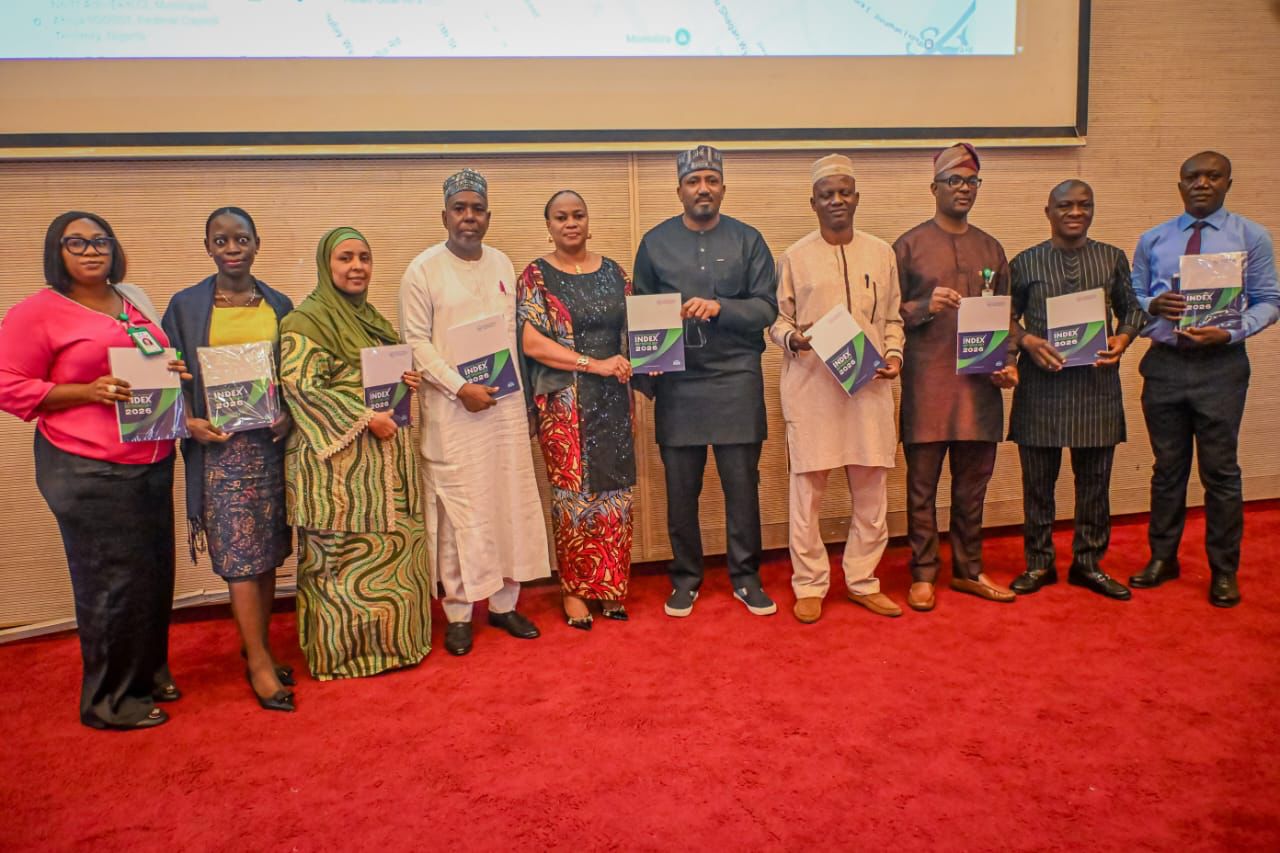
The Bureau of Public Service Reforms (BPSR), in collaboration with the Centre for Fiscal Transparency and Public Integrity (CeFTPI), has unveiled the 2026 Transparency and Integrity Index (TII) Methodology Handbook, reaffirming efforts to strengthen transparency, accountability, integrity, and good governance across public institutions in Nigeria.
?
?Speaking at the workshop held in Abuja, the Director-General of BPSR, Mr. Dasuki Ibrahim Arabi, represented by Mrs. Gloria Omene, Acting Director of Finance and Accounts, described the Transparency and Integrity Index as a practical, evidence-based assessment tool designed to help Ministries, Departments and Agencies (MDAs) evaluate and improve their compliance with transparency and accountability standards.
?
?Mrs. Omene explained that the Transparency and Integrity Index was developed in 2021 by the Centre for Fiscal Transparency and Public Integrity (CeFTPI), a non-partisan organisation committed to promoting good governance in Nigeria. Since its inception, the Index has evolved into an annual assessment framework that evaluates more than 500 federal and state institutions on their adherence to transparency, integrity, and open governance principles.
?
?According to her, the TII serves as an important mechanism for promoting transparency, strengthening preventive measures against corruption, and assisting public institutions to improve performance and compliance with established regulations. The methodology provides a clear framework for assessing governance practices and identifying areas requiring reform.
?
?She noted that the 2026 assessment evaluates institutions across five key thematic areas: Fiscal Transparency, Open Procurement and Contracting, Human Resources and Inclusion, Control of Corruption, and Citizens Engagement. Each category accounts for 20 per cent of the overall score and is measured through 31 sub-variables designed to provide an objective evaluation of institutional performance.
?
?Mrs. Omene stated that the methodology is rooted in both national and international governance frameworks, including the Constitution of the Federal Republic of Nigeria, the Fiscal Responsibility Act 2007, the Public Procurement Act 2007, the Freedom of Information Act 2011, Executive Order 001 of 2017 on the Promotion of Transparency and Efficiency in Government Business, the Federal Character Principle, and the Discrimination Against Persons with Disabilities (Prohibition) Act 2018. It also draws from global standards such as the United Nations Convention Against Corruption (UNCAC), the African Union Convention on Preventing and Combating Corruption (AUCPCC), the Open Government Partnership (OGP), and other international accountability frameworks.
?
?She explained that the assessment focuses on information that should ordinarily be accessible to the public, including budget allocations and implementation reports, revenue disclosures, audit reports, procurement records, recruitment processes, anti-corruption policies, whistleblowing mechanisms, conflict-of-interest frameworks, and citizen engagement tools.
?
?Under the Fiscal Transparency component, institutions are assessed on the publication of budget documents, releases, implementation reports, revenue records, and audit reports. The Open Procurement and Contracting category evaluates the disclosure of procurement plans, tender notices, contract awards, implementation reports, and details of contractors.
?
?Similarly, the Human Resources and Inclusion component examines recruitment practices, staff information, promotion policies, gender representation, disability inclusion, organizational structures, and compliance with federal character requirements. The Control of Corruption category focuses on the existence and implementation of anti-corruption and anti-bribery policies, whistleblowing mechanisms, and conflict-of-interest frameworks. The Citizens Engagement category assesses the availability of interactive websites, official communication channels, social media platforms, annual reports, and other mechanisms that facilitate public participation and feedback.
?
?The BPSR Director-General noted that increasing public demand for responsive, open, and trustworthy institutions has heightened the need for transparency in the management of public resources. He observed that current fiscal realities and governance challenges make it imperative for institutions to adopt measurable standards that promote accountability and enhance public trust.
?
?”The Transparency and Integrity Index translates governance principles into practical actions by helping institutions identify gaps, benchmark performance, and prioritize reforms that improve service delivery and public confidence,” she said.
?
?Mrs. Omene highlighted several reforms introduced by the Federal Government to strengthen transparency and integrity in public financial management. These include the Fiscal Responsibility Act, Public Procurement Act, Money Laundering (Prohibition) Act, ongoing tax reforms, debt management initiatives, the Cybercrime Act, the Finance Act, and Executive Order 9 of 2026 on petroleum revenue and the Office of the Tax Ombud.
?
?She further disclosed that state governments are assessed using the same framework, with indicators covering budget appropriation and implementation, debt management, procurement transparency, recruitment practices, anti-corruption measures, and citizen engagement mechanisms such as town hall meetings, official emails, websites, and social media platforms.
?
?According to her, findings from previous assessments indicate that many public institutions are becoming increasingly proactive in the disclosure of public information, contributing to stronger governance systems and improved accountability across the public sector.
?
?She encouraged participants to actively contribute their expertise and feedback during the workshop to ensure that the 2026 Transparency and Integrity Index Methodology remains practical, impactful, and responsive to emerging governance challenges.
?
?Mrs. Omene commended CeFTPI for its continued partnership and support in advancing transparency initiatives and expressed appreciation to stakeholders, governance experts, civil society organisations, and representatives of public institutions for their contributions to the success of the programme.
?
?The workshop brought together representatives of federal and state institutions, development partners, governance professionals, and accountability advocates committed to promoting transparency, integrity, and improved public sector performance in Nigeria.
?
?Signed:
?Aliyu Umar Aliyu, FNIPR,
?Head, Strategic Communications,
?BPSR
5th June, 2026.