

The Federal Government has intensified nationwide efforts to tackle Nigeria’s out-of-school children crisis through data-driven reforms, stronger collaboration, and targeted investments aimed at expanding access, improving foundational learning, and ensuring that every Nigerian child is reached by the education system.
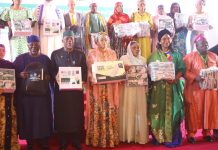
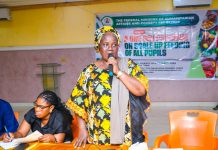
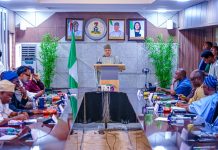
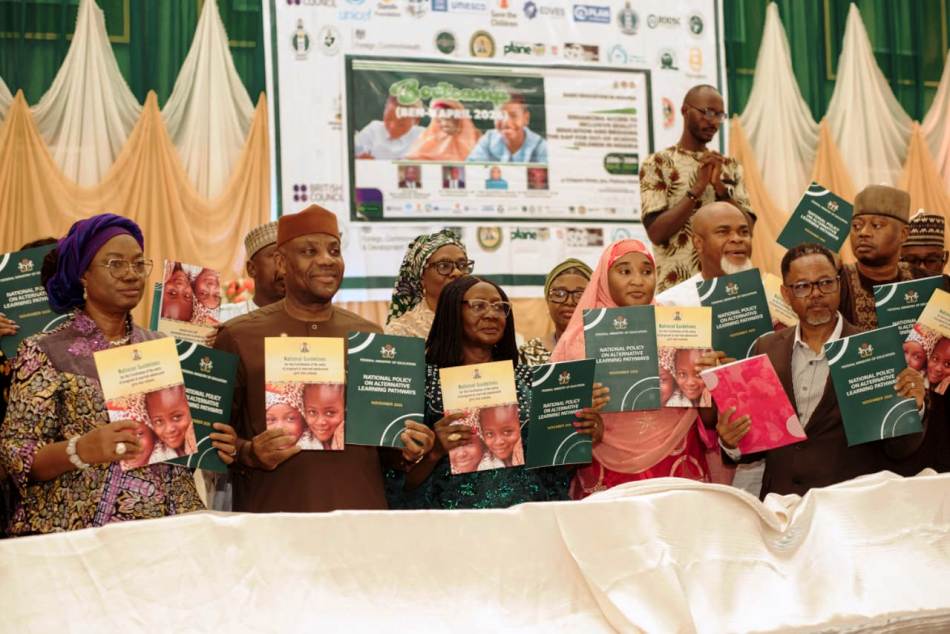
This renewed commitment was highlighted at the 2026 Basic Education in Nigeria Bootcamp held in Jos, Plateau State, where policymakers, development partners, and education stakeholders gathered to develop practical solutions to improve access, retention, and learning outcomes across the basic education sector.
Speaking at the event, the Honourable Minister of Education, Dr. Maruf Tunji Alausa CON, emphasised that credible education data and accurate learner tracking are critical to resolving Nigeria’s long-standing education challenges, including an estimated 15 million out-of-school children and persistent gaps in foundational literacy and numeracy.
According to the Minister, effective reform depends on identifying where children are, understanding why they are out of school, and deploying targeted interventions that return them to learning. “Reliable data remains the backbone of effective education reform. Without knowing where the children are and why they are out of school, meaningful solutions cannot be implemented,” he said.
To strengthen evidence-based planning, the Federal Ministry of Education is expanding the Digital National Education Management Information System (NEMIS) and accelerating the rollout of the Learner Identification Number (LIN) to enable real-time tracking of learners nationwide. The 2025/2026 Annual School Census has already captured over two million learners, generating critical insights to guide policy decisions, improve enrolment strategies, and strengthen accountability.
Through improved data systems and targeted interventions, nearly one million out-of-school children have also been mapped for reintegration into formal schools and alternative learning pathways.
The Minister further highlighted significant investments supporting these reforms. Between January 2025 and January 2026, states accessed over ?106 billion in Universal Basic Education Commission matching grants to strengthen basic education delivery. In addition, ?22 billion has been invested in teacher professional development, leading to the training of approximately 978,000 teachers nationwide, while more than 10,000 classrooms have been renovated and 7.8 million textbooks distributed to improve learning conditions.

Efforts to expand access are also targeting vulnerable groups through strengthened Almajiri and non-formal education programmes, with 1,400 Tsangaya teachers trained, 119 learning centres identified nationwide, and 760 enumerators deployed to enhance community-level education data and planning.
In her remarks, the Honourable Minister of State for Education, Professor Suwaiba Said Ahmad, described the Bootcamp as a critical platform for addressing persistent challenges in basic education. She noted that ongoing initiatives such as LUMINA 2030, EduRevamp, Skill-Up, and Communities of Practice are designed to strengthen curriculum delivery, enhance teacher capacity, expand digital learning, and improve monitoring systems to boost access, equity, and learning outcomes nationwide.
Also speaking, Plateau State Governor, Caleb Mutfwang, represented by Deputy Governor Josephine Piyo, warned that the out-of-school children crisis poses serious social and economic risks, including poverty, insecurity, and social exclusion. He highlighted the state government’s efforts to improve access through the construction and renovation of classrooms, provision of water facilities, and supply of learning resources to create more conducive learning environments.
The Permanent Secretary, Federal Ministry of Education, Abel O. Enitan represented by Director Basic Education who doubles as convener of the event Dr Mrs Folake Olatunji Davis noted that the Bootcamp was designed to move beyond policy dialogue to actionable solutions by bringing together stakeholders to identify gaps, share experiences, and develop measurable strategies for identifying, reintegrating, and retaining out-of-school children in the education system.
Delivering the lead paper, education expert Titus Syengo emphasised the urgency of addressing Nigeria’s out-of-school crisis, describing the estimated 18.5 million children currently out of school as a major national emergency requiring immediate action. He noted that Nigeria’s education progress carries continental implications, stressing that the country’s scale and influence make its reforms critical for Africa’s broader development.
Syengo further urged stakeholders to prioritise strong foundational learning and adopt Afrocentric strategies that reflect African realities and local contexts in addressing the out-of-school challenge.
The Federal Ministry of Education reaffirmed that credible data, sustained investment, and coordinated national action remain central to achieving inclusive, equitable, and quality education for all Nigerian children.
Boriowo Folasade
Director, Press and Public Relations