

The Honourable Minister of Solid Minarals Development, Dr Dele Alake, has harped on the need for global cooperation to tackle development financing gaps in emerging economies, including Nigeria.
According to him, collaboration among governments, development institutions, private investors, and international partners will go a long way to unlock investments in green development, support small and medium-scale enterprises (SMEs), and accelerate sustainable economic growth in Nigeria.
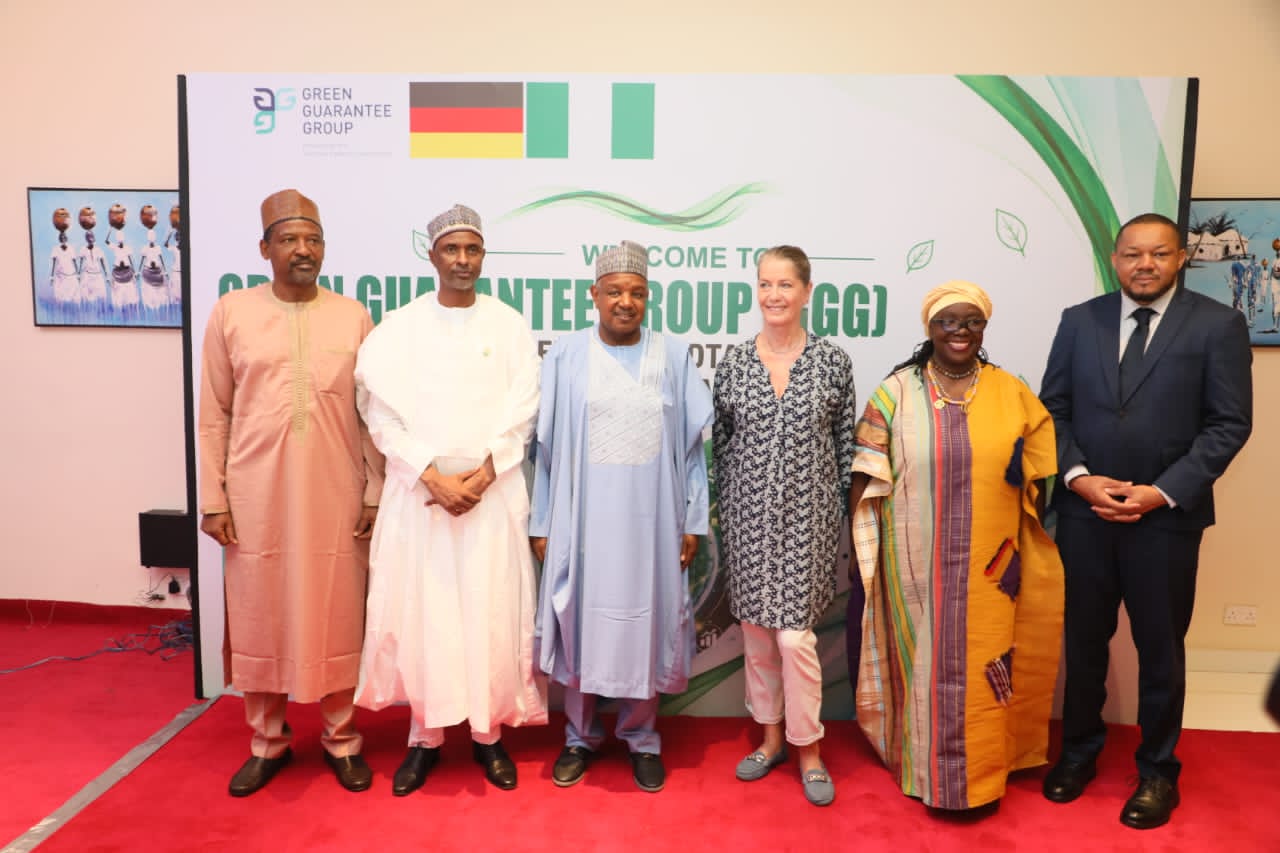
He spoke virtually on Tuesday at the Green Guarantee Group (GGG) High Level Stakeholders’ Roundtable on Mainstreaming Financial Guarantees In Nigeria, held in Abuja.
The Minister stressed on innovative funding mechanisms that reduce risks and encourage long-term investments in sectors like renewable energy, mining, agriculture, infrastructure, and climate-resilient industries.
To de-risk investments, mobilize private sector funding and enhance economic transformation and climate adaptation efforts, the Minister said, guarantee instruments are inevitable tools.
He said “We are deliberately pursuing policies that encourage climate action, global process, renegotiation, and greater participation in higher value segments in global supply chains.
“Realizing this vision requires substantial investment across financing constraints within future challenge, many viable projects struggle to attract capital due to concerns around market uncertainty. This is where guaranteed instruments and innovative risk share in the country are so important.” he added.
Speaking specifically on Micro, Small, and Medium-Scale Enterprises (MSMEs), the Minister said it needs access to financing in order for the businesses to expand and compete as a critical drivers of economic growth, job creation, and innovation.
The Roundtable meeting, he said, therefore provides a great platform for policymakers, financial institutions, development partners, and private sector stakeholders to exchange ideas and identify practical solutions to Nigeria’s development financing gaps.
The Chair of the Green Guarantee Group (GGG), Mr. Lars-Hendrik Roeller, said that guarantees are being used globally as important instruments for reducing pricing risks, improving investor confidence, and unlocking private capital for climate and development projects.
He also harped on the need to move climate finance discussions from policy conversations to practical implementation through national initiatives and stakeholder collaboration.
The GGG Chair disclosed that the Green Guarantee Group is working towards establishing a stronger global guarantee architecture capable of supporting sustainable investments, especially in developing countries.
Nigeria as Africa’s largest economy and Co-Chair of the GGG, he said, is strategically placed to lead efforts to build practical financing solutions capable of accelerating green industrialization.
He revealed plans to expand international cooperation through an alliance of countries focused on improving guarantee systems and boosting climate financing mechanisms.
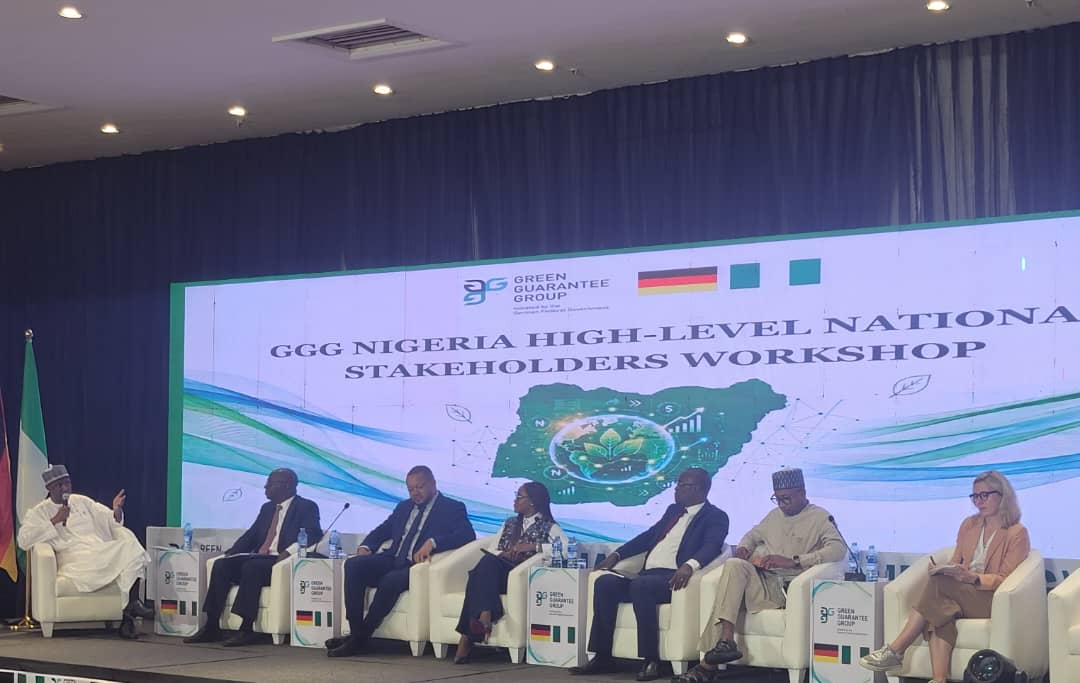
On his part, the Co-Chair of GGG and the Permanent Secretary of the Ministry of Solid Minerals Development, Engr Faruk Yabo, disclosed that the workshop has three objectives.
“First, to build a shared understanding across government, regulators, development finance institutions, domestic guarantee providers, and the private sector of what the GGG is, what it recommends, and how the strategic use of guarantees can be applied to Nigeria’s specific context.
“Second, to take stock of where Nigeria already stands.
We are not starting from zero. Institutions such as InfraCredit, NIRSAL, the Nigeria Credit Guarantee Company, the Nigeria Sovereign Investment Authority, the Infrastructure Bank, and others represented in this room already provide elements of the guarantee and risk sharing architecture this agenda requires. Today is about understanding how these pieces fit together, where the gaps remain, and how Nigeria’s domestic architecture can connect more effectively with global guarantee mechanisms from the AfDB, the World Bank Group, ATIDI, PIDG and others.
“Third, and most practically, to begin testing this thinking against real opportunities. Later today, we will look at a small set of priority investment cases in renewable energy, nature based solutions, agricultural value chains and the solid minerals sector not as transactions for approval, but as illustrative cases for guarantee mapping and dialogue.” he added
The Permanent Secretary said the Green Guarantee Group was established to address one of the most persistent obstacles to climate and development finance: the gap between the scale of capital available globally and the volume of capital that actually reaches bankable projects on the ground, particularly the Nigerian markets.
He explained that guarantee is helping to cross a bridge, where on one side are institutional capital looking for safe, productive returns, while on the other side are climate and development projects that are viable but feel unfamiliar or risky to outside investors.
Nigeria’s position as Co-Chair of the GGG, he said, is not symbolic, but reflects a recognition that the scale of investment needs in power, solid minerals, agriculture, infrastructure and the broader green economy makes Nigeria a natural proving ground for the instruments.
“It also reflects an expectation that we will lead by example: that we will work to align our domestic guarantee institutions, our capital markets, our regulators and our development finance partners around a shared agenda for mobilising capital at the scale and cost our development priorities demand.”
The conversations at the workshop, the Permanent Secretary said, speak directly to whether the next generation of solar farms, mining projects, agricultural platforms, and restoration initiatives in Nigeria can access capital on terms that make them viable.
The Ambassador of the Federal Republic of Germany to Nigeria and ECOWAS, Annett Günther, said African-European partnerships are key to addressing climate adaptation and development challenges, as climate financing needs are very high in Africa.
Guarantees, according to her, have been effective in reducing investment risks and mobilizing up to six times more private financing than traditional development instruments.
She expressed Germany’s commitment to enhancing climate finance cooperation with Nigeria towards unlocking private investments and boost sustainable development efforts.
The Envoy also disclosed that Germany is supporting Nigeria’s climate financing architecture through partnerships involving relevant ministries and guarantee institutions to enhance investment mobilization.
Nigeria’s Minister of Budget and Economic Planning, Sen. Abubakar Bagudu, noted that the achievement of the SDGs can be enhanced through the Roundtable.
He described the Roundtable workshop as very significant.
Nigeria, he said, is available to take the conversation to the next level.
The Resident Representative of UNDP Nigeria, Ms. Elsie Attafuah, reflected on three summaries for Gaurantees.
First, she said, guarantees are not just financial instruments but development accelerators.
She said guarantees, secondly, help to unlock the capital required for Nigeria’s energy transition, climate agenda, industrial transformation, and inclusive growth.
Thirdly, she said, Nigeria has the opportunity to become a leader in building an integrated ecosystem for climate and development financing.
“The conversation matters because it can mobilize investment that creates jobs, expands energy access, strengthens infrastructure, and accelerates industrialization, improving the lives of millions of Nigerians.” she stated
Also speaking at the works, President of the Africa Finance Corporation (AFC), Mr. Samaila Zubairu, who was represented by Dr. Musa Salwara, said that the conversation is timely and necessary.
He noted that Africa countries don’t lack opportunities, but bankability has been a constraint.
The progress of Nigeria, he said, would depend on building strong project pipelines, strengthening institutional capacity, and attracting regional and global partnerships.
Gaurantees, he said, are effective when applied to well-conceived and strengthened projects
Noting that AFC is ready to work with Nigeria, he emphasized the need to move from ideas to transactions.
After the opening session, Engr Faruk Yabo moderated panel discussion on the Role of Green Guarantees in Mobilizing Private Capital for Investments in Nigeria.
This was also followed by various Roundtable sessions focusing on different areas.
Some of them are Data Aggregation, Transparency and Sharing for Ratings and Investors Confidence, Strategies for Low-Cost Capital Mobilisation, Local Currency Financing and Gaurantee Ecosystem Development, Regulators, Policy and Market-Enabling Institutions – Creating an Enabling Environment for Guarantee-Backed Investment, and Projects Pipeline and Investment Case Review Across Sectors.
Kania Maliki A.
Head (P&PRD)
16/6/2026