

The Federal Government has approved a comprehensive reform to regulate the award and use of honorary degrees in Nigerian universities, in a decisive move aimed at restoring academic integrity, strengthening quality assurance, and safeguarding the credibility of the nation’s higher education system.
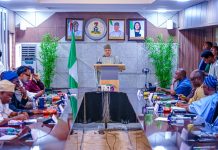
Briefing State House correspondents at the Presidential Villa, Abuja, after the Federal Executive Council meeting, the Honourable Minister of Education, Dr. Maruf Tunji Alausa, CON, described the policy as a firm intervention to end the long-standing abuse, politicisation, and commercialisation of honourary academic titles in the university system.
Dr. Alausa explained that while honourary degrees are designed to recognise individuals who have made exceptional contributions to society, their indiscriminate conferment and misuse as earned academic qualifications have undermined public trust and weakened the integrity of university honours in Nigeria.
Under the new framework, aligned with the 2012 Keffi Declaration and guidelines of the Association of Vice-Chancellors of Nigerian Universities (AVCNU), honourary degrees must be clearly designated as honoris causa and cannot be used as formal academic qualifications. Recipients must demonstrate verifiable societal impact and uphold high standards of integrity.
The policy further prohibits holders of honourary degrees from using the title “Dr” in any official, academic, or professional capacity based solely on such awards. Any misrepresentation or violation will be treated as academic fraud, attracting both legal and reputational consequences.
It also clarifies that honourary degrees do not qualify recipients for academic appointments or ranks such as Lecturer or Professor, nor do they substitute for professional certifications, licences, or regulated qualifications required for practice in specialised fields.
Dr. Alausa further disclosed that honourary awards are now restricted to four recognised categories: Doctor of Laws (LL.D), Doctor of Letters (D.Litt.), Doctor of Science (D.Sc.), and Doctor of Humanities (D.Hum.). He added that such awards may only be conferred by universities with established doctoral programmes, through transparent, merit-based, and ethically compliant processes.
Implementation of the policy will be coordinated by the Federal Ministry of Education in collaboration with the National Universities Commission (NUC), which has been granted enhanced enforcement powers to ensure full compliance across all universities.
The Commission will issue formal compliance circulars to Vice-Chancellors, Registrars, and Governing Councils nationwide, monitor convocation ceremonies to ensure strict adherence to the Keffi Declaration, work with relevant regulatory and media stakeholders to discourage misuse of academic titles, and publish an annual verified register of legitimate honourary degree recipients in Nigeria.
Also speaking, the Honourable Minister of State for Education, Prof. Suwaiba Said Ahmad, stressed that the reforms do not undermine university autonomy but rather reinforce adherence to national standards, ethical practice, and global best practices in higher education governance. She noted that while existing frameworks such as the Keffi Declaration provided guidance, weak enforcement had led to inconsistencies across institutions. The new legal backing, she said, now empowers the NUC to ensure accountability, transparency, and uniform implementation nationwide.
Dr. Alausa expressed appreciation to President Bola Ahmed Tinubu, GCFR, for his visionary leadership and commitment to strengthening integrity, accountability, and excellence in the education sector. He stated that the reform marks a new era of discipline, credibility, and international respect for Nigeria’s university system.
Mrs. Boriowo Folasade
Director, Press and Public Relations